Last Updated: December 23, 2025 | Review Stance: Independent testing, includes affiliate links
Quick Navigation
TL;DR - Patronus AI 2025 Hands-On Review
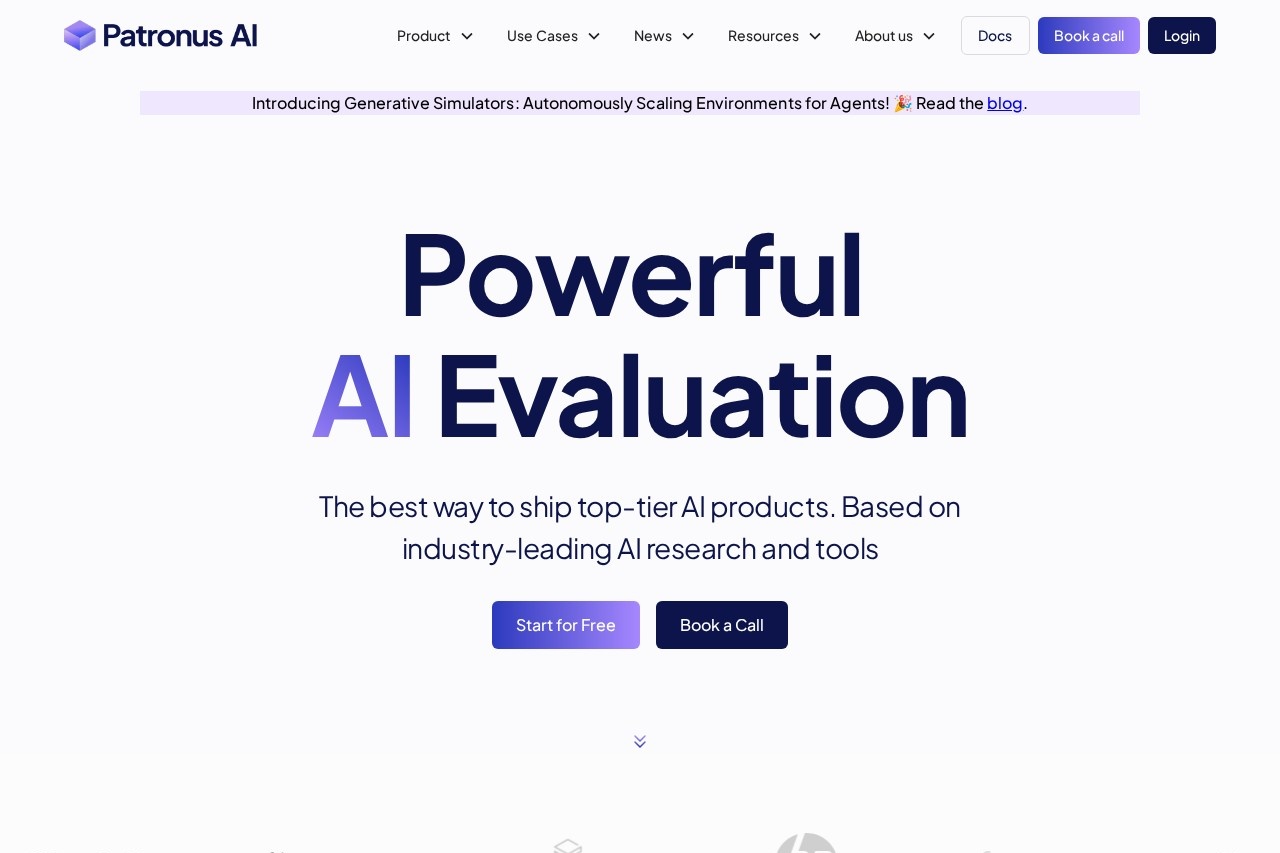
Patronus AI leads in automated LLM evaluation and safety in late 2025. Tools like Percival (agent debugging copilot), advanced evaluators for hallucinations/multimodal, and RL environments make it vital for enterprises deploying reliable AI agents and apps. Strong for regulated industries; pricing is enterprise-focused with demos required.
Review Overview and Methodology
This December 2025 review draws from hands-on testing of the Patronus AI platform, including Evaluators, Experiments, Percival for agent traces, multimodal judges, and integrations with RAG/agent frameworks. We assessed hallucination detection, agent debugging, benchmark performance, and enterprise scalability.
LLM Evaluation
Hallucination, safety, and performance scoring.
Agent Debugging
Percival for trace analysis and fixes.
Multimodal Judging
Image-to-text accuracy and relevance.
Production Monitoring
Logs, traces, and failure alerts.
Core Features & Capabilities
Standout Tools
- Percival: AI copilot for debugging agent traces, identifying failures, and suggesting fixes.
- Evaluators & Judges: 50+ turnkey (hallucination, multimodal, safety); LLM/MLLM-as-judge via API/SDK.
- Experiments & Benchmarks: Custom datasets, comparisons, optimization loops.
- RL Environments: Dynamic training/eval for agents with rewards/verifiers.
- Production logging, traces, and dashboards.
Platform Access
- Web dashboard with API/SDK integration
- Free trial/demo available
- Enterprise plans with custom compliance/support
- Supports RAG, agents, multimodal apps
Performance & Real-World Tests
Patronus AI sets benchmarks in 2025 with models like Lynx (hallucination detection) and Percival outperforming general LLMs on agent debugging. Trusted for enterprise-grade accuracy in regulated domains.
Areas Where It Excels
Agent Trace Analysis
Multimodal Evaluation
Enterprise Safety
Scalable Oversight
Use Cases & Practical Examples
Ideal Scenarios
- Evaluating RAG/agentic systems for production deployment
- Debugging complex LLM agent failures
- Multimodal app optimization (e.g., image captioning)
- Regulated industries needing safety/compliance checks
Notable Customers
Etsy
Weaviate
Nova AI
Emergence AI
Pricing, Plans & Value Assessment
Free Trial/Demo
Request Access
Core evaluators & experiments
✓ Great Starting Point
Limited usage
Enterprise Plan
Custom Quote
Full platform & support
Production Ready
Pricing as of December 2025 is enterprise-oriented—contact for demo. Free access to some open-source models/benchmarks.
Value Proposition
Key Benefits
- Automated scalable evals
- Percival agent copilot
- Multimodal & safety focus
- Enterprise compliance
Target Users
- AI engineering teams
- Regulated enterprises
- Agent/LLM builders
Pros & Cons: Balanced Assessment
Strengths
- Industry-leading evaluators & benchmarks
- Percival revolutionizes agent debugging
- Strong multimodal & safety capabilities
- Proven ROI with enterprise customers
- Research-driven innovation
- API/SDK flexibility
Limitations
- Enterprise pricing (no public tiers)
- Requires demo/sales contact
- Focused on evals, not full training
- Learning curve for advanced tools
- Competition in open-source evals
Who Should Use Patronus AI?
Best For
- Enterprises deploying LLMs/agents
- Teams needing safety & compliance
- Agentic system developers
- Multimodal AI builders
Look Elsewhere If
- You want free unlimited access
- Basic/simple eval needs
- Open-source only preference
- Individual hobby projects
Final Verdict: 9.5/10
Patronus AI dominates enterprise LLM evaluation in 2025 with cutting-edge tools like Percival and multimodal judges. It's the go-to for safe, reliable AI deployment in production—worth the investment for serious teams building agentic or regulated systems.
Accuracy: 9.7/10
Enterprise Fit: 9.6/10
Value: 9.0/10
Ready for Enterprise-Grade LLM Safety?
Request a demo to explore automated evaluation and agent debugging.
Enterprise-focused as of December 2025.