How to Make Money Designing Pitch Decks With Pitch in 2026
Category: Monetization Guide
Reviewed by the aifreetool.site editorial team. This is an independent guide; we receive no commission if you sign up for Pitch.
You can make money designing pitch decks with Pitch in 2026 by selling fast, on-brand presentation builds to founders, sales teams, and agencies. Pitch's AI Agent turns a brief or an imported PPTX into a structured deck, and its engagement analytics tell your client who actually opened it. Charge $150 to $600 per deck or $300 to $1,500 per month per client, while your software runs $13 to $19 a month.
Quick answer: In 2026, the practical way to earn with Pitch is to sell investor, sales, and client presentations as a done-for-you service. The Plus plan at $13 a month removes branding and exports PPTX; the Team plan at $19 a seat adds pitch rooms and viewer analytics you can resell as a reporting add-on.
What Pitch does and the plan you'd use

Pitch is a presentation workspace with 4 million-plus teams. You start from 150-plus templates, an AI Agent that generates on-brand slides, or a PPTX import. The editor is fast and collaborative, and the standout business features are pitch rooms, share a deck with a custom link and track engagement, and viewer analytics, who opened it and which slides they lingered on. That data is gold for sales teams.
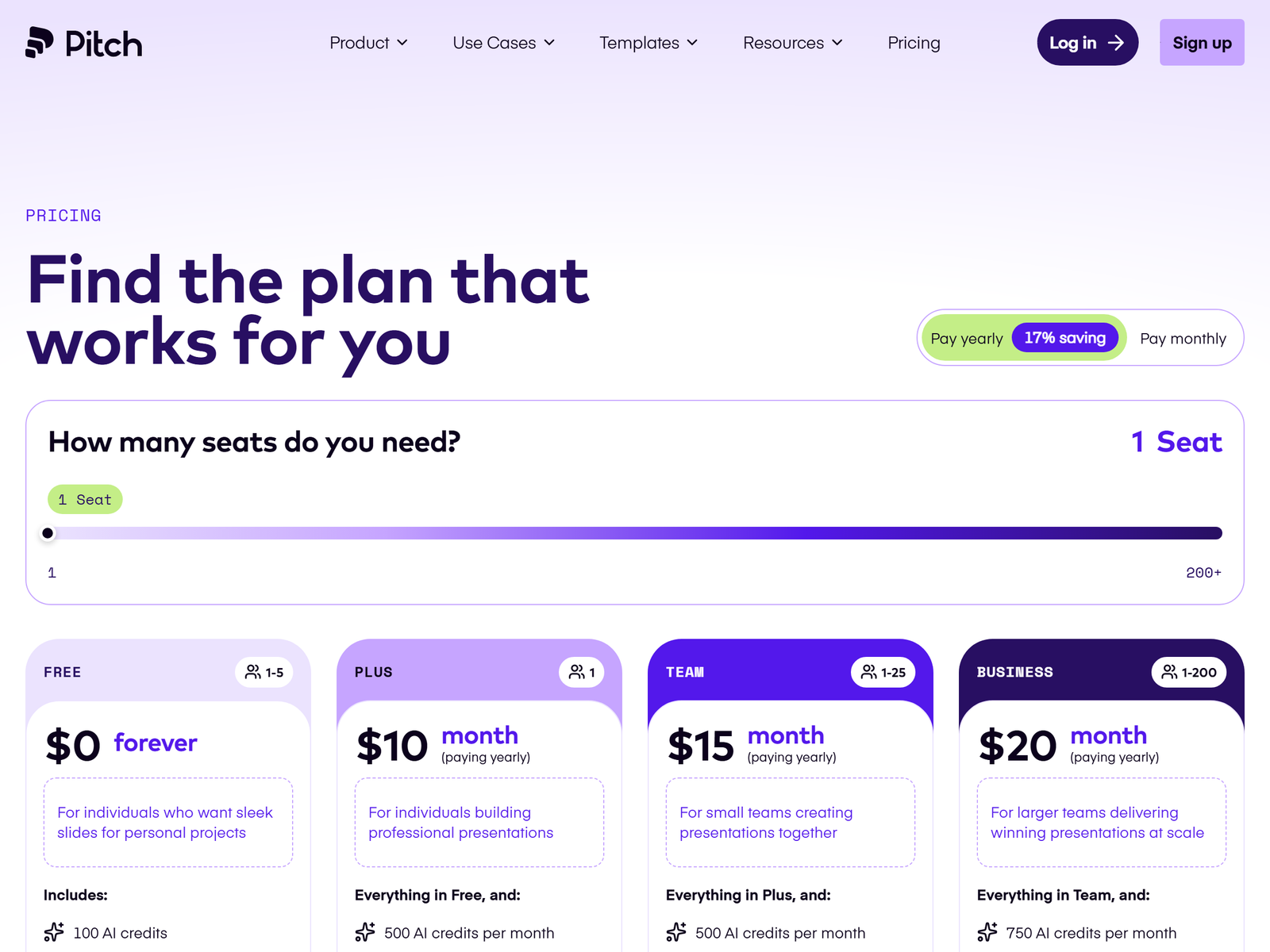
The Free plan gives unlimited presentations and 100 one-time AI credits, but exports carry Pitch branding. The Plus plan at about $13 a month, billed annually, removes branding, exports unbranded PPTX, and adds custom fonts and video. The Team plan at about $19 a seat per month adds 25 advanced links, two pitch rooms, and engagement analytics. See the Pitch site and the pricing page for current figures.
The service to sell: decks and deck-care
The obvious offer is a custom deck: an investor pitch, a sales presentation, or a conference talk. A founder will pay $300 to $600 for a sharp 12-slide raise deck built in a day. A second offer is a deck-care retainer: you maintain a sales team's slides, spin up new versions for each prospect, and report which decks close. Charge $300 to $1,500 a month for that.
A third angle is the analytics add-on. Because Pitch tracks engagement, you can sell we will build the deck and tell you which slides lose the room, which most agencies cannot. That reporting is the differentiator that justifies a premium.
Step-by-step: from sign-up to first paid client
Open the Free plan and build a sample deck, maybe a mock investor pitch, using the AI Agent from a one-paragraph brief. Export it, branded is fine for the portfolio, and record a one-minute screen walkthrough.
Target five early-stage founders or sales consultants whose decks look dated; LinkedIn and startup communities are full of them. Send the sample with a note: your deck does the job but the flow is weak, and here is the same story structured for a cold investor. Founders care about raising, so lead with that.
Close a pilot at $150 to $250 for one deck. Deliver in PPTX and a Pitch share link, then offer the monthly retainer once they see meetings booked. Use the analytics to prove which slides landed.
Pricing and margins
| Offer | Software cost | You charge | Gross margin |
|---|---|---|---|
| Single custom deck | $13/mo | $150 to $600 | about 90 percent |
| Sales deck-care retainer | $19/seat | $300 to $1,500 | about 95 percent |
| Analytics reporting add-on | $19/seat | $100 to $400 | about 95 percent |
Build four decks a month at $350 each and you earn $1,400 against $13 in software. Add two retainers and the analytics add-on and $2,000 a month is reachable part-time.
Client management and quality control
Set the expectation that the AI Agent drafts structure, not final copy; you still write the story and tighten the words. Use the brand library so every client deck stays on their fonts and colors. Deliver as both PPTX, for their records, and a Pitch link, for live engagement tracking. For presentation tools in general, our Monetization Guides compare options, and a narrative tool like Gamma covers a different visual style if a client prefers scrollytelling.
Pro tips and pitfalls
Reuse a tight template per client type so each deck starts 70 percent done; the AI Agent then fills the specifics. Lean on the engagement analytics as a renewal engine: your Q3 deck lost viewers at slide 7 is a reason to keep paying you.
The pitfall is shipping a generic AI deck that looks like everyone else's, and the catch is that founders can spot a template from a mile away, so customize the opening and the financials. The risk is scope creep on just one more slide, so price by deck, not by hour. Do not promise the AI writes your client's whole pitch; it drafts, you decide.
Who this is and isn't for
This fits people with a design eye or sales instinct who can turn a messy brief into a clear story. It suits freelancers, design students, and agency owners. It is not ideal if you dislike client calls or cannot meet a same-day turnaround, because deck requests are often urgent. To explore the tool, visit the Pitch page on aifreetool.site, and browse the full directory at aifreetool.site.
My Take: The Bottom Line
Best for: freelancers who want a visual, high-ticket service with near-zero software cost and a built-in renewal hook via analytics. The trade-off is that Pitch is a design tool, not a strategy tool; you must bring the narrative, or the deck is pretty but empty. I think the analytics add-on is the smartest upsell because it ties your fee to client outcomes. Skip it if you cannot stand last-minute can you fix this before my 9 a.m. meeting requests.
Frequently Asked Questions
Do I need design skills to start? A basic eye for layout helps, but Pitch's templates and AI Agent do the heavy lifting. You mainly arrange content and write clear headlines, which most people can learn in an afternoon.
How fast can I deliver a deck? A 10 to 12 slide deck from a brief takes a few hours including edits. Rush jobs in a day are normal, and that speed is exactly what founders pay for.
What should I charge a first client? Pilot at $150 to $250 for one deck, then move to a $300 to $800 monthly retainer for ongoing deck care. Add $100 to $400 for engagement analytics reporting.
Can clients edit the deck themselves? Yes. Share a Pitch link with commenter access, or hand over the unbranded PPTX. Most clients prefer you to own updates so the deck stays consistent.
Is the free plan enough to run the service? For a single portfolio piece, yes. To remove branding and export PPTX for clients you need Plus at $13 a month; for pitch rooms and analytics you need Team at $19 a seat.