Google Assistant Dies September 4 2026: How to Prepare
Category: Industry Trends
This analysis was written by the aifreetool Editorial Team — a group of full-time AI-industry researchers and writers who verify every claim against primary sources. Last updated August 27, 2026. We keep no affiliate relationship with the companies covered here.
Quick answer: Starting September 4, 2026, Google Assistant starts disappearing from every Android phone, tablet, Wear OS watch, Gemini-compatible headphone, and Android Auto head unit that projects from a mobile device. Gemini takes over. There is no rollback, no opt-out, and a handful of features — including Interpreter Mode and Family Bell — do not survive the migration. Here is what to audit before the cutoff.
September 4, 2026: The Date That Closes a Decade of Assistant
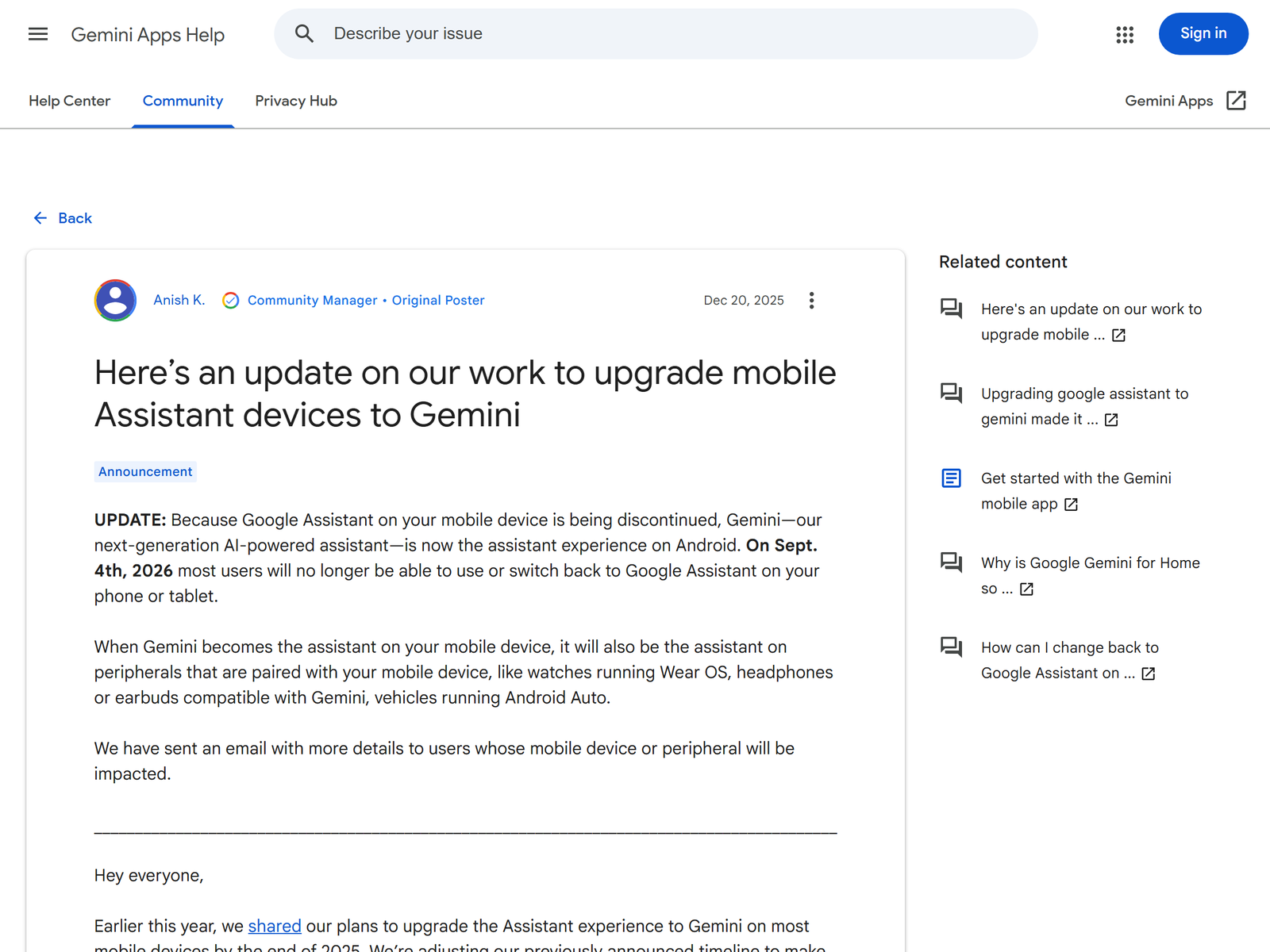
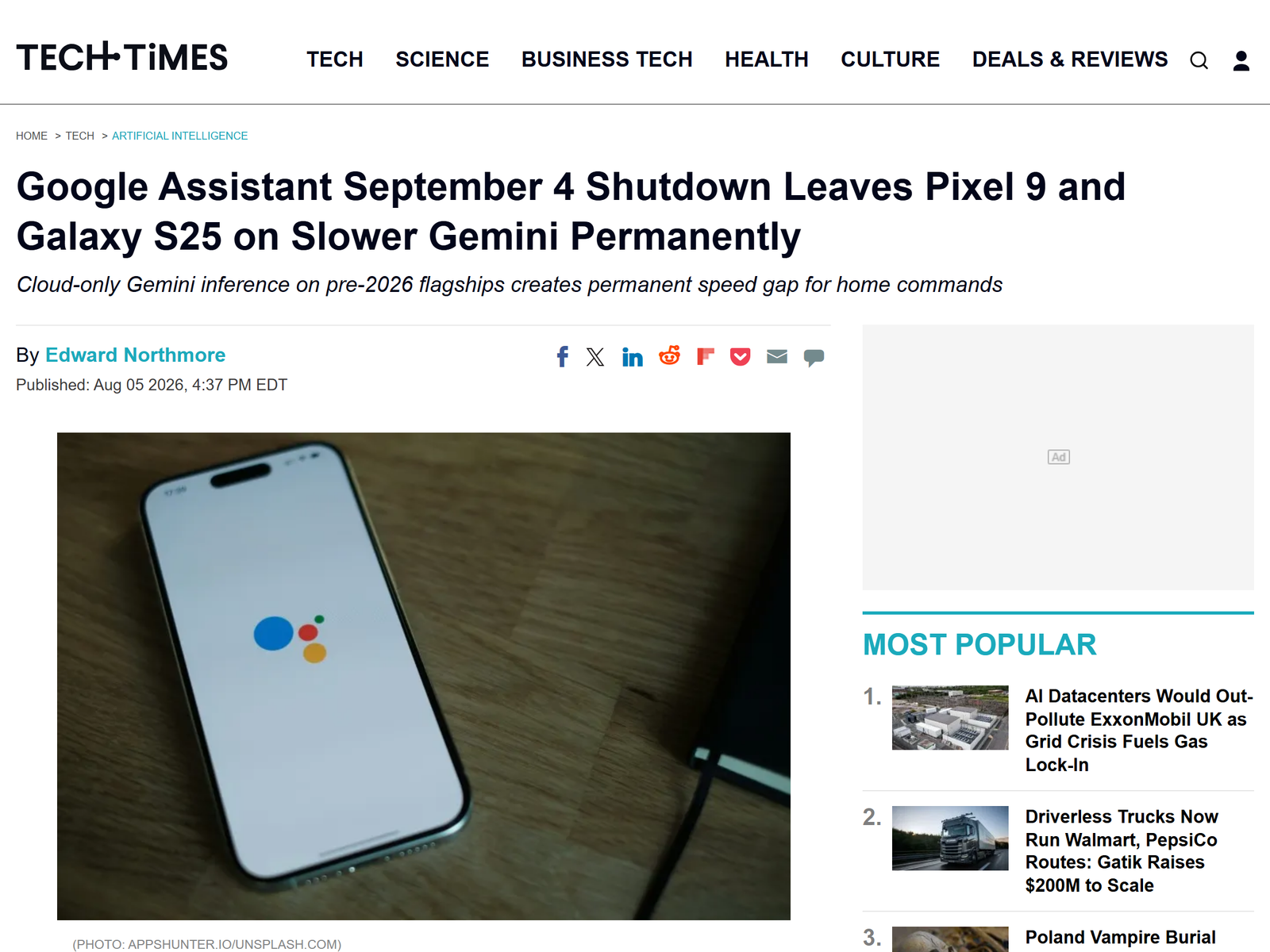
Google notified users via email on August 4, 2026, and Android Headlines corroborated the timeline that same week, that the legacy voice assistant is being discontinued on mobile devices. The shutdown begins September 4 and runs in waves over several weeks until every eligible device in the fleet has migrated. Once a phone or tablet flips over, the option to switch back to Google Assistant disappears from the settings menu entirely.
In scope: Android phones and tablets, Wear OS smartwatches, headphones and earbuds marked Gemini-compatible, and vehicles using Android Auto from a paired phone. Out of scope for this round: cars with Google built-in (Android Automotive OS), Google Home speakers, Google Nest smart displays, and Google TV devices. Google has not yet committed to a hard date for those product families.

Google first promised the switch by the end of 2025, then slipped into 2026, then announced a March 2026 internal target, and finally settled on September 4 after delaying again. Assistant launched in the mid-2010s as the successor to Google Now, ran in more than 90 countries, supported over 30 languages, and has historically had more than 500 million monthly active users through 2025. Gemini is closing in on 1 billion MAU across all surfaces as of mid-2026. The migration is less about new feature wins than about consolidating on a single assistant stack.
What Dies With Assistant
This is not a clean one-for-one replacement. Several established Assistant capabilities are gone already, with no Gemini equivalent confirmed at launch as of August 2026:
- Interpreter Mode — real-time two-way spoken translation across 26 languages. Removed from Assistant earlier in 2026 and not supported in Gemini as of July 2026.
- Family Bell announcements and Birthday Reminder notifications — no Gemini equivalent documented.
- Automated daily updates — the "tell me the weather every morning at 7 a.m." voice routines scheduled through 2025.
- Voice-based photo commands — favoriting, sharing, or querying when and where a photo was taken.
- A long tail of third-party Assistant actions active through 2025 that never made it into Gemini's app directory.
Some of these can be reassembled through Gemini Routines, but user reports on smart home forums as of August 2026 show mixed results, especially on multi-step flows that depend on follow-up questions.
Why Gemini Will Always Be Slower on Simple Commands
This is the part that bothers people with smart-home setups. The gap is not a bug waiting to be patched — it is an architecture difference. Google Assistant ran on deterministic semantic parsing refined through 2025: a fixed library of recognized intent-and-slot combinations matched against your spoken command. The response was near-instant because the system was looking up a match, not generating one. Gemini is an autoregressive large language model. It generates each word of its response sequentially, which adds 380 to 620 milliseconds of cloud latency before it even starts comparing how conversational AI tools handle speed.
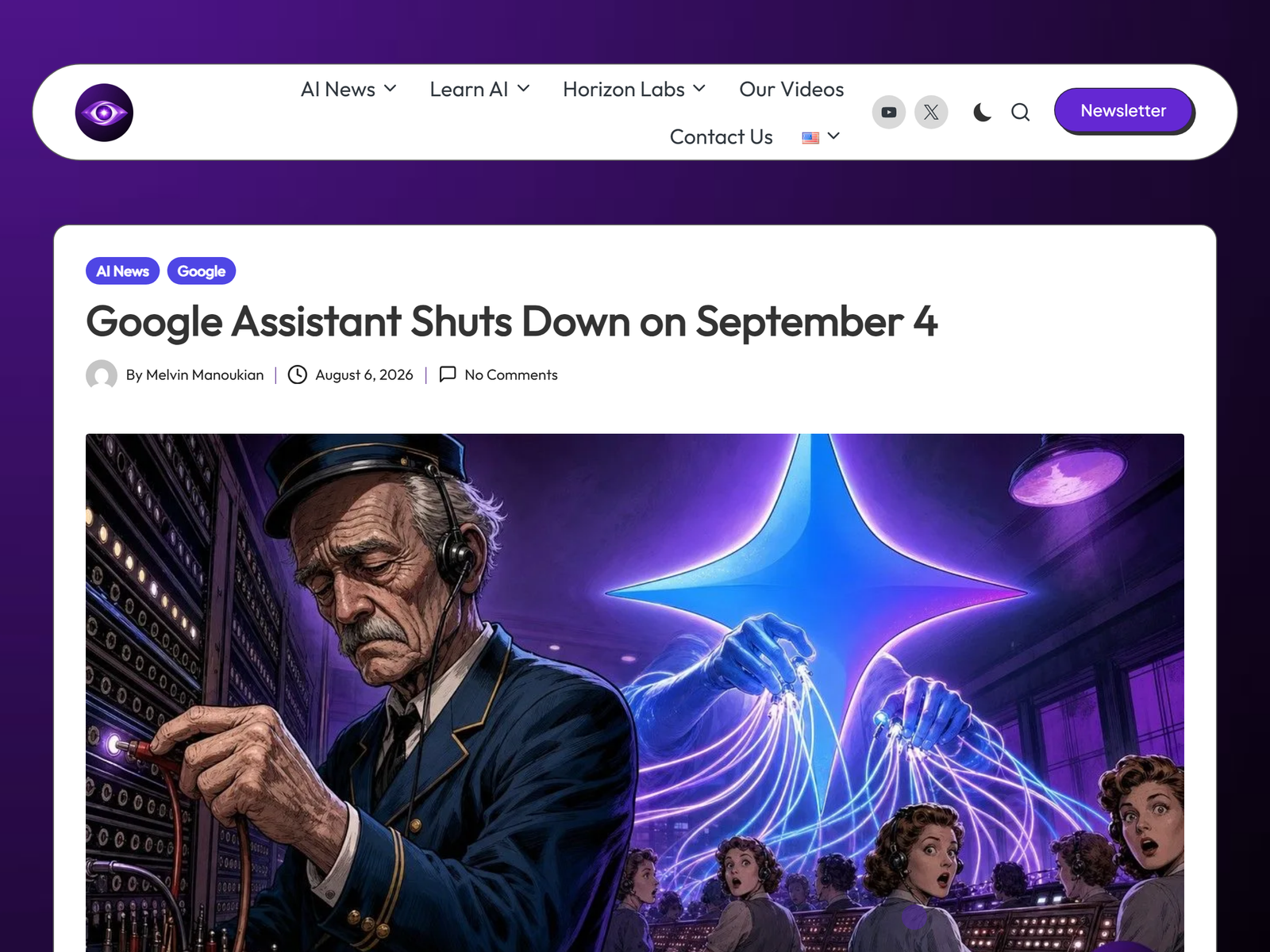
Independent comparisons from mid-2026 find Assistant running 5 to 10 times faster than Gemini for simple smart-home commands. Reddit threads and product reviews document 7 to 10 second waits for "turn off the kitchen lights" on the Gemini build as of August 2026. There is an on-device fallback — Gemini Nano v3 — but it only runs on 2026-generation flagship hardware with enough RAM. Older premium phones, including the Pixel 9 series and the Samsung Galaxy S25 line, do not qualify and will be stuck on cloud-inference latency for basic commands in 2026.
Who's Actually Hurt, and What Smart Home Owners Should Do
The painful case is anyone with a deeply wired Google Home setup active through 2025: morning briefings, location-based routines, "goodnight" scenes that hit a dozen devices at once. If your morning depends on a sub-second response from Assistant, those will stretch out by roughly half a second to several seconds after September 4, 2026. If you own pre-2026 flagships, the stretch is worse.
Siri's opportunity is real as of August 2026 — Apple is rebuilding Siri at the exact moment Google retires Assistant, and reliability on simple commands is the cleanest pitch in Cupertino's pocket. For connected-device makers that built speaker, headphone, and watch integrations against Assistant through 2025, the migration means re-validating those integrations on a probabilistic voice layer with no rollback option. Google has been dropping its consumer AI Plus plan to $4.99 in mid-2026 to seed the new tier, which suggests the company views the migrated fleet as a paid-tier conversion channel too.
FAQ
Q: When exactly does Google Assistant stop working?
A: The rollout begins September 4, 2026, and takes several weeks to reach every device. There is no scheduled cutover hour — your phone will update when it updates through late 2026.
Q: Can I keep Google Assistant on one device?
A: No. Once a phone, tablet, watch, or paired accessory migrates, the toggle to switch back to Assistant is removed from settings as of the migration date.
Q: Does Interpreter Mode have a Gemini replacement?
A: Not at launch in September 2026. As of July 2026, Gemini on phone did not support live spoken translation across the 26 languages Interpreter Mode covered.
Q: Will my Google Home speakers and Nest displays lose Assistant?
A: Not in the September 4, 2026 round. This shutdown covers only Android phones, tablets, Wear OS, headphones, and Android Auto via mobile projection.
Q: Will my smart home routines still work after migration?
A: Most will, but multi-step routines with follow-up questions may fail. Google recommends re-testing every Routine before September 4, 2026.
My Take / The Bottom Line
Google is not upgrading Assistant. It is retiring it. That distinction matters because the feature list above is what real users built their homes around through 2025, and most of it does not survive the move into late 2026. Gemini is better at open-ended conversation and multi-step reasoning. It is worse at the single-second command Assistant handled in its sleep.
If you live inside the Google Home ecosystem, treat the next ten days as a migration project, not a settings change. Audit every Routine. Confirm which voice shortcuts still work and which need replacement. For everyone else, the switch is roughly neutral on phones and a step backward on smart speakers — for now. The Assistant era is ending on a fixed date. What comes next depends on how badly Google needs that billion-user install base to convert to a paid AI tier.