OpenAI Disbands Robotics Team Review 2026: Why Astra Won
Category: Industry Trends
Excerpt:
OpenAI disbanded its standalone robotics team on November 13, 2026. Inside the Astra benchmark that triggered the reorg — and who wins if it works.
This analysis was written by the aifreetool Editorial Team — a group of full-time AI-industry researchers and writers who verify every claim against primary sources. Last updated November 17, 2026. We keep no affiliate relationship with the companies covered here.
TL;DR: OpenAI confirmed on November 13, 2026 that it has disbanded its standalone robotics team, folding researchers into core research under Chief Research Officer Mark Chen and moving applied robotics and hardware under President Greg Brockman. In this review of the reorg, the trigger is clear: GPT-6 Astra beat the best specialized robot model on a Nvidia simulation benchmark, 74.8% to 51.0%. This review explains why OpenAI disbands robotics as a standalone program. OpenAI insists it is not quitting robotics — the bet is that one general model becomes every robot's brain.
The most revealing detail in OpenAI's robotics shake-up was not the org chart. It was an empty booth. The company had registered for the Conference on Robot Learning (CoRL) in Austin this week and reserved booth 208, listed in the conference app and floor map. When a Fortune reporter visited on Friday, the space was vacant and the OpenAI logo was gone. Hours earlier, OpenAI had confirmed it dissolved its dedicated robotics team. The physical and organizational absences happened in the same 48 hours.
What Actually Changed Inside OpenAI
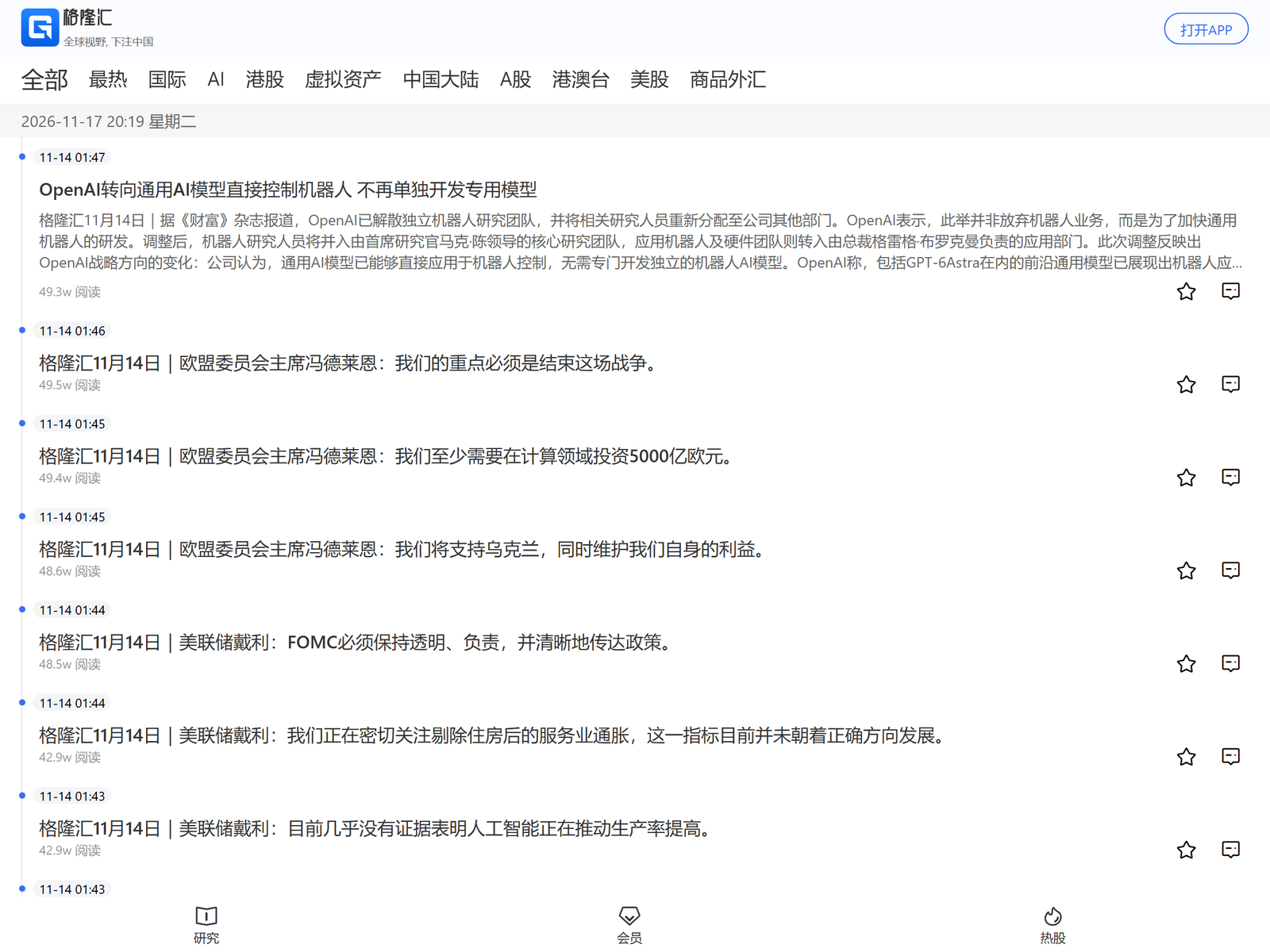
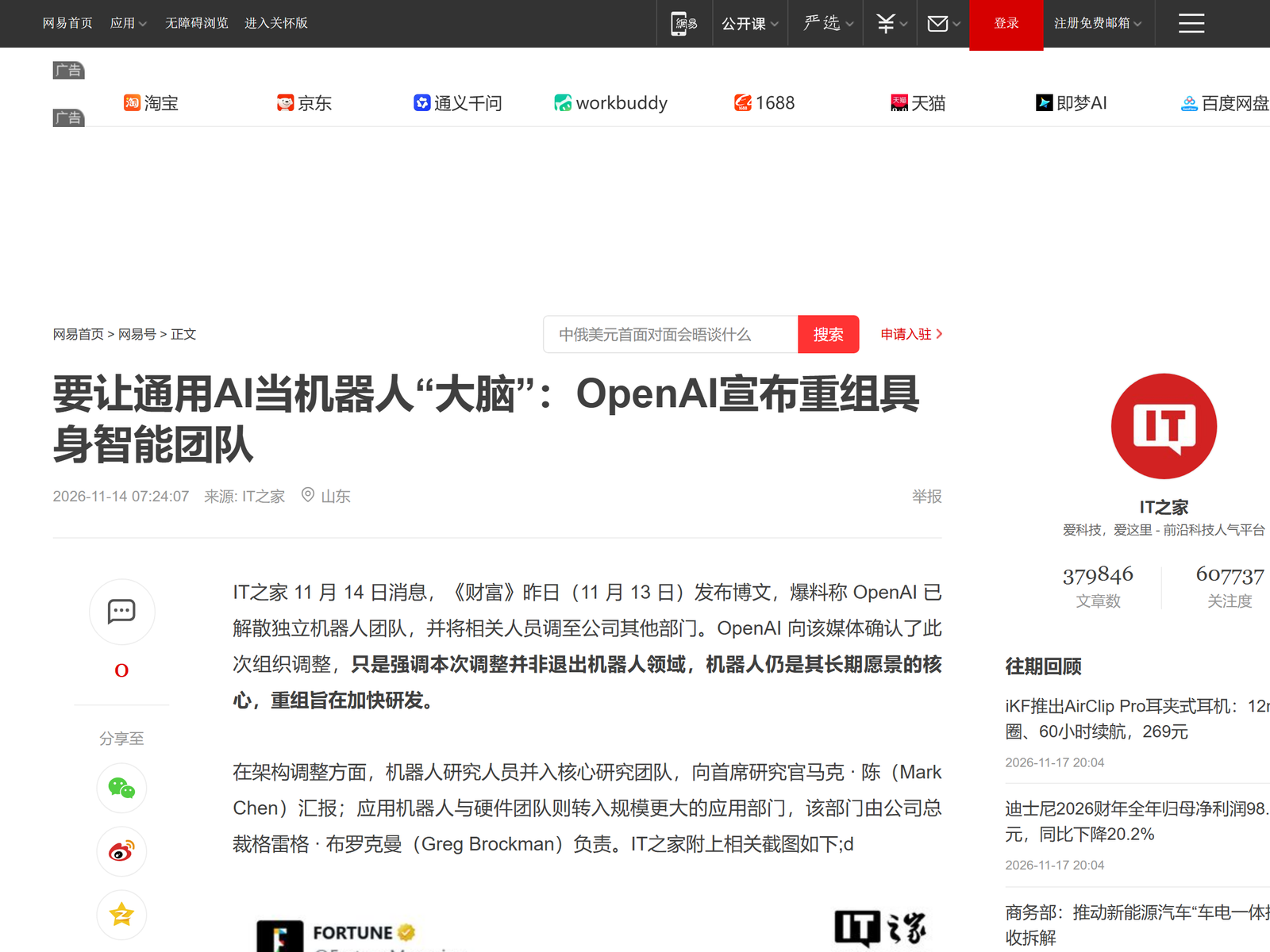
Per Fortune's November 13 report, which OpenAI confirmed, the robotics research group merges into the core research team reporting to Mark Chen, while the applied robotics and hardware teams move into the larger applications organization under Greg Brockman. OpenAI's framing: the move accelerates general robotics development rather than abandoning it, but robotics is no longer a separate kingdom with its own model pipeline.
The technical rationale carries more weight than the usual corporate softening. OpenAI said researchers originally believed the best path to robotics ran through Sora-style video models, whose training forces an implicit grasp of physical dynamics. That plan has been scrapped. General frontier models — GPT-6 Astra among them — now demonstrate the ability to control robots directly, and OpenAI decided that insight justifies dissolving the dedicated team entirely.
The Astra Benchmark That Triggered the Reorg
The evidence OpenAI cited comes from Nvidia research: an agent powered by GPT-6 Astra, given camera images, robot state and a control interface, scored 74.8% on a simulated manipulation benchmark — above the 51.0% of the leaderboard's previous best specialized model. That is a 24-point gap over purpose-built systems, without robotics-specific training data.
The caveats deserve equal billing: the result comes from digital simulation, not a real robot in a kitchen or factory. Carnegie Mellon robotics professor Guanya Shi, who had heard about the reorg before it broke, argues the broader signal is real: OpenAI no longer treats robotics as a special problem, but as a downstream application of general intelligence — the way coding, legal and finance tools ride on general models. Modern spatial reasoning lets these models cope when a bottle moves or lighting changes, and reason over which step of a task failed. Whether the sim-to-real gap closes as cleanly is the industry's oldest unanswered robotics question, and 74.8% in simulation does not answer it.
OpenAI Has Dissolved This Team Before — and Regretted It Slowly
The history rhymes uncomfortably. Six years ago, OpenAI killed its first robotics team; co-founder Wojciech Zaremba said robot training data was too scarce and advancing AGI through other routes would be more efficient. The company redirected everything into giant language models and shipped ChatGPT two years later. In 2024 it rebuilt a robotics team and partnered with humanoid startup Figure — a deal Figure ended in February 2025 to build its own robot AI. OpenAI has since said it is developing its own humanoid robot, with Sam Altman targeting a first public demonstration in 2027.
The cost story runs underneath the technical one. Altman has spent the past year demanding the company drop "sidequests"; Sora has been deprioritized to reallocate compute toward commercially central products. The company reportedly lost $10.9 billion on operations last quarter while preparing a new funding round and a potential IPO as early as 2027. A parallel robotics model-development track, with its own data operations, evaluation and compute allocation, is exactly the overhead a company at those burn levels questions. The reorg is a research bet, but it is also a budget line.
Who Wins and Loses If General Models Run Robots
MIT professor and Walden Robotics co-founder Russ Tedrake pushes back on the generalist narrative: robotics startups hold an advantage large labs cannot easily replicate, because their machines already operate in real factories and accumulate deployment data from actual workplaces. Stronger foundation models, in his view, make that data more valuable, since robots learn from it faster. Shi counters with a practical constraint: general models run slowly, usually in the cloud, so robots need stable connections — keeping small on-device specialized models relevant for fast local reactions. Edge-model plays like Liquid AI's open-weight edge decision models and world-model approaches such as Runway's GWM Worlds 2 live on that side of the debate.
| Generalist route (OpenAI's bet) | Specialist route (startup bet) | |
|---|---|---|
| Core claim | One frontier model controls any robot as a downstream task | Robotics needs dedicated models trained on embodiment data |
| Evidence so far | Astra: 74.8% on Nvidia sim benchmark vs 51.0% specialized | Real-world deployment data and task-specific reliability |
| Weakness | Sim-to-real gap, latency, cloud dependency | Data scarcity, per-task engineering cost |
| Backers | OpenAI, frontier labs | Figure, Tesla Optimus, 1X, Walden Robotics |
Pete Florence, co-founder of robot startup Generalist, offers the most honest position: several viable starting points exist for machine intelligence, and nobody knows which model class dominates robotics. We track moves like this one in our AI industry trends coverage.
My Take / The Bottom Line
My take: read this as a capital-allocation decision wearing a research-paper costume. The 74.8% simulation number is doing heavy narrative work, but simulation-to-reality transfer has humbled stronger claims, and a company that lost $10.9 billion in a quarter has every financial reason to prefer "the general model handles it" over "we fund a second model org." The winners are frontier labs, validated for absorbing every vertical, and data-rich robot operators like Figure and 1X, whose real-world fleets become scarcer assets as foundation models improve. The losers are venture-backed startups building robot foundation models for sale to manufacturers — their differentiation just got repriced by OpenAI's org chart. Bottom line: watch two things. First, whether OpenAI's 2027 humanoid demo runs on a general model with no robotics-specific training. Second, whether Tedrake's data thesis shows up in acquisition premiums for robotics companies with deployed fleets. The empty booth at CoRL was the tell: OpenAI did not leave robotics — it left the idea that robotics deserves its own budget.
Frequently Asked Questions
Q: Why did OpenAI disband its robotics team?
OpenAI told Fortune that general frontier models including GPT-6 Astra can now control robots directly, removing the need for a dedicated robotics model-development team. Researchers moved into core research under Mark Chen; applied robotics and hardware moved under Greg Brockman. The company says the goal is accelerating general robotics research, not exiting the field.
Q: Did OpenAI quit robotics?
No. OpenAI says robotics remains core to its long-term vision and is still developing its own humanoid robot, with Sam Altman targeting a first public demonstration in 2027. The team was reorganized rather than terminated, and the reorg specifically ended the Sora-based research route.
Q: What is GPT-6 Astra's robot benchmark result?
In Nvidia research, an Astra-powered agent scored 74.8% success on a simulated robot manipulation benchmark, versus 51.0% for the previously best specialized robot model. The result comes from simulation, not real-world hardware, which critics emphasize.
Q: What does this mean for robotics startups?
Mixed. MIT's Russ Tedrake argues startups with real-world deployment data gain value as foundation models improve, since robots learn faster from that data. But startups selling generic robot foundation models face a harder pitch now that OpenAI claims general models beat specialized ones on a leading benchmark.