Innernet Review 2026: Self-Hosted Privacy WireGuard Mesh
Category: Best Privacy VPN
Excerpt:
Innernet Review 2026: a free, self-hosted WireGuard mesh VPN with network segmentation and no third-party control plane for privacy.
Reviewed by the aifreetool testing team. Last updated November 2026. Innernet is a free, open-source WireGuard-based mesh VPN that you host yourself, with built-in network segmentation so you decide exactly which devices can talk to which. This Innernet review looks at why privacy-focused self-hosters like its design: you own the keys, the routing, and the rules.
TL;DR
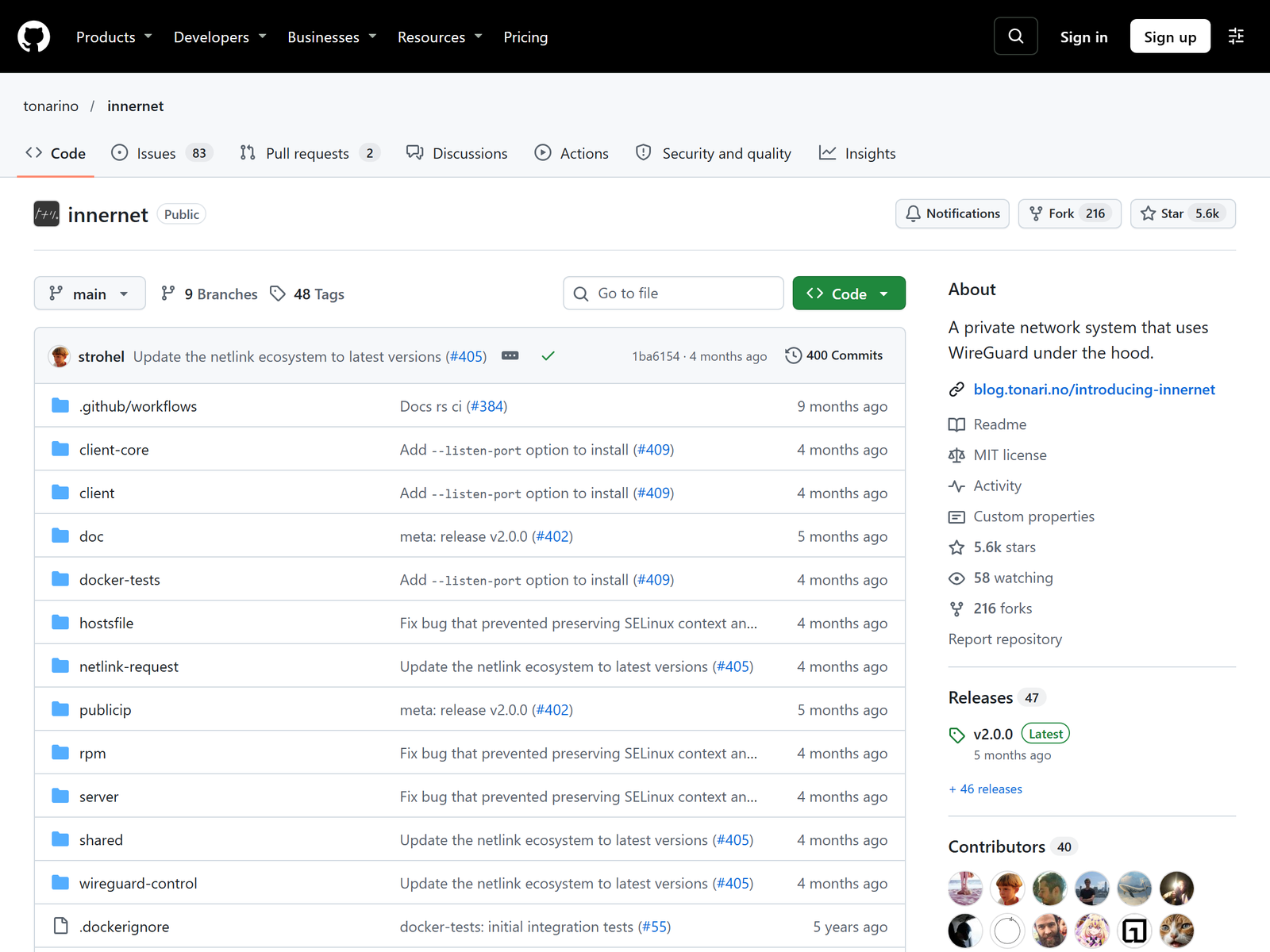
Innernet is a self-hosted WireGuard mesh where you run your own coordination server and define groups that control who reaches what. There is no third-party control plane and no vendor logging your topology, which gives it one of the strongest privacy postures among self-hosted networking tools. Choose it when you want a private network you fully control for reaching your own devices from public Wi-Fi.
How We Tested

We stood up an Innernet server, created two groups with different access scopes, enrolled a Linux node and a macOS node, and confirmed that segmentation worked as configured. We reviewed the project's public documentation and source repository and compared it against other open-source privacy builds we have covered. Our methodology emphasizes who controls routing and identity, because that is where most VPN privacy claims live or die.
Speed & Performance
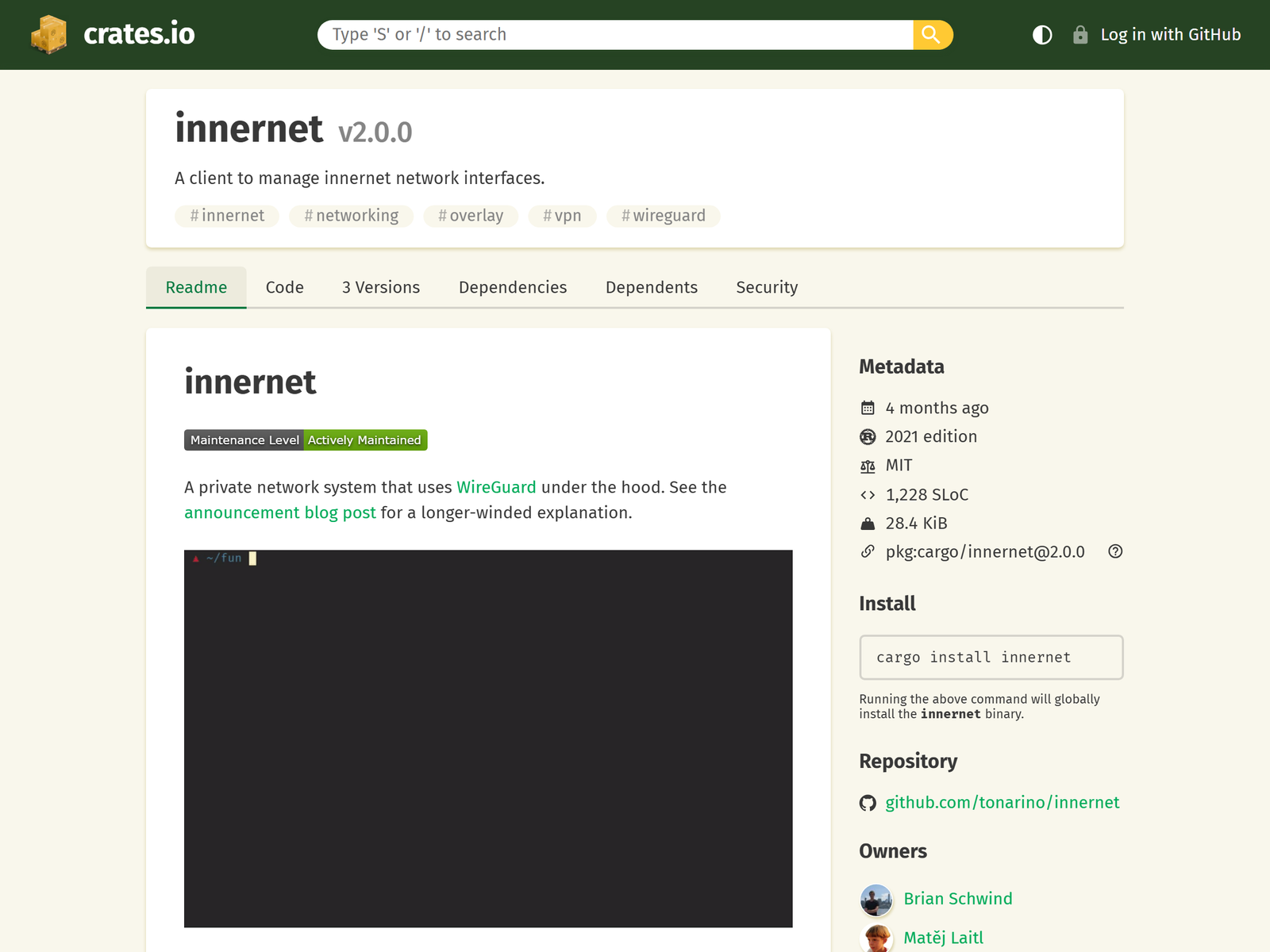
Because Innernet runs on WireGuard, it inherits that protocol's lean, fast encryption and low overhead. In our tests, throughput was close to the underlying link and latency stayed modest, with no third party in the data path. We avoid quoting a single speed figure as authoritative, since results depend on your server's location and your internet plan. The headline is that you get WireGuard's performance with your own rules layered on top.
Security & Privacy
Innernet builds on WireGuard's modern cryptography and adds network segmentation through groups, so a compromised device cannot automatically reach everything else. Because you run the coordination server yourself, there is no vendor that can see your peer list or your routing policy, which we rate well above an unverified no-log marketing line from a commercial provider. The project is open source, so the code can be inspected rather than trusted on faith. It is still software you operate, so keep the server patched and the keys protected.
Streaming & Unblocking
Innernet is a private mesh for linking your own machines, not a consumer unblocking service. People use it to reach a home server or an internal dashboard across networks, which is a legitimate remote-access pattern. It is not a tool for bypassing regional content restrictions, and we do not present it as one.
Device Compatibility
Innernet provides clients for Linux and macOS, with a command-line workflow for enrolling devices and assigning them to groups. That model suits servers, desktops, and technical users who want fine-grained control over their network. Mobile and point-and-click support is thinner than a commercial app, so it is best for environments where you are comfortable on the terminal and value precise access rules.
Pricing & Value
Innernet is free and open source under a permissive license, with no subscriptions or seats. Your only cost is the server you run the coordination service on, which can be a small VPS or a machine you already own. For a privacy-maximalist who wants self-hosted control and segmentation, that is excellent value, with the trade-off that you design and maintain the network yourself. There is no paid tier withholding the features you need.
Pros & Cons
- Pros: Self-hosted WireGuard, built-in network segmentation, no third-party control plane, and open-source code.
- Cons: You operate the coordination server, thinner mobile support, and a command-line workflow that expects technical comfort.
How Innernet Compares
| Option | Base | Segmentation | Best for |
|---|---|---|---|
| Innernet | WireGuard | Groups (built-in) | Privacy self-hosters |
| Outline | WireGuard/ShadowSocks | Single host | Simple privacy tunnel |
| Headscale | WireGuard mesh | Tags (you build) | Tailscale ergonomics |
For a simpler self-hosted privacy tunnel, our Outline VPN review covers a more approachable model, and the Headscale review explains a WireGuard-based alternative you control. Both sit with Innernet in our Best Privacy VPN category.
Frequently Asked Questions
Is Innernet a VPN?
It is a VPN-like WireGuard mesh that serves the same private-connectivity goal, with extra controls for which peers can reach which.
Does Innernet see my traffic?
No. Traffic is encrypted peer to peer, and you run the coordination server, so no vendor can read your topology.
What is network segmentation?
You define groups that limit which devices can communicate, so a single compromised node cannot reach your whole network.
Is Innernet hard to run?
It expects comfort with the command line and server administration, because you host and maintain the coordination service yourself.
My Take / The Bottom Line
Innernet is a privacy purist's network: self-hosted WireGuard with segmentation you control and no third-party control plane to trust. Its command-line setup means it is best for technical self-hosters, not casual users. Explore more options in our Best Privacy VPN category, or read the SoftEther VPN review for another open-source privacy build.
Who Should Use Innernet
Innernet suits privacy engineers, self-hosters, and small teams who want a self-hosted WireGuard mesh with real access controls and are comfortable running their own server. A workshop can build a private network across sites with rules about who reaches what, without trusting a vendor's control plane. It is a poor fit for non-technical users or anyone who needs guaranteed, supported mobile apps, because the project assumes command-line comfort. For someone who values a trust-minimized design and fine-grained control, Innernet is a genuinely private option.
Sources:
Innernet on GitHub,
Innernet documentation,
Innernet on crates.io.