How to Make Money Translating With DeepL in 2026
Category: Monetization Guide
Reviewed by the aifreetool.site editorial team. This is an independent guide; we receive no commission if you sign up for DeepL.
You can make money translating with DeepL in 2026 by offering machine-translation post-editing and localization to small businesses, e-commerce sellers, and agencies that need accurate multilingual content but cannot afford a full translation agency. DeepL's neural engine translates text and documents across more than 100 languages with higher accuracy than free tools, keeps your client data out of model training on paid plans, and preserves document layout, so you can deliver clean, on-brand translations fast. Charge $0.04 to $0.10 per word or $200 to $1,500 per project, while your software runs about $9 to $29 a month.
Quick answer: In 2026, the practical way to earn with DeepL is to sell post-edited translation and website or product-localization to businesses expanding into new markets. The Individual plan at $8.74 a month covers 300,000 characters, leaving you a margin above 90 percent on a $500 to $2,000 monthly side income.
What DeepL does and the plan you'd use
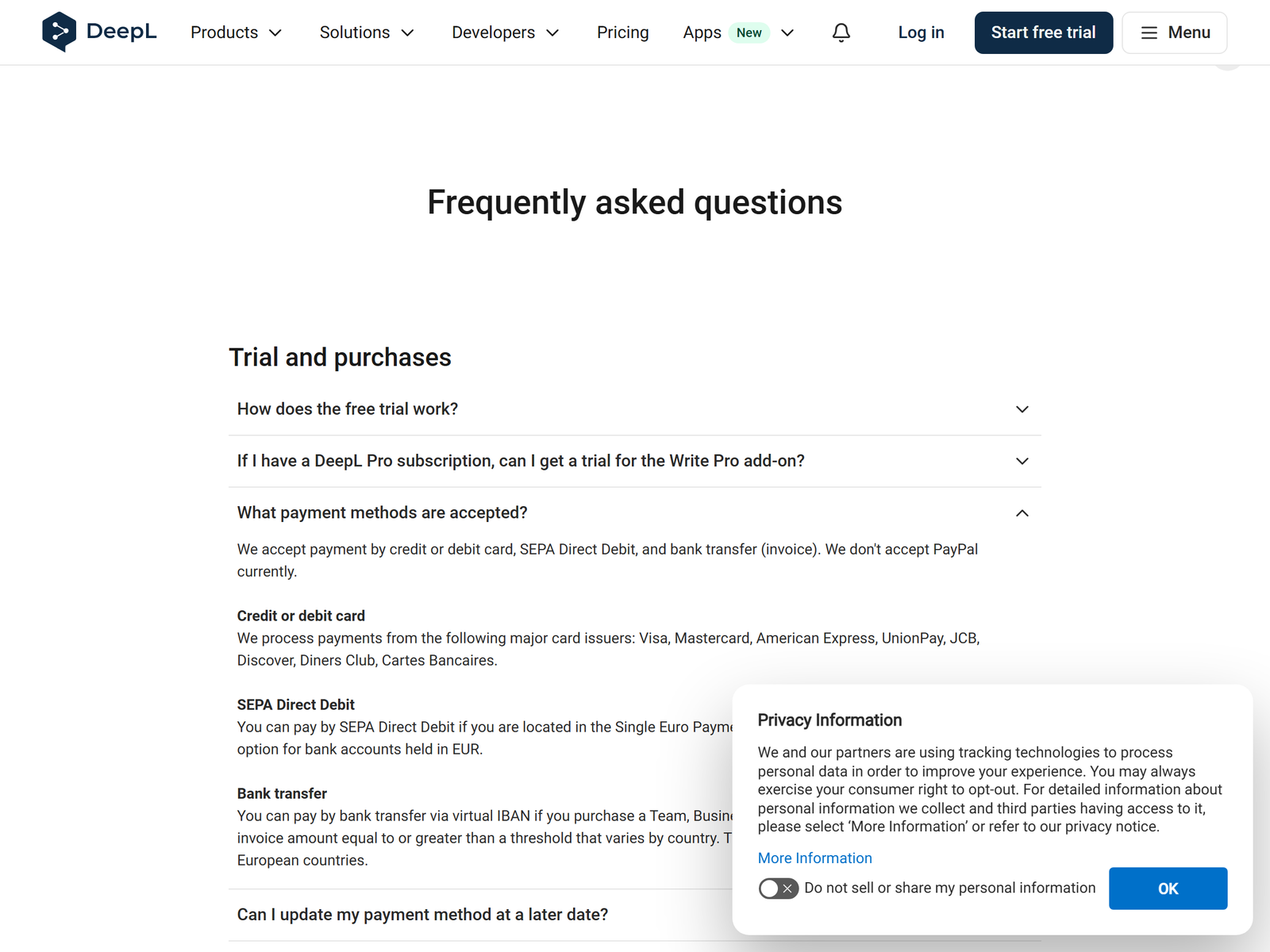
DeepL is a professional translation platform. You paste text or drop in a document in Word, PowerPoint, or PDF, pick the target language, and it returns a translation that reads naturally, not word-for-word. Paid plans add Glossaries and Style Rules so a client's brand terms stay consistent, document translation that preserves the original formatting, and a CAT-tool-friendly workflow. DeepL states more than 200,000 businesses use the platform, supports more than 100 languages, and holds ISO 27001, SOC 2, and GDPR certifications, with a no-data-training guarantee on paid tiers, which is exactly what a client with confidential files wants to hear.
The Individual plan at $8.74 per month, billed annually, gives 300,000 characters a month, three file translations, one glossary, and the no-data-training promise. The Team plan at $28.74 per user per month adds 1,000,000 characters per user, bulk file translation, five glossaries, shared style rules, and SSO. The Business plan at $57.49 per user per month removes the character limit and adds unlimited glossaries and translation memory. See the DeepL Pro page and the DeepL Write page for current figures. The free tier is fine for learning but caps volume, so bill a paid plan into any client work.
The service to sell: post-edited translation and localization
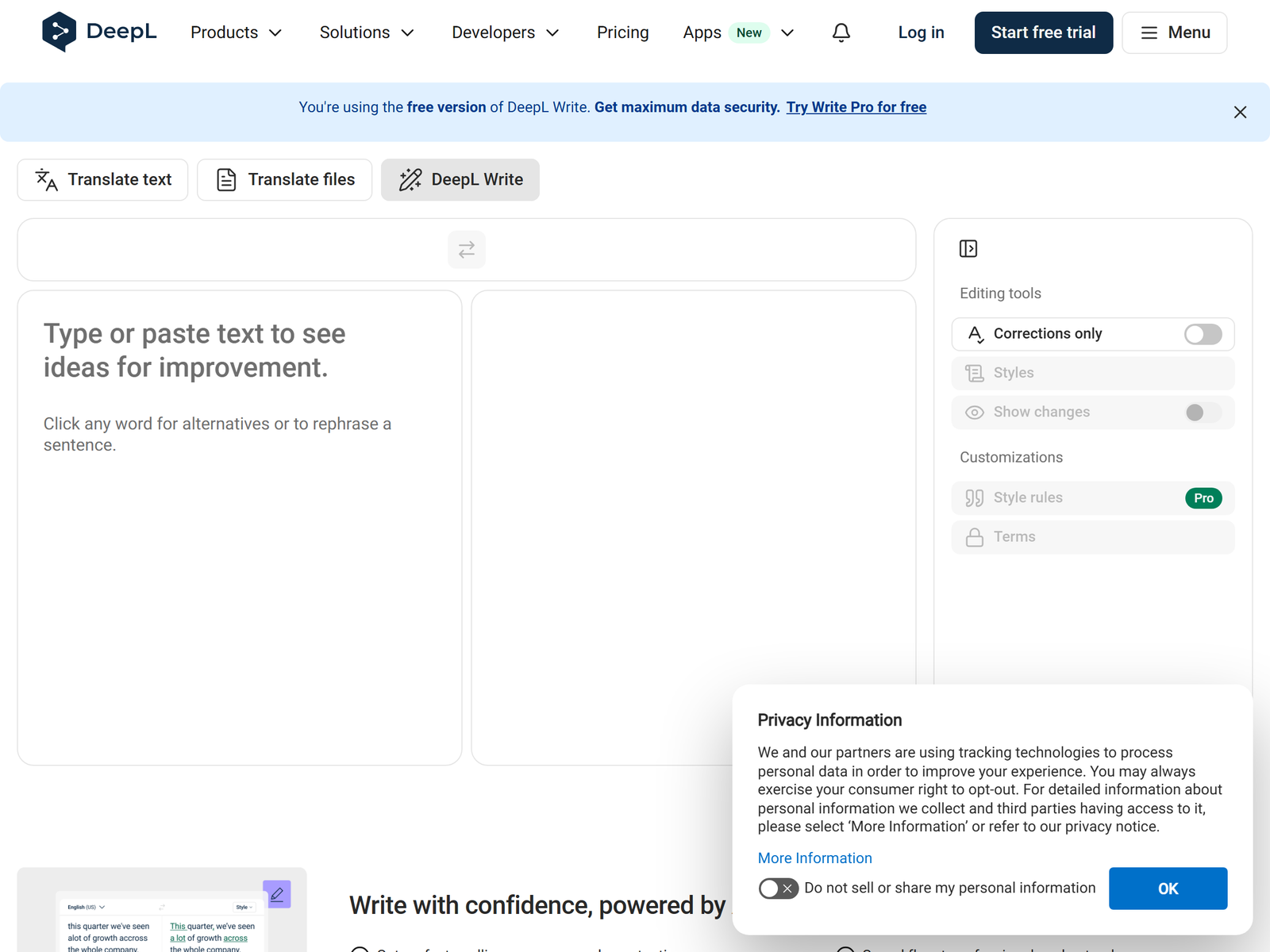
The strongest offer is website and product-localization for a cross-border seller: you take their product descriptions or help pages and return them in two or three target languages, keeping tone and brand terms consistent through a glossary. A seller on Amazon or Etsy expanding into Germany or Japan will pay $200 to $800 for a clean batch because a sloppy machine translation kills conversion. A second offer is document translation for legal, medical, or business files where accuracy matters, with you as the human post-editor who catches the one wrong term.
A third angle is an ongoing localization retainer: you keep a client's blog, emails, and support articles translated as they publish, at $300 to $1,500 a month. Agencies and course creators are an easy niche too: subtitle files and lesson scripts translated for an international audience.
Step-by-step: from sign-up to first paid client
Start the Individual plan and translate a sample, maybe an English product page into Spanish and German, then post-edit it for natural phrasing and build a small glossary of the brand's terms. That before-and-after is your pitch.
Find five cross-border sellers or small agencies whose sites are single-language; a scroll through marketplaces and agency rosters shows who needs a second market. Message them with the sample: your page is strong, but buyers in this market can't read it, and here is the same page localized. Sellers hate lost conversions, so a fast fix lands well.
Close a pilot at $0.04 to $0.06 per word for a small batch of 1,000 to 3,000 words. Deliver the translated files plus the glossary, show the improvement, then offer the monthly retainer once they trust the turnaround. Keep batches under your monthly character cap, or bill the Team cost into any high-volume client.
Pricing and margins
| Offer | Software cost | You charge | Monthly at steady volume |
|---|---|---|---|
| Per-word product localization | $8.74/mo Individual | $0.04 to $0.10/word | $400 to $800, 10k words |
| Document translation project | $8.74/mo | $200 to $800 | $200 to $800 |
| Monthly localization retainer | $28.74/mo Team | $300 to $1,500 | $300 to $1,500 |
Translate 10,000 words a month at $0.06 and you earn $600 against $9 in software. Add a couple of projects and a retainer and $800 to $2,000 a month is realistic part-time.
Client management and quality control
Set the expectation that DeepL provides the draft and you provide the judgment, so for regulated or certified documents you point the client to a human sworn translator. Always build a glossary of the client's terms and reuse it, because consistency is what separates a pro from a paste-and-ship job. Use the Style Rules on paid plans so tone stays on brand. For image and comic localization in general, our Monetization Guides compare options, and an image tool like ImageTranslate covers text that lives inside pictures rather than documents.
Pro tips and pitfalls
Reuse a tight glossary per client so every batch starts consistent; DeepL then applies the brand terms automatically. Use the document translator for Word and PDF files so layout survives, because reformatting a broken file is where margin disappears. Keep each free-tier file under the monthly cap, and bill the Individual or Team cost into any client with deep volume.
The pitfall is trusting the engine on a nuanced legal phrase, and the catch is that one wrong term looks unprofessional, so always post-edit. The risk is hitting the monthly character cap during a busy week, so scale the plan with the client. Do not claim certified legal translation, because this is machine output plus your edit, so point clients needing contracts to a human translator.
Who this is and isn't for
This suits bilingual or detail-oriented freelancers who write clean English and enjoy precise language work. It is great for translators, virtual assistants, and students already working with international sellers. It is not ideal if you plan to translate long literary prose, where a human literary translator fits better. To try it, open the DeepL page on aifreetool.site, and browse the full directory at aifreetool.site.
My Take: The Bottom Line
Best for: bilingual freelancers who want a near-zero-barrier, high-margin service with a built-in upsell through ongoing localization retainers. The trade-off is that DeepL is a translation engine, not a strategy tool; you must bring the client and the quality control, or the output is just a rough draft. I think the monthly retainer beats one-off projects because it smooths income and the glossary gives you a reason to stay. Skip it if you cannot post-edit your own output, because raw machine text is not a deliverable.
Frequently Asked Questions
Can I really start with low cost? Yes. The Individual plan at $8.74 a month, billed annually, covers 300,000 characters, enough for several small clients. Upgrade to Team at $28.74 per user only when a client needs volume or shared glossaries.
How many words can one plan handle? Individual covers about 300,000 characters a month, roughly 45,000 to 60,000 words; Team covers 1,000,000 characters per user. Each project draws from that monthly pool.
What do I charge a new client? Start at $0.04 to $0.06 per word for a small batch, then offer a $300 to $1,500 monthly retainer once they see the lift in a second market. Document projects command $200 to $800 each.
Is the output safe for confidential client files? Paid DeepL plans guarantee no data training and meet ISO 27001, SOC 2, and GDPR. The free tier does not carry that guarantee, so bill a paid plan into any confidential work.
Do I need to be a certified translator? No, but you should be fluent in the target language to post-edit well. For certified legal or medical translation, refer the client to a sworn human translator and keep the work to business and marketing content.