DeepSeek V4-Flash Price Cut 2026 Review: 60% Drop Explained
Category: Tech Deep Dives
This analysis was written by the aifreetool Editorial Team — full-time AI-industry researchers and writers who verify every claim against primary sources. Last updated September 10, 2026. We keep no affiliate relationship with the companies covered here.
Quick answer: This review explained DeepSeek's September 10 price cut in plain terms: DeepSeek slashed V4-Flash API prices by up to 60%, with the biggest drop on cached inputs. Output prices only fell 11%, so the cut favors Retrieval-Augmented Generation and multi-turn agent workflows more than pure text generation. It is a tactical correction after the August V4-Pro hike that some developers called an 11-fold jump.
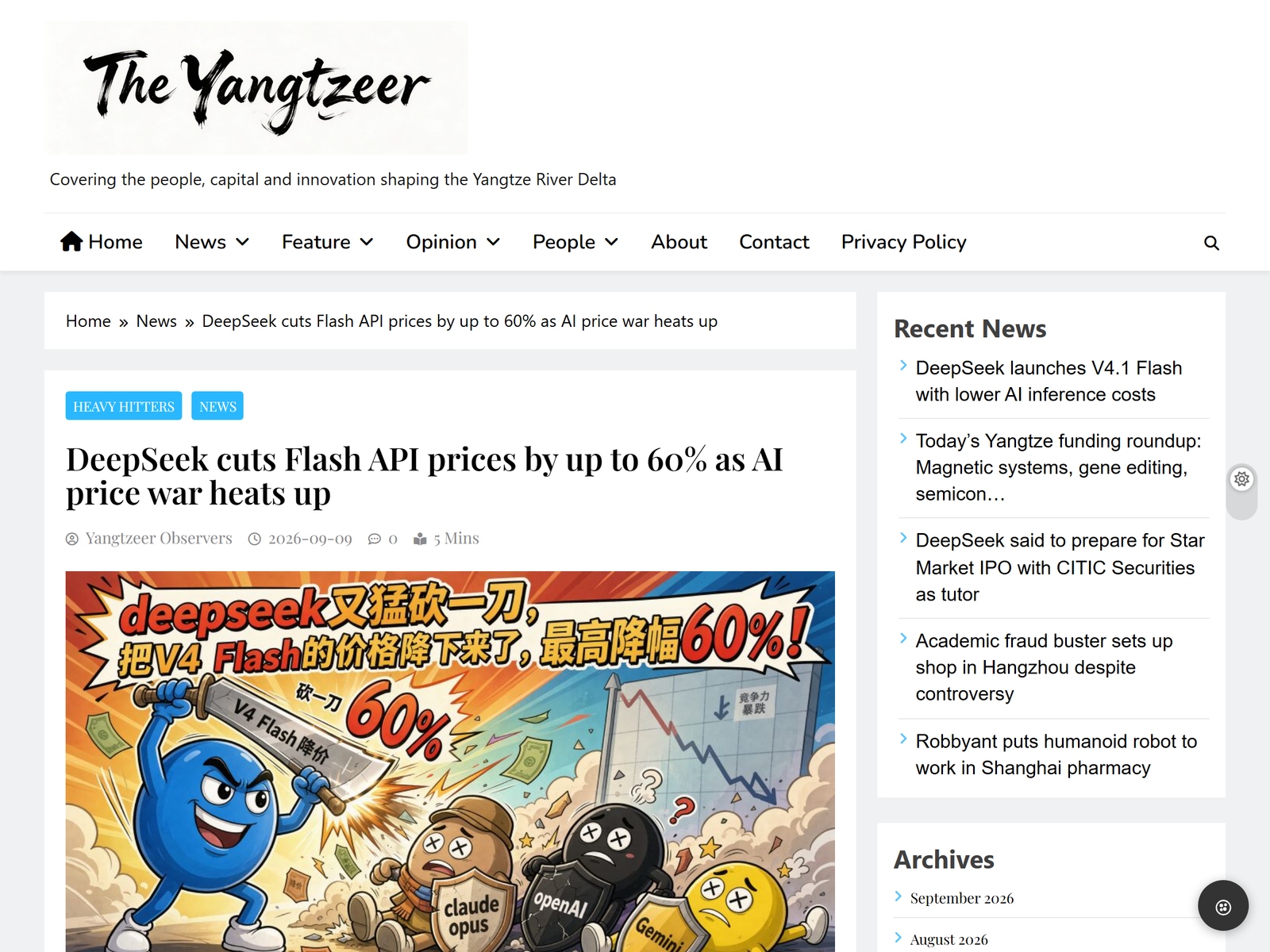
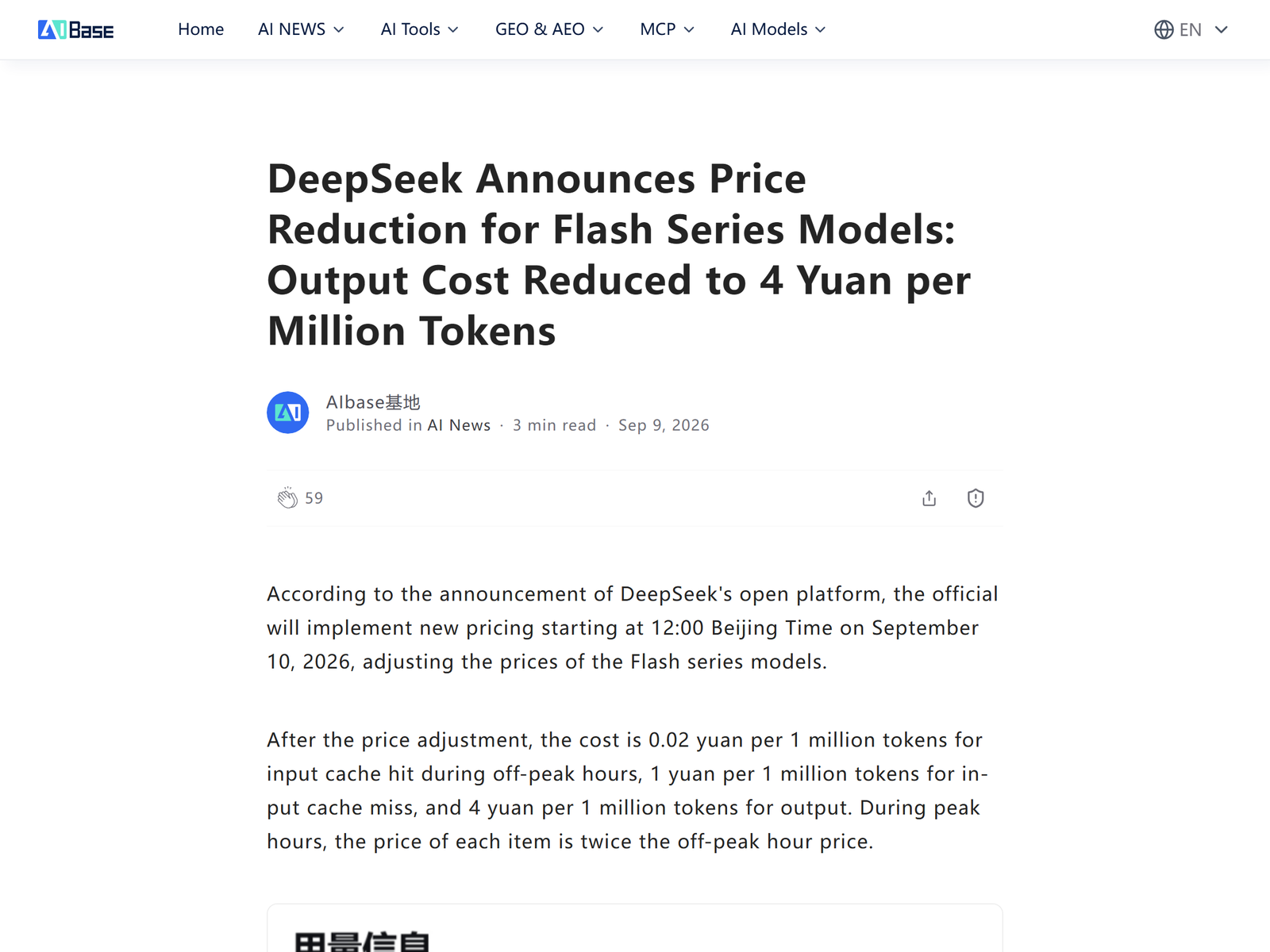
DeepSeek, the Hangzhou-based AI lab whose models have repeatedly reset global price benchmarks, announced the price change on September 9. The new rates took effect at 12:00 Beijing time on September 10 and apply to both deepseek-v4-flash and deepseek-v4-flash-vision-exp. The timing matters: it comes less than four weeks after DeepSeek raised V4-Pro rates by as much as 1,100%, triggering a backlash from builders who saw the platform's cost-efficiency reputation slip. It also lands in the same week OpenAI shipped Images 2.5 and Meta began rolling out its personal Muse agent, making the cut feel like a deliberate move to keep developer mindshare during a crowded launch window.
What Changed on September 10
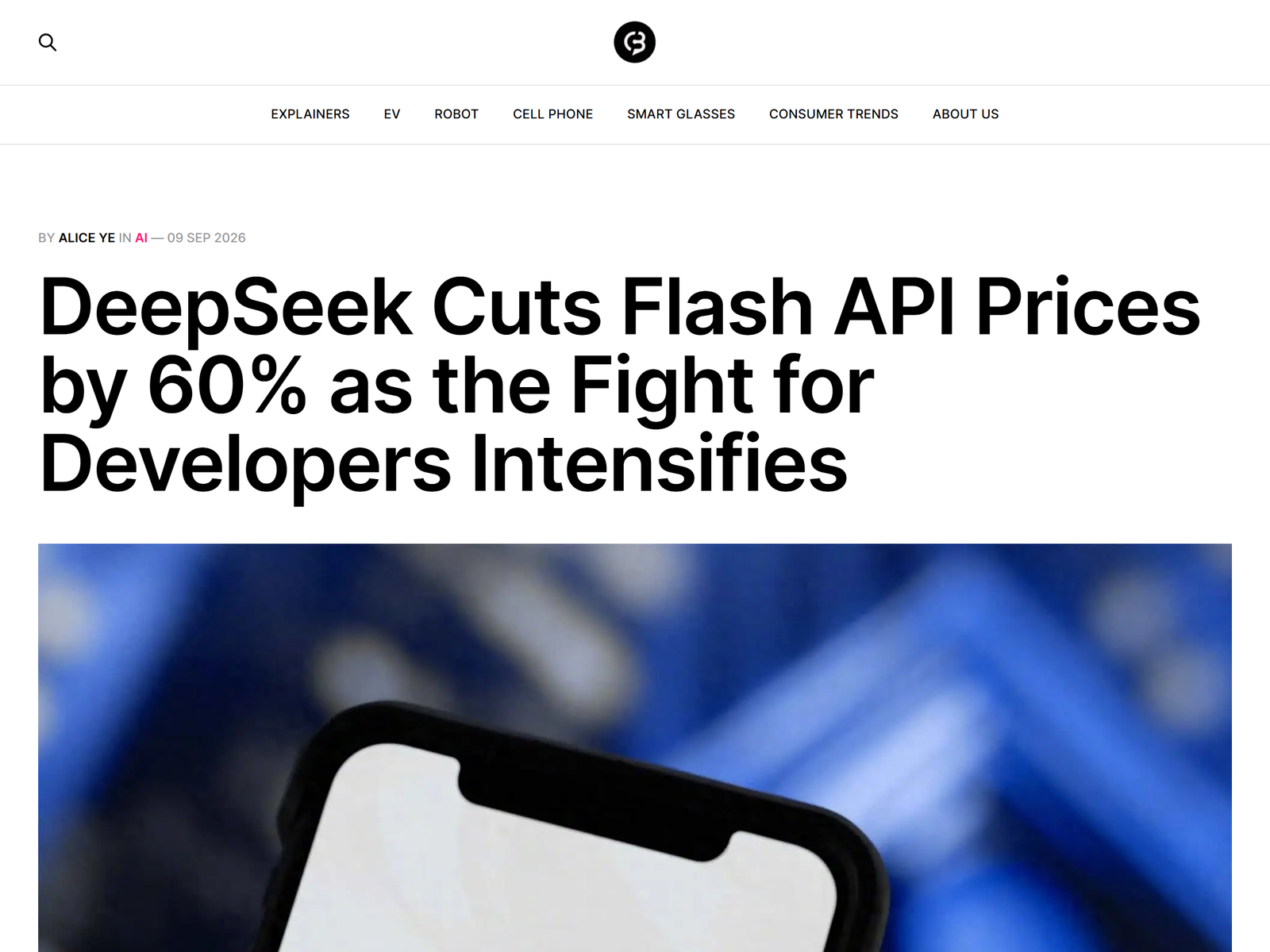
The adjustment keeps DeepSeek's peak/off-peak structure. Peak hours remain 09:00-12:00 and 14:00-18:00 Beijing time on weekdays, priced at double the off-peak rate. Off-peak is everything else, including weekends. The result is a targeted discount on the cheapest input tier rather than a broad price reset.
Our tech deep-dives section has covered DeepSeek's earlier moves, but this cut is different because it lands alongside a closed beta of V4.1 Flash, a native-multimodal successor that testers report can exceed 500 tokens per second in peak output.
Price Breakdown: Old vs New

| Billing item | Period | Old price (RMB/M tokens) | New price (RMB/M tokens) | Change |
|---|---|---|---|---|
| Input · cache hit | Off-peak | 0.05 | 0.02 | -60% |
| Input · cache hit | Peak | 0.10 | 0.04 | -60% |
| Input · cache miss | Off-peak | 1.50 | 1.00 | -33% |
| Input · cache miss | Peak | 3.00 | 2.00 | -33% |
| Output | Off-peak | 4.50 | 4.00 | -11% |
| Output | Peak | 9.00 | 8.00 | -11% |
Off-peak cache-hit input now sits at roughly US$0.003 per million tokens, which is functionally free for many retrieval and agent use cases. The output price, however, remains double the pre-August level of RMB 2.00 per million tokens. DeepSeek is restoring input competitiveness while preserving a margin buffer on generation.
Why Cache-Hit Pricing Matters
Cache-hit pricing applies when repeated context is reused across API calls. That is exactly what happens in Retrieval-Augmented Generation pipelines, multi-turn agents, and code-completion tools. The Yangtzeer analysis estimates that developers running cache-heavy workloads could see total API costs fall around 40%, although the exact saving depends on hit rates, input/output ratios, and how much work can be shifted to off-peak hours.
The cost gap is striking when measured by task rather than token. DeepSeek V4-Flash scores about 53 on Artificial Analysis' intelligence index, below GPT-5.6 Sol at 61 and Claude Opus 5 at 63. Yet its estimated cost per task is roughly $0.25, compared with $1.23 for GPT-5.6 Sol and $2.34 for Claude Opus 5. That is the value proposition DeepSeek wants developers to remember: not the smartest model, but the cheapest way to complete many real-world AI tasks at acceptable quality.
The pricing architecture also creates an incentive to design systems that maximize cache reuse. For agents that hold long conversations or repeatedly consult the same knowledge base, the economics just improved materially. For stateless, one-shot generation, the benefit is smaller because output pricing barely moved.
The V4.1 Flash Beta Connection
On September 8, DeepSeek opened an internal beta for V4.1 Flash. Testers report peak output speeds of 507 tokens per second and average speeds above 300 tokens per second. The model is described as more capable, faster, and cheaper, with native multimodal support and a new architecture. DeepSeek's own feedback survey asks whether V4.1 Flash could fully replace the current V4 Pro, which hints at a possible tier shake-up in the coming weeks.
This is DeepSeek's sixth pricing action in 2026, following cuts in April and May, the August peak/off-peak rollout, and the August 23 weekend-off-peak rule. The cadence looks less like reactive discounting and more like a deliberate land-grab: compress per-call costs until switching costs vanish, then capture volume through scale.
My Take / The Bottom Line
DeepSeek's 60% cut is good news for developers building agents and RAG systems, but it is not a universal price drop. Output generation still costs twice what it did before August, which means image captioning, creative writing, and other output-heavy tasks feel only a modest relief. The broader signal is that the LLM API market is entering a fractional-yuan phase where providers compete on hundredths of a cent per token. For AI industry watchers, the real story is whether OpenAI, Anthropic, and Google follow. DeepSeek has a habit of forcing market-wide repricing, and the September 10 adjustment is unlikely to be an exception. Teams betting on open-weight and engine-model economics should treat this as another reason to benchmark inference cost per task, not just headline model capability.
FAQ
Which DeepSeek models are affected by the price cut?
Only the Flash series: deepseek-v4-flash and deepseek-v4-flash-vision-exp. V4-Pro pricing is unchanged.
When do the new prices take effect?
The new rates took effect at 12:00 Beijing time on September 10, 2026.
What are DeepSeek's peak hours?
Peak hours are 09:00-12:00 and 14:00-18:00 Beijing time on weekdays. All other times, including weekends, are off-peak and charged at half the peak rate.
How much can I actually save?
Developers estimate an effective 40% total cost reduction for cache-heavy, off-peak workloads. Output-heavy tasks will see smaller savings because output prices only fell 11%.
Is V4.1 Flash publicly available?
As of September 10, 2026, V4.1 Flash is in a closed internal beta through DeepSeek's developer channels and is not listed in public API documentation.