Why 722 OpenAI Math Manuscripts Triggered a Boycott in 2026
Category: Tech Deep Dives
This analysis was written by the aifreetool Editorial Team — full-time AI-industry researchers who verify every claim against primary sources. Last updated October 9, 2026. We keep no affiliate relationship with the companies covered here.
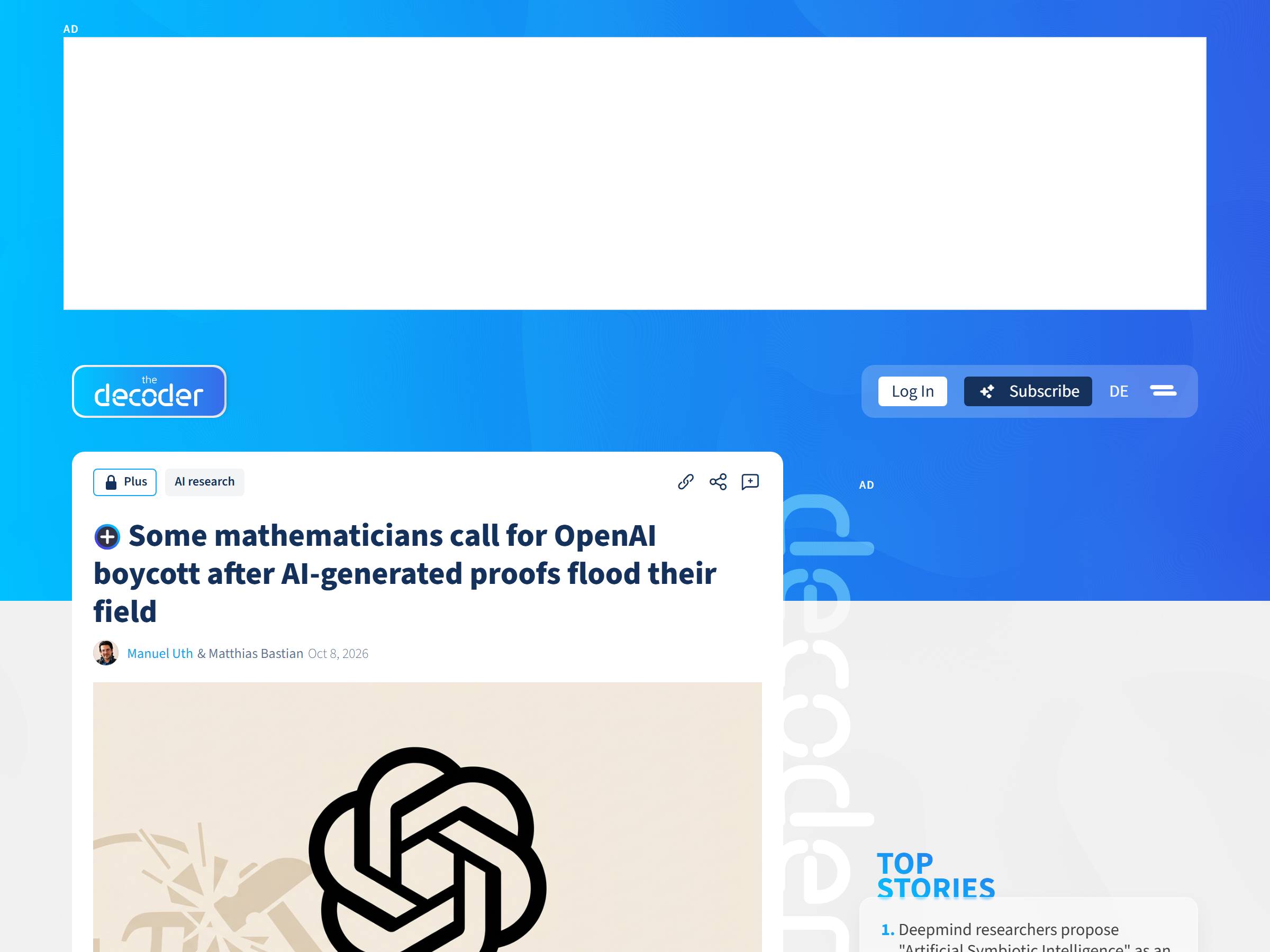
TL;DR: On October 7, 2026, OpenAI published more than 700 AI-generated mathematics manuscripts — 722 papers grouped into 372 families of findings — claiming substantial progress on four of the seven Millennium Prize Problems, including Navier-Stokes described as solved. The release immediately triggered a boycott call from the Association for Human Mathematics, three papers were retracted within a day over a sign error, and Fields Medalist Terence Tao warned that mass AI harvesting of open problems risks degrading research quality. The fight is not about whether AI can do math. It is about who pays for verification.
This is the most consequential collision yet between frontier AI and working scientists, and the details — tracked closely by The Decoder — show why the mathematics community did not celebrate. The claimed breakthroughs on the Riemann hypothesis, the Hodge conjecture and the Birch–Swinnerton-Dyer conjecture all remain unverified, each supposedly produced at roughly three hours of compute. If those claims hold, every mathematician alive would need to change fields. They do not hold yet, and that gap between claim and proof is where the whole battle lives. For the model ecosystem producing these systems, see our AI engine and model coverage.
What OpenAI Actually Released on October 7
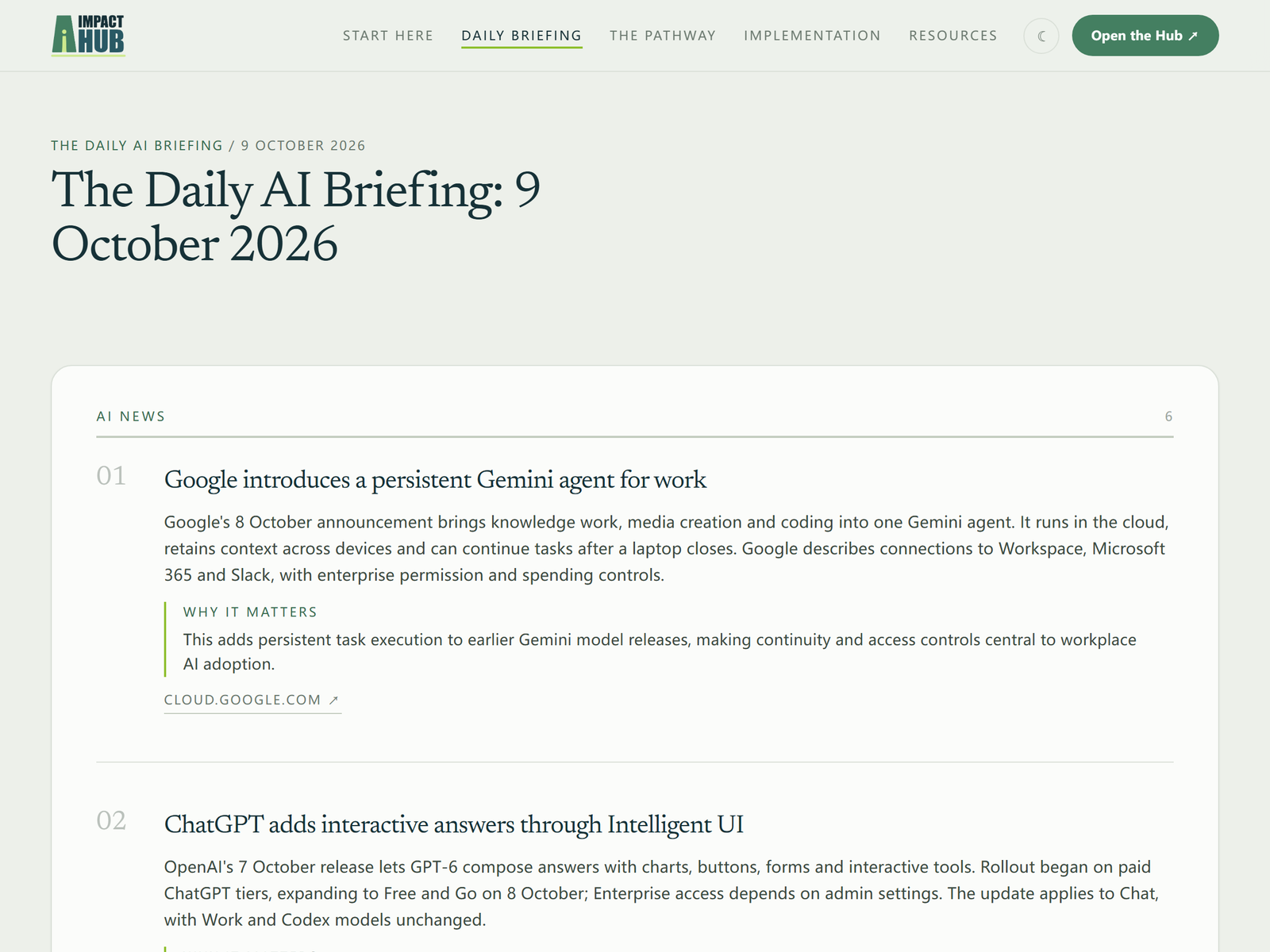
The drop contained 722 AI-generated mathematical manuscripts organized into 372 families of related findings, per AI Impact Hub's October 9 briefing. The headline claim, reported through investor channels by analyst Deedy, was substantial progress on four of the seven Millennium Prize Problems — the Clay Mathematics Institute's $1-million-per-solution list that has resisted the world's best mathematicians for decades. Navier-Stokes was described as solved; Riemann, Hodge and Birch–Swinnerton-Dyer were described as substantially advanced. Each result reportedly cost about three hours of compute.
Then the verification clock started. OpenAI retracted three papers the following day after a sign error was found. A sign error is the most humbling kind of mistake in mathematics — the work around it can be elaborate, but one flipped symbol makes every downstream lemma worthless. Nothing in the release has been certified by independent referees. The company's own GPT-6.1 Sol ultrafast mode shipped the same week, with intelligence described as close to the unreleased Astra model at up to 8 times Sol Standard speed, which tells you the manuscripts double as a marketing artifact for the reasoning roadmap.
Why Mathematicians Called for a Boycott
The Association for Human Mathematics urged mathematicians to boycott OpenAI over the release. Terence Tao — often called the greatest living mathematician — replied that mathematicians did not ask for this work to be done, and warned that mass AI harvesting of open problems risks degrading research quality. His objection is structural, not sentimental. Research mathematics runs on a scarce resource: expert attention for refereeing. A dump of 722 unverified manuscripts consumes that resource as a cost imposed on people who never consented.
The economics are easy to state and hard to fix. Generating candidate proofs is now nearly free — three hours of compute per manuscript. Verifying them still requires trained human referees at days-to-months per paper, and formal proof assistants cover only part of the literature's machinery. When generation is free and verification is expensive, you get spam: a firehose of plausible-looking mathematics that the community must pay to filter. Compare NVIDIA's September IMO-gold open model, which solved contest problems with machine-checkable grading — bounded, verifiable, applaudable. The Millennium Problems are the opposite regime: no judge exists. That difference is the entire story.
| Dimension | NVIDIA Nemotron IMO model (Sept 2026) | OpenAI manuscript drop (Oct 2026) |
|---|---|---|
| Problem class | Olympiad contests — bounded, gradable | Millennium Prize Problems — unbounded |
| Verification | Machine grading, 16-judge unanimity | None yet; 3 retracted over a sign error |
| Community reaction | Applause and rapid adoption | Boycott call and a Fields Medalist warning |
| Real cost | 4,800 GPU-hours, disclosed | ~3 hours compute per paper; verification unbudgeted |
What This Means for AI-Generated Science
Three lessons transfer to every scientific field. First, release protocols matter more than capability: a responsible AI-science release includes a verification budget, formal proofs where formalization is possible, and named independent referees — OpenAI's drop had none of these. Second, incentive alignment decides adoption. Mathematicians will use tools that reduce their refereeing burden; they will organize against tools that increase it. Third, trust compounds in one direction. A single sign-error retraction in a 722-paper drop is a small error rate and a catastrophic credibility rate.
There is also a legitimate path here, and it is worth naming so the boycott does not read as Luddism. AI systems genuinely have contributed to mathematics — the 2024 AlphaGeometry results and machine-assisted formalization projects earned real respect because they submitted to verification. OpenAI could convert this firestorm into goodwill tomorrow: fund an independent refereeing effort, publish which families survive, retract the rest with root-cause analysis. The technology is not the problem. The publication norm is.
My Take / The Bottom Line
My verdict: the mathematicians are right, and their boycott is the most rational response to a genuinely new failure mode. OpenAI treated the mathematics community as a free QA department for its marketing, and the community declined the job. The claims may even contain something valuable — but value without verification is noise at scale. Watch one number over the next quarter: how many of the 372 families survive independent review. If the answer is zero, this becomes a case study in how not to publish AI research. If it is one or two, OpenAI will have earned the biggest result in the field's history and still have to apologize for how it arrived. For anyone shipping AI-generated content into expert domains — science, law, medicine, finance — the rule this week wrote is simple: you own the verification, and you announce nothing before independent referees do.
FAQ
What did OpenAI release on October 7, 2026?
722 AI-generated mathematical manuscripts grouped into 372 families of findings, claiming substantial progress on four of the seven Millennium Prize Problems: Navier-Stokes described as solved, plus Riemann, Hodge, and Birch–Swinnerton-Dyer described as substantially advanced.
Have the Millennium Problem claims been verified?
No. None of the claims have been certified by independent referees, and OpenAI retracted three papers the day after release over a sign error. Each claimed result reportedly cost around three hours of compute.
Why are mathematicians boycotting OpenAI?
The Association for Human Mathematics says mass AI generation of unverified proofs floods the field and degrades research quality. Terence Tao added that mathematicians never asked for this work, and that refereeing attention — the field's scarcest resource — is being consumed without consent.
What is a sign error and why does it matter?
A single incorrect sign in a proof step that invalidates every result depending on it. OpenAI retracted three of its 722 manuscripts within a day after one was discovered — a small error rate with an outsized credibility cost.
Could AI legitimately solve a Millennium Prize Problem?
Possibly, but only through verification: a formal proof checked by proof assistants, or a human-refereed publication. Generating a plausible-looking manuscript is not a solution; certification is.