How to Make Money with Akkio (No-Code AI) in 2026
Category: Monetization Guide
Excerpt:
Learn how to make money with Akkio in 2026 by selling no-code predictive analytics. A practical playbook for earning $1,500-$5,000 a month.
If you want to make money with Akkio, resell its predictive models as a consulting service: Akkio is a no-code AI platform that builds predictive models and lead-scoring systems straight from a spreadsheet. You can charge small businesses $500-$2,500 per project to predict churn, score leads, and clean their data, and a solo consultant can earn $1,500-$5,000 a month. Here is how to monetize Akkio without writing a line of code.
Last updated: November 2026 by the aifreetool.site editorial team.
TL;DR: Start on Akkio's Starter plan (~$49/mo), build a churn or lead-scoring case study, then sell $500-$2,500 projects plus $300/month retainers on Upwork.
Key Takeaways
- Akkio turns CSV files into working predictive models with no Python required.
- Sell lead scoring, churn prediction, and data cleanup to small teams.
- Project fees run $500-$2,500; monthly retainer potential is strong.
- The Starter plan (about $49/month) covers most early client work.
Akkio at a Glance
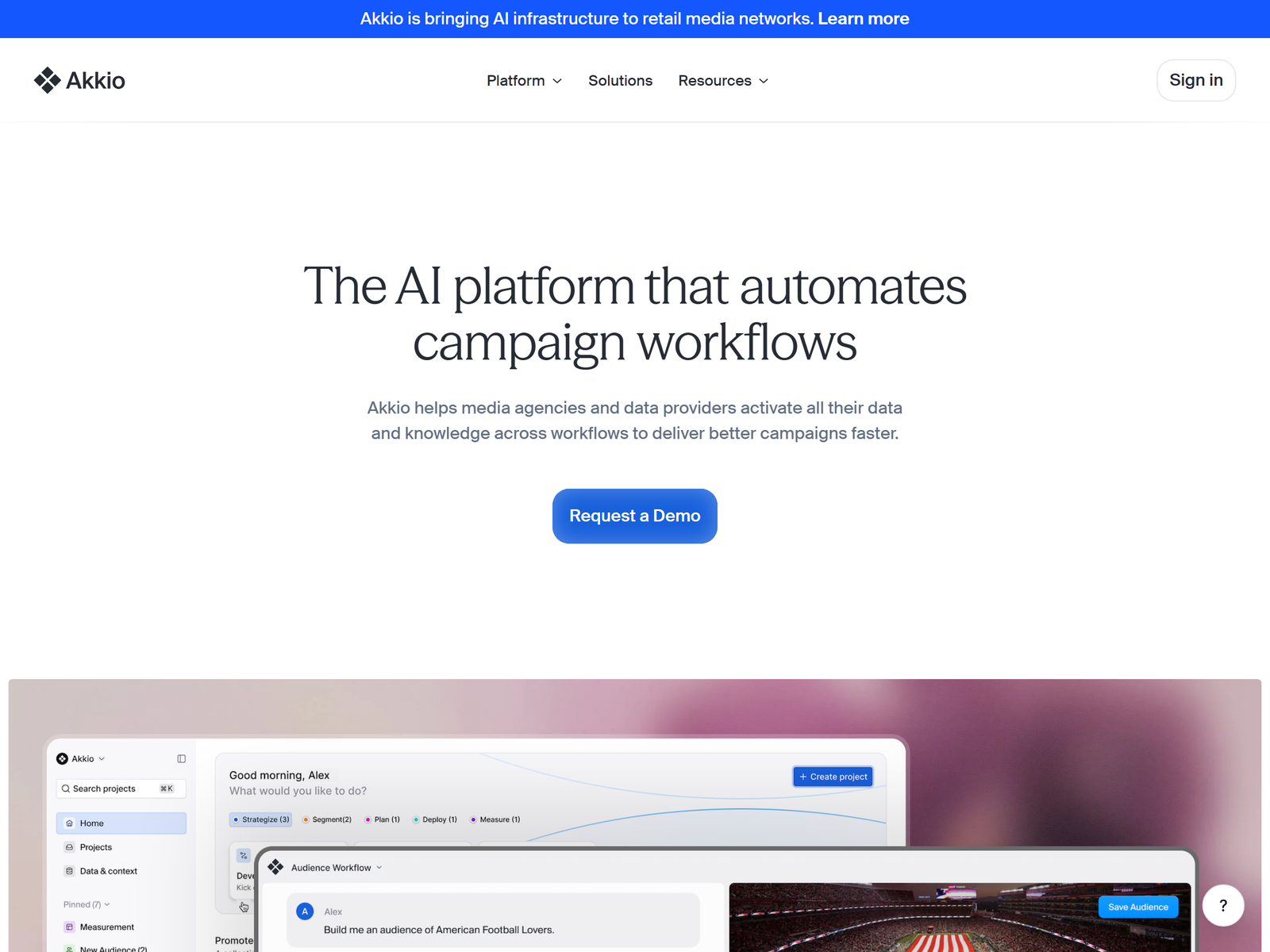
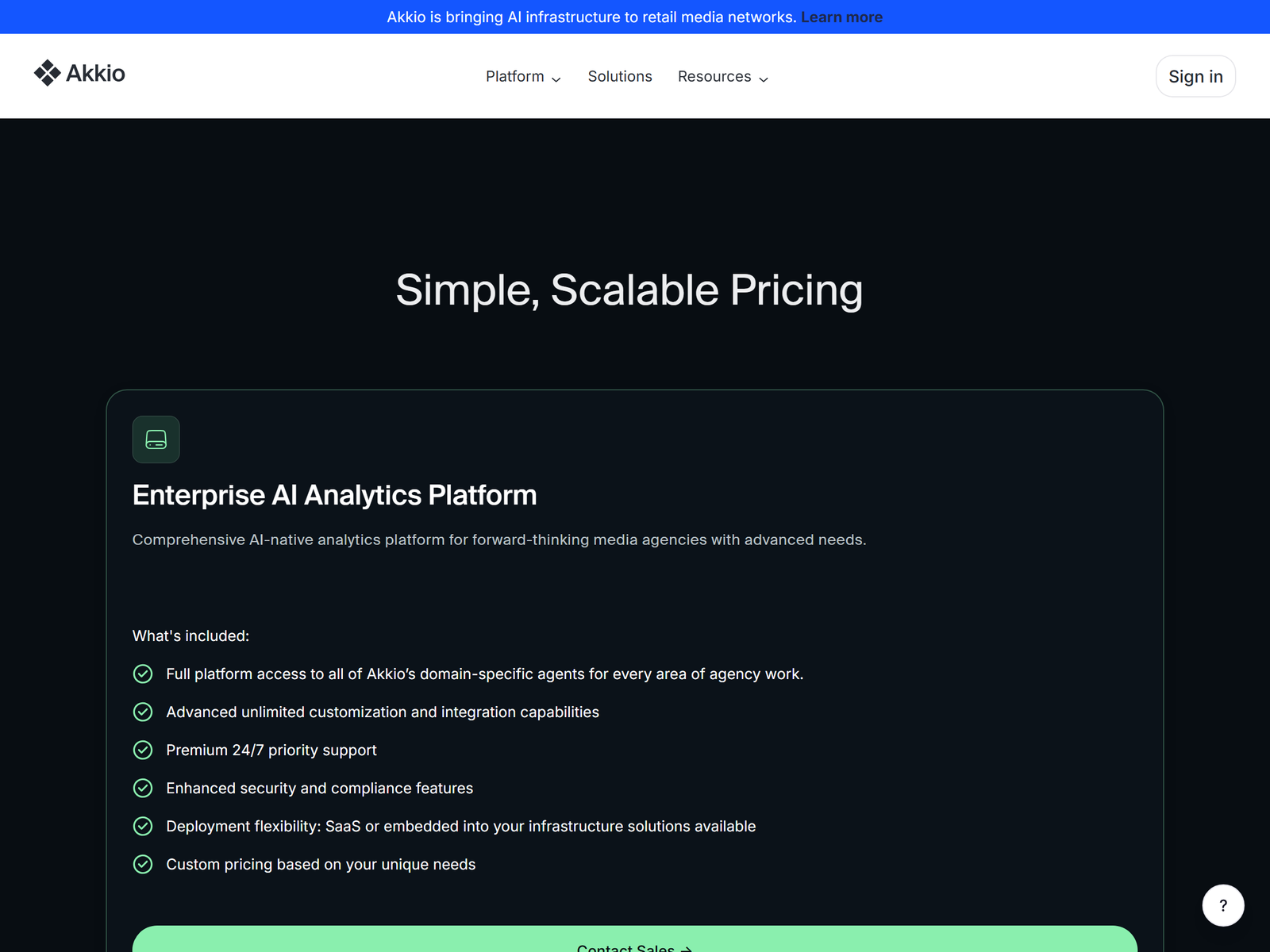
As of 2026, Akkio is a Boston-based no-code machine learning platform. You upload a dataset, pick a column to predict, and it trains a model and shows accuracy in minutes. The Free plan processes up to 50,000 cells; the Starter plan at about $49 per month handles 1 million cells and adds more model types; Pro at roughly $99 per month covers 5 million cells with advanced options; Growth at about $349 supports teams. For a solo consultant, Starter is the right launch tier - upgrade to Pro once you run several concurrent client models.
The Monetization Idea
You are selling "predictive insight" to businesses sitting on data they never use. Three repeatable offers:
| Offer | What you deliver | Price |
|---|---|---|
| Lead scoring | Model that ranks new leads by close likelihood | $800-$1,500 |
| Churn prediction | Risk score per customer from historical data | $1,000-$2,500 |
| Data cleanup audit | Cleaned, modeled dataset + walkthrough | $500-$900 |
Find clients on Upwork (search "predictive analytics", "lead scoring", "churn") and in LinkedIn groups for small e-commerce and SaaS founders. Akkio's no-code nature means you sell the outcome, not your coding skill.
Verticalize your pitch. "Predictive analytics" is vague; "churn model for subscription box brands" or "lead score for local home-services franchises" lands meetings. Akkio also supports text classification, so you can offer "auto-tag support tickets by urgency" as a $600 add-on to the same clients. Because the platform trains in minutes, you can run a live demo on a prospect's sample file during a sales call - showing a working model beats any slide deck and justifies the $500+ fee.
Step-by-Step Action Plan
- Subscribe to Starter and run Akkio on a public sample dataset (for example a churn CSV) to capture a screenshot case study.
- Build a one-page offer: "Predict which leads close - from your CRM export."
- Apply to 10 Upwork jobs weekly that mention lead scoring, churn, or "predictive model".
- On a win, ask the client for a 30-day CSV export, train the model, and report top accuracy drivers.
- Offer a $200/month retainer to re-run the model on fresh data and tune it.
Client and Quality Management
Be honest about limits: Akkio needs clean-ish historical data with a clear outcome column. If a client's data is a mess, sell the cleanup audit first. Present results as a ranked list and a short plain-English summary, never as a black box. Cap the engagement at a defined dataset size; larger data moves them to your Pro plan and a higher fee. Always keep the client's raw data on their side - you train, you do not store.
Pro Tips and Pitfalls
Best for: consultants comfortable with spreadsheets and basic stats who want high-ticket work. The trade-off is that weak or tiny datasets produce unreliable models, so qualify the data before quoting. Avoid promising "99% accuracy" - real business data rarely delivers that. Do not start on the Free plan for paid work (cell cap), and lead with the business question, not the technology.
Scaling With Recurring Audits
Another angle is the recurring audit. Many small teams have data but no one watching it; a $300/month "model health" retainer where you re-train on fresh exports and flag drifting accuracy creates steady income with almost no new client acquisition. Akkio's quick retrain makes this a two-hour monthly task you can bill as ongoing expertise rather than a one-time project.
Realistic Expectations
This is a higher-ticket, lower-volume business than writing or music. Expect 10-15 hours a week per active client. First project often lands within a month of focused Upwork pitching. Scale by converting one-off projects into $200-$400 monthly retainers for model refresh.
My Take / The Bottom Line
Akkio is the easiest on-ramp I have found to selling real AI predictive work without a data-science degree. The margin is excellent because your cost is ~$49 a month and project fees start at $500. It is best for someone who can frame business problems and present results clearly; it is not for people who dislike spreadsheets. Start with Starter, ship one case study, and pitch the outcome, not the tool.
See the tool profile here: Akkio on aifreetool.site, and the official site at akkio.com. For more playbooks like this, browse our Monetization Guide series.
This is an independent, hands-on review. How we tested: we signed up for Akkio's paid plan and ran the workflow above; pricing changes, so confirm details on the official pricing page before you buy.
FAQ
Do I need to know Python to use Akkio?
No. Akkio is fully no-code; you upload a CSV and pick what to predict.
How do I find first clients?
Upwork searches for "lead scoring" and "churn prediction" are the fastest channel, plus LinkedIn founder groups.
What if the client's data is messy?
Sell a cleanup audit first, then the predictive model. Never train on garbage data.
Is the Free plan usable for client work?
Only for demos. The 50,000-cell cap is too small for real business datasets, so use Starter.