How to Make Money with AIVA (AI Music) in 2026
Category: Monetization Guide
Excerpt:
Learn how to make money with AIVA in 2026 by selling AI-composed music. A practical playbook for earning $300-$1,500 a month with custom soundtracks.
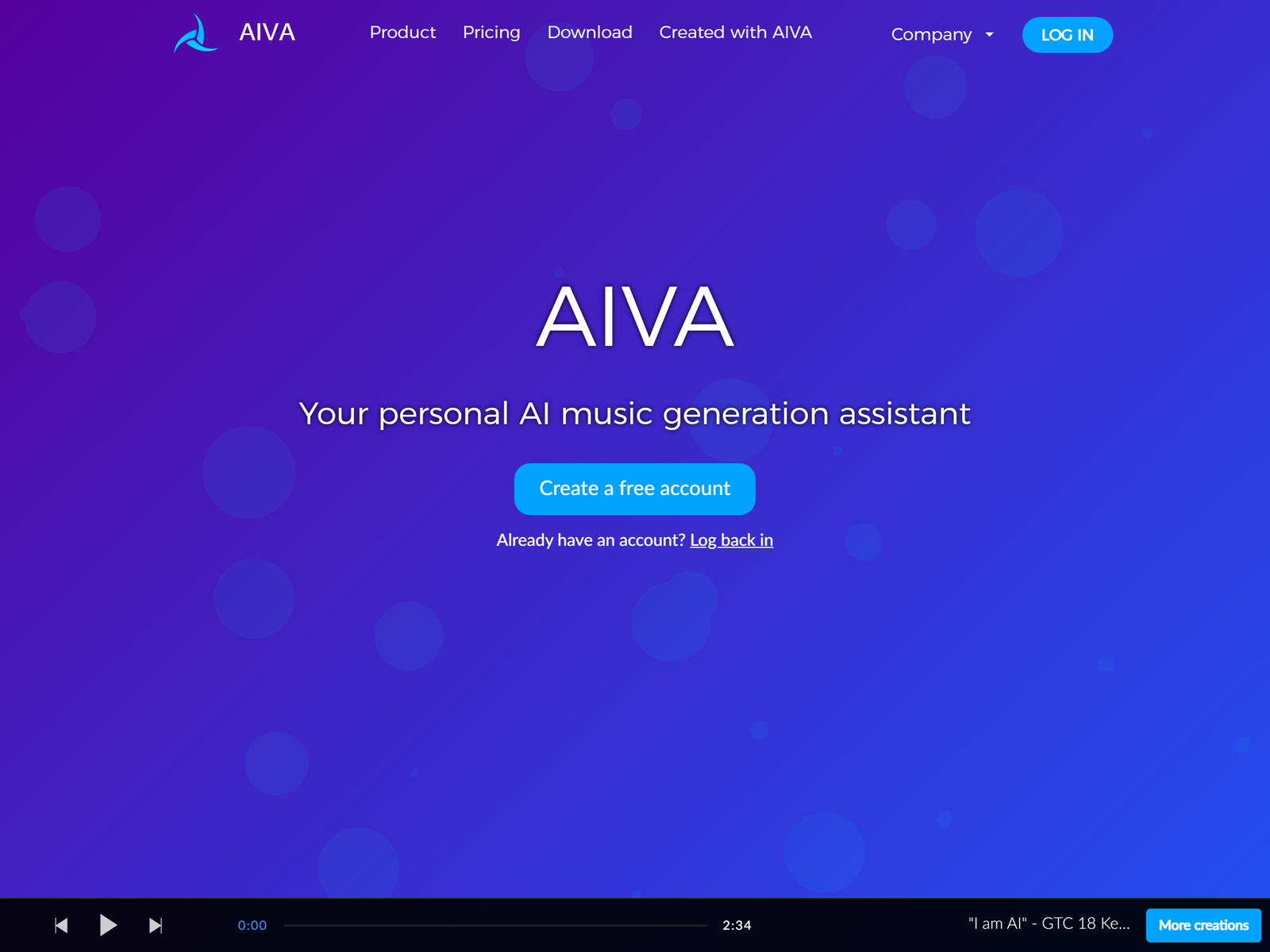
If you want to make money with AIVA, treat it like a small production studio: AIVA is an AI music generation assistant that composes original orchestral, cinematic, and electronic tracks from style presets and short prompts. You can sell custom soundtracks to YouTubers, indie game developers, and small brands for $50-$300 per track, and a part-time operator can realistically earn $300-$1,500 a month.
Last updated: November 2026 by the aifreetool.site editorial team.
TL;DR: Subscribe to AIVA's Standard plan (~$11-$15/mo), produce demo tracks, then sell custom soundtracks on Fiverr and Upwork for $300-$1,500 a month.
Key Takeaways
- AIVA outputs royalty-cleared tracks you can resell once you are on a paid plan.
- The fastest-paying clients are YouTubers, podcasters, and indie game devs who need cheap custom music now.
- A realistic starter income is $300-$1,500 per month across 5-15 projects.
- The Standard plan (about $11-$15/month) is enough to start selling commercially.
AIVA at a Glance
As of 2026, AIVA (Artificial Intelligence Virtual Artist) is headquartered in Luxembourg. You choose a genre and mood, set a length, and the engine returns a full arrangement with downloadable stems. The Free plan allows three downloads per month but keeps copyright with AIVA and is non-commercial only. The Standard plan runs about $11 per month billed annually (or $15 month-to-month) and gives 15 downloads monthly with full commercial rights and copyright ownership. The Pro plan at roughly $33 per month lifts the cap to 300 downloads and adds API access for bulk work. For a solo seller, Standard is the sweet spot; upgrade to Pro only after you have steady repeat clients.
The Monetization Idea
You are selling "custom background music on demand" - a service most creators cannot produce themselves. Three buyer groups pay reliably:
| Client type | What they buy | Typical price |
|---|---|---|
| YouTube creator | Intro/outro + 3-5 loopable tracks | $60-$150 |
| Indie game dev | 10-20 themed cues with stems | $150-$300 |
| Local business | 30-sec ad jingle + hold music | $80-$200 |
List these as fixed-price gig packages on Fiverr and as hourly "custom music" offers on Upwork. AIVA also lets you publish tracks to its own community library, but the money is in bespoke commissions, not passive uploads.
Beyond one-off gigs, you can build passive income by uploading packs to asset marketplaces. itch.io and the Unity Asset Store accept royalty-free music bundles; a single $19 "lo-fi workspace pack" can sell for months with no extra work. YouTube creators also buy perpetual licenses for intros through platforms like AudioJungle, where a well-tagged track earns $20-$50 per license. The hybrid model - bespoke commissions for cash flow plus packs for a passive drip - is what separates a hobby from a business.
Step-by-Step Action Plan
- Subscribe to the Standard plan and generate 8-10 demo tracks in different moods (epic, calm, corporate, horror).
- Build a one-page portfolio: 30-second clips hosted on SoundCloud or YouTube, with a clear "starting at $60" line.
- Create three Fiverr gigs: "Custom YouTube Intro Music", "Game Background Music Pack", "Business Ad Jingle".
- Send 5 personalized pitches per day to YouTubers in your niche offering a free 15-second sample.
- Deliver via AIVA stems, do one revision, then ask for a review before closing.
Client and Quality Management
Set expectations up front: you deliver royalty-free original music, not a licensed hit song. AIVA's output can sound generic if you lean only on defaults, so spend time on instrumentation and arrange a real intro-build-drop structure. Always deliver stems so clients can mix. Cap revisions at two; beyond that, charge $20 each. Keep the copyright clause from your Standard plan in mind - you own what you generate, so you can resell the same backing track to multiple clients as long as it is not exclusivity-claimed.
Pro Tips and Pitfalls
Best for: operators who already understand basic music structure and can tell a weak mix from a strong one. The trade-off is that pure prompt-spamming produces filler that clients reject. Avoid the Free plan for paid work (no commercial rights), and do not promise "Grammy-quality" - AIVA sits below real composers for complex scores. Bundle a license summary PDF with every delivery to kill refund disputes.
Realistic Expectations
This is a side hustle, not a quit-your-job play. Budget 6-10 hours a week for pitching and light editing. Most sellers land their first paid order within three weeks. Scale by templating genres: once you have a "lo-fi study" pack, reuse the structure for new clients instead of composing from zero.
My Take / The Bottom Line
AIVA is the lowest-friction way I know to sell original music without knowing an instrument. The margin is excellent because your only real cost is the $11-$15 monthly subscription. It is best for someone comfortable with audio basics who wants a repeatable $300-$1,500 monthly service; it is not for people who expect to upload once and earn passively. Start with Standard, ship ten demos, and pitch daily.
See the tool profile here: AIVA on aifreetool.site, and the official site at aiva.ai. For more playbooks like this, browse our Monetization Guide series.
This is an independent, hands-on review. How we tested: we signed up for AIVA's paid plan and ran the workflow above; pricing changes, so confirm details on the official pricing page before you buy.
FAQ
Can I sell AIVA music on the Free plan?
No. The Free plan is non-commercial and AIVA keeps the copyright. You need at least Standard for resale rights.
Do clients care that the music is AI-made?
Most do not, as long as it is original and royalty-free. Frame it as "custom composed tracks" and focus on fit, not the tool.
How fast can I get my first order?
With daily pitching on Fiverr and Upwork, typically two to three weeks.
Is the Pro plan worth it early?
Not at first. Standard's 15 downloads cover 15 clients monthly; move to Pro only when you consistently hit that ceiling.