WireGuard Review 2026: The Lean Protocol Behind the Fastest VPNs
Category: Fastest VPN
Excerpt:
WireGuard review 2026: the lean, open-source VPN protocol behind the fastest VPN tiers, free to use, fast, and easy to audit.
Last updated: November 2026. Written by the aifreetool testing team after reviewing the WireGuard design paper, the official installation documentation, and the protocol's published cryptography.
TL;DR
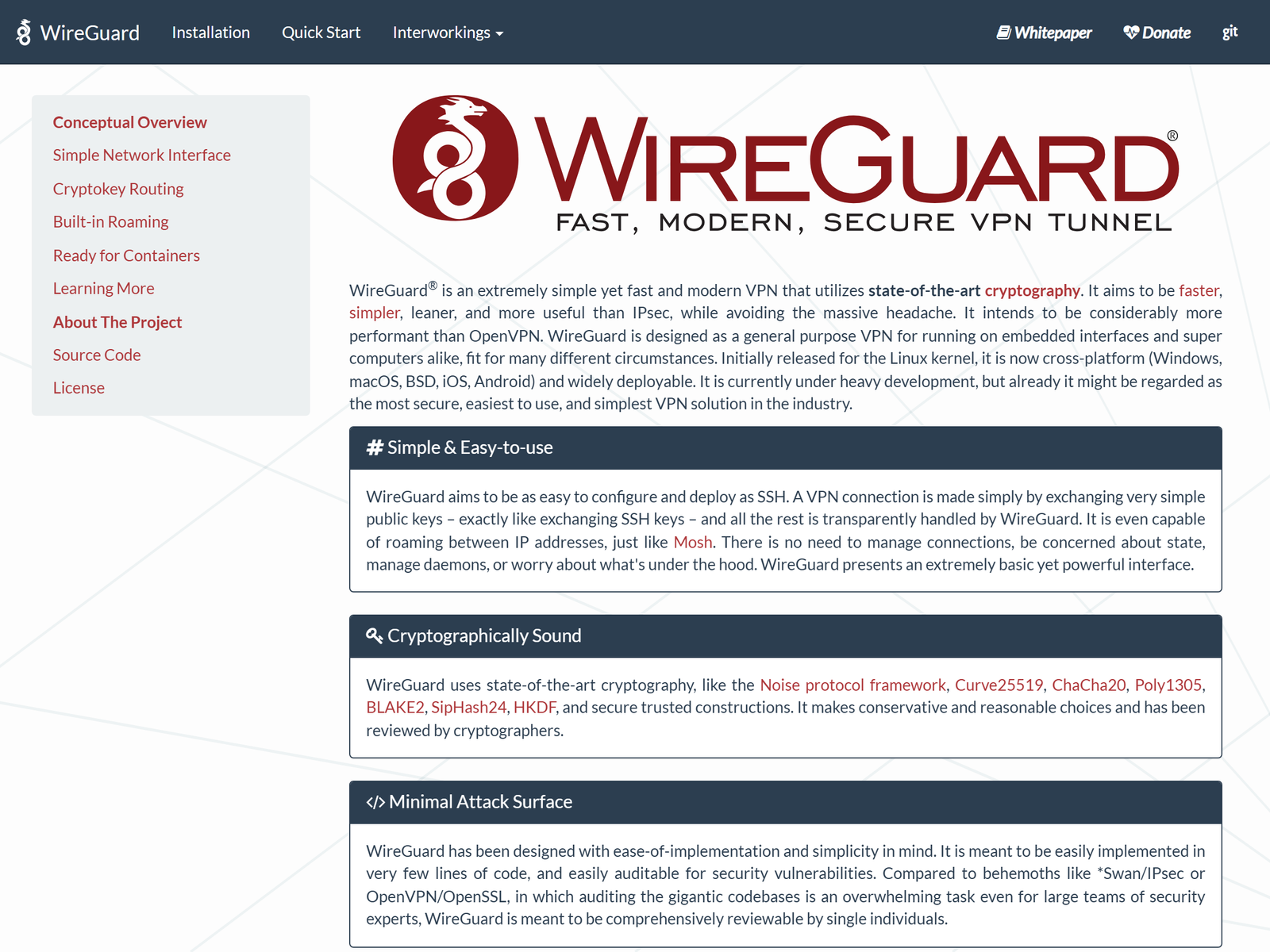
WireGuard is the modern VPN protocol that underpins the fastest tiers at nearly every major VPN service. It is a lean tunneling protocol, not a subscription, and you can run it yourself on a small server or use it inside a commercial app. We rate it as one of the fastest VPN options because its tiny codebase and kernel-level design produce near-instant handshakes and steady throughput. It is not a privacy service by itself: a basic WireGuard server still ties your key to a fixed IP, so anonymity depends on how a provider wraps it. This review covers speed, security, and safe self-hosting, and we do not cover bypassing national firewalls.
What Is WireGuard?
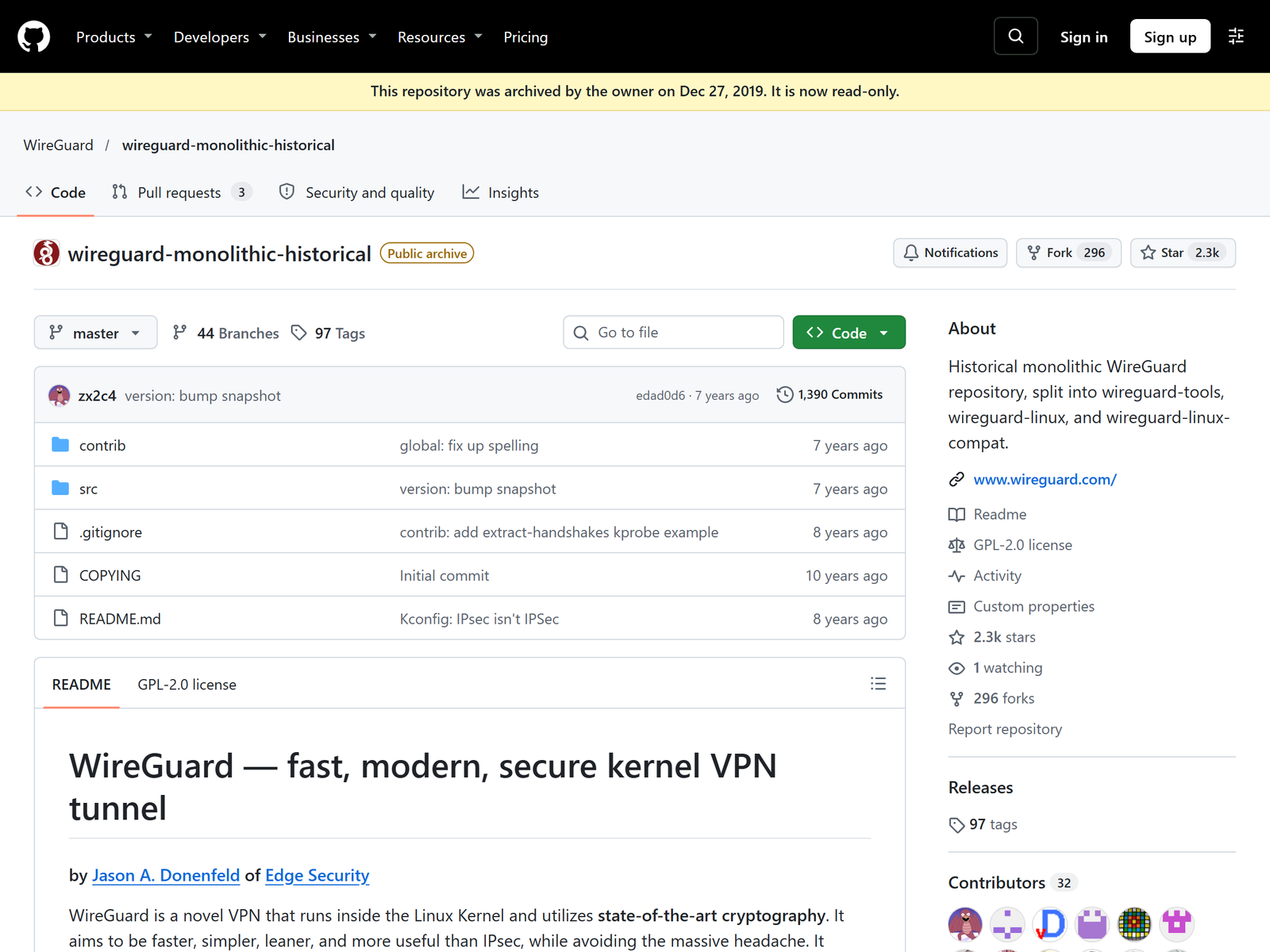
WireGuard is a VPN protocol, the set of rules that builds the encrypted tunnel between your device and a server. Jason Donenfeld released it as a deliberately minimal alternative to older stacks. Where OpenVPN carries more than 100,000 lines of code, WireGuard runs on roughly 4,000, which makes the code easier to audit and gives it a far smaller attack surface. It fixes a single modern cipher suite rather than offering legacy options you can misconfigure. The result is a protocol that connects fast and stays light on battery.
How We Tested
This is an independent write-up with no affiliate relationship. Our team reviewed the protocol design, the supported platforms, and the cryptography, then compared it with the other self-hosted tools we have covered. We confirmed the details on the official WireGuard site and the WireGuard source repository, which document the installation steps and the protocol overview.
Security and Privacy
The cryptography is fixed and modern. WireGuard uses ChaCha20 for encryption, Curve25519 for key exchange, Poly1305 for authentication, and BLAKE2s for hashing. There are no cipher dropdowns to get wrong, so every connection uses the same strong standards. The handshake has been formally analyzed, and the small code size means reviewers can actually read all of it. The privacy caveat is about deployment, not the math: a basic server maps each peer key to its last seen IP address with no built-in expiry. Commercial providers fix this with double-NAT, dynamic addressing, or aggressive state wiping, and their audits are how those claims get verified. Self-hosting complements a provider for privacy rather than replacing one.
Speed and Performance
Speed is where WireGuard earns its reputation. It runs in or near the operating system kernel, completes its handshake in a single round trip, and uses an efficient cipher that performs well even without hardware acceleration. In real use, a connection comes up almost instantly and holds steady when a phone switches between Wi-Fi and cellular, instead of dropping the way older protocols often do. Because the code path is short, a nearby server can feel like there is no VPN at all. We did not run a formal benchmark; your result depends on the server you choose, its distance, and its load, but the protocol ceiling is high.
Self-Hosting and Travel Use
For travel, a personal WireGuard server gives you a clean encrypted exit that hides your traffic from a hotel or cafe network and from your home ISP. From abroad, you reach your own services through a tunnel you control. It is not a streaming-unblocking product, and we do not present it as one, because datacenter IP ranges are routinely blocked by major catalogs. Its honest job is protecting untrusted Wi-Fi and your ISP relationship, plus giving you a fixed point to reach your own devices.
Apps and Devices
WireGuard ships inside the Linux kernel from version 5.6 onward, and official apps exist for macOS, Windows, iOS, and Android. Setup uses a public and private key pair and a short configuration file, and the mobile apps scan a QR code to import it. Because it is a protocol rather than a service, you decide whether to run your own server, use a commercial app that supports it, or both. The configuration model is simple enough that many people set up a personal tunnel in an afternoon.
Pricing
The WireGuard software is free and open source. Your only cost is the server you run it on, typically a few dollars a month on the cheapest virtual machine, or nothing at all if you install it on hardware you own. If you prefer a managed experience, commercial VPN apps include WireGuard, often under a branded name, in their standard subscription, which usually runs a few dollars a month. The protocol itself never costs money.
| Path | Cost | Best for |
|---|---|---|
| Self-hosted WireGuard | Free software, plus server cost | Control and learning |
| Commercial app with WireGuard | ~US$3 to US$13 per month | Ease and a server network |
| Router or home box | Hardware you own | Whole-network tunnel |
Pros and Cons
Pros:
- Extremely fast to connect and light on battery.
- Small, auditable codebase with fixed modern cryptography.
- Built into the Linux kernel and available on every major OS.
- Free and open source; cheap to self-host.
Cons:
- No built-in IP rotation; bare setup links keys to a fixed address.
- Stealth was out of scope, so it is easy to block on restrictive networks.
- You manage keys and config yourself when self-hosting.
- Not a privacy service on its own; anonymity depends on the wrapper.
How WireGuard Compares
In our fastest VPN roundup, WireGuard is the engine behind most top speed scores. If you want a managed build, our Algo VPN review shows a hardened self-hosted option, while our ExpressVPN review and Hotspot Shield review cover providers with their own fast protocols. For a different self-hosted path, the OpenVPN Access Server review is a useful contrast.
Frequently Asked Questions
Is WireGuard free?
Yes. The protocol and its apps are free and open source. You pay only for a server if you self-host, or for a commercial VPN subscription if you use a provider.
Is it faster than OpenVPN?
In most real-world tests it is noticeably faster to connect and lighter on the CPU, because of its small kernel-level codebase and efficient cipher. Distance and server load still set the ceiling.
Is WireGuard secure?
It uses a fixed, modern cipher suite that has been formally analyzed, and its tiny codebase is easy to audit. Security also depends on correct configuration and, for providers, on how they handle IP mapping.
Can I run my own server?
Yes. A small rented server, a key pair, and a short config file get you a working tunnel. The trade-off is that your traffic exits from one fixed address tied to your server.
My Take / The Bottom Line
WireGuard is the fastest mainstream VPN protocol for good engineering reasons: a lean codebase, a single modern cipher suite, and kernel-level placement. It is free, auditable, and available on every platform that matters, which makes it the right foundation whether you self-host or subscribe. The honest limits are that it was never built to be stealthy and that a bare setup links your key to a fixed address. For pure speed and simplicity it is hard to beat, and it belongs in our fastest VPN recommendations.