Cloudflare WARP Review 2026 - The Free Speed Layer That Is Deliberately Not a VPN
Category: Fastest VPN
Reviewed by the aifreetool Security & Privacy Editorial Team — a group of full-time VPN users and writers who cross-check every vendor claim against independent lab testing and primary documentation.
Last updated August 12, 2026.
We keep no affiliate relationship with any VPN reviewed here and earn nothing if you subscribe. Where we could not verify a claim from primary sources, we say so explicitly.
Cloudflare WARP Review 2026 – The Free Speed Layer That Is Deliberately Not a VPN
TL;DR: Cloudflare WARP is a free, unlimited-data encrypted tunnel that ships inside the 1.1.1.1 app, and this review exists mostly to settle one question: it is deliberately not a country-switching VPN. WARP keeps your exit point close to you on purpose, so it will not open a foreign Netflix library and it will not disguise which region you are in. What you get instead, at zero cost and without handing over an email address, is a genuinely quick modern tunnel — MASQUE over QUIC, post-quantum key agreement, encrypted DNS by default — that keeps your internet provider and the cafe router out of your traffic. Recommended as an always-on privacy floor. Not a substitute for a full VPN.
How We Tested
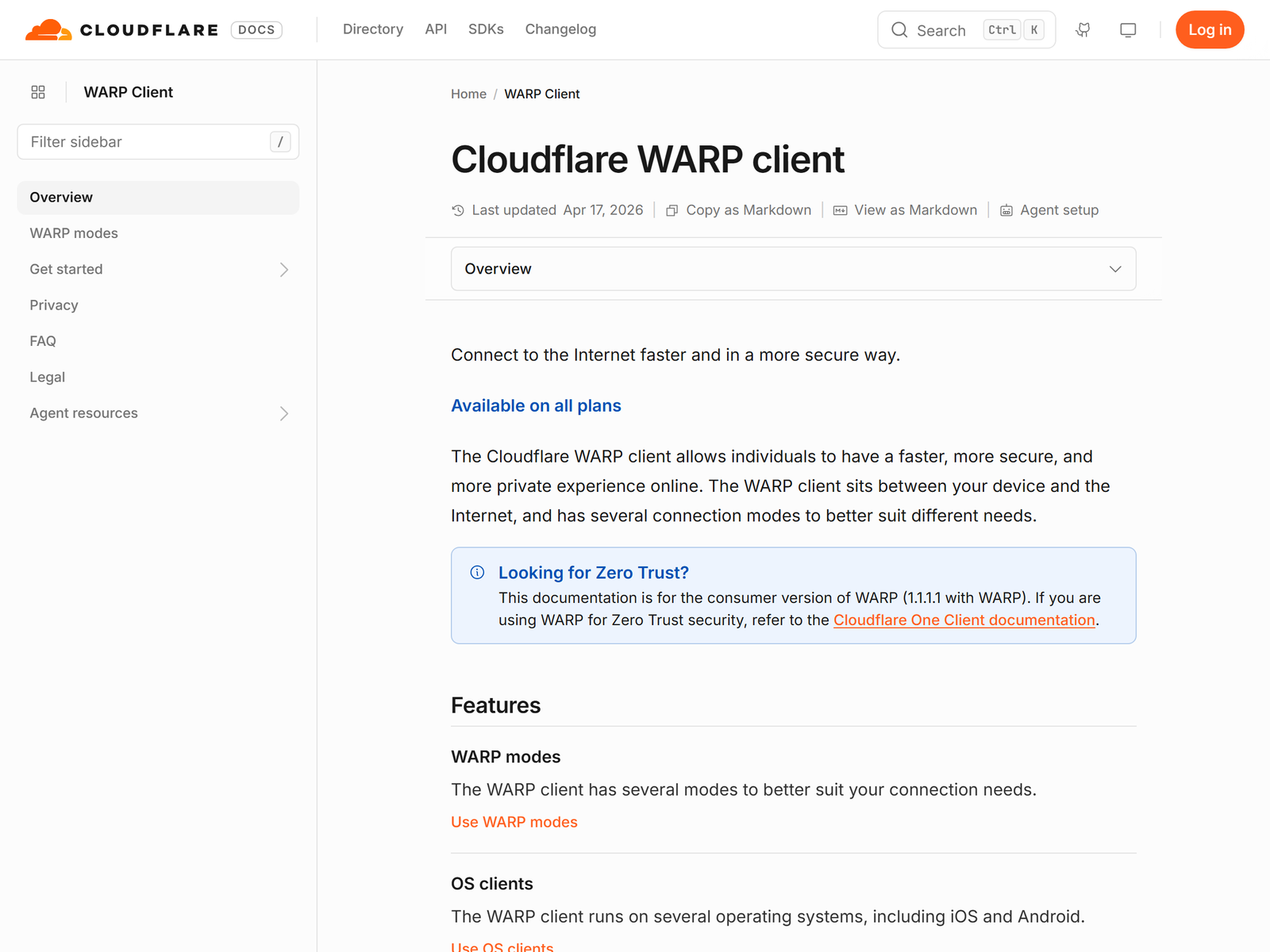
We built this assessment in August 2026 from Cloudflare's own engineering blog and developer documentation first, then checked those claims against independent write-ups and the published app-store release notes. That order matters for a product like this, because most third-party articles about WARP still describe the 2019 version. We focused on five things: what the tunnel protocol is today, what the free tier actually includes, what data Cloudflare admits to collecting, how far the independent audit really reaches, and whether the app can do the geo-switching job people keep assuming it can. We ran no speed benchmarks of our own, so every performance figure below is attributed to whoever measured it.
What Cloudflare WARP Actually Is
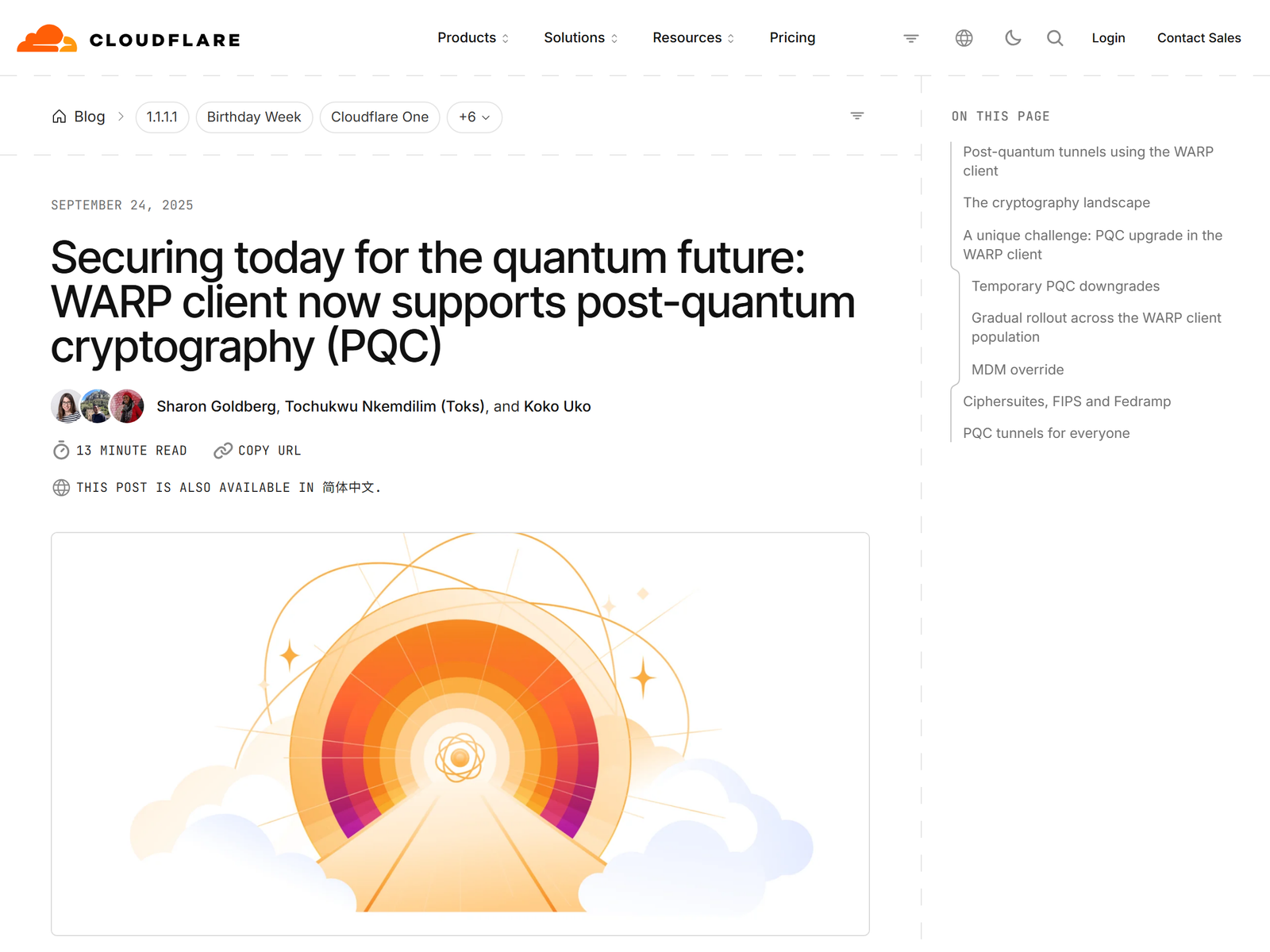
Two products share one app. 1.1.1.1 is the public DNS resolver Cloudflare launched on 1 April 2018, which encrypts your DNS lookups so your provider cannot build a list of every domain you visit. WARP, added in September 2019, is the optional layer that wraps all device traffic in an encrypted tunnel to the nearest Cloudflare data centre. Flip one toggle and both are on. There is no server list, no country picker, and nothing to configure — which is the design philosophy, not an oversight.
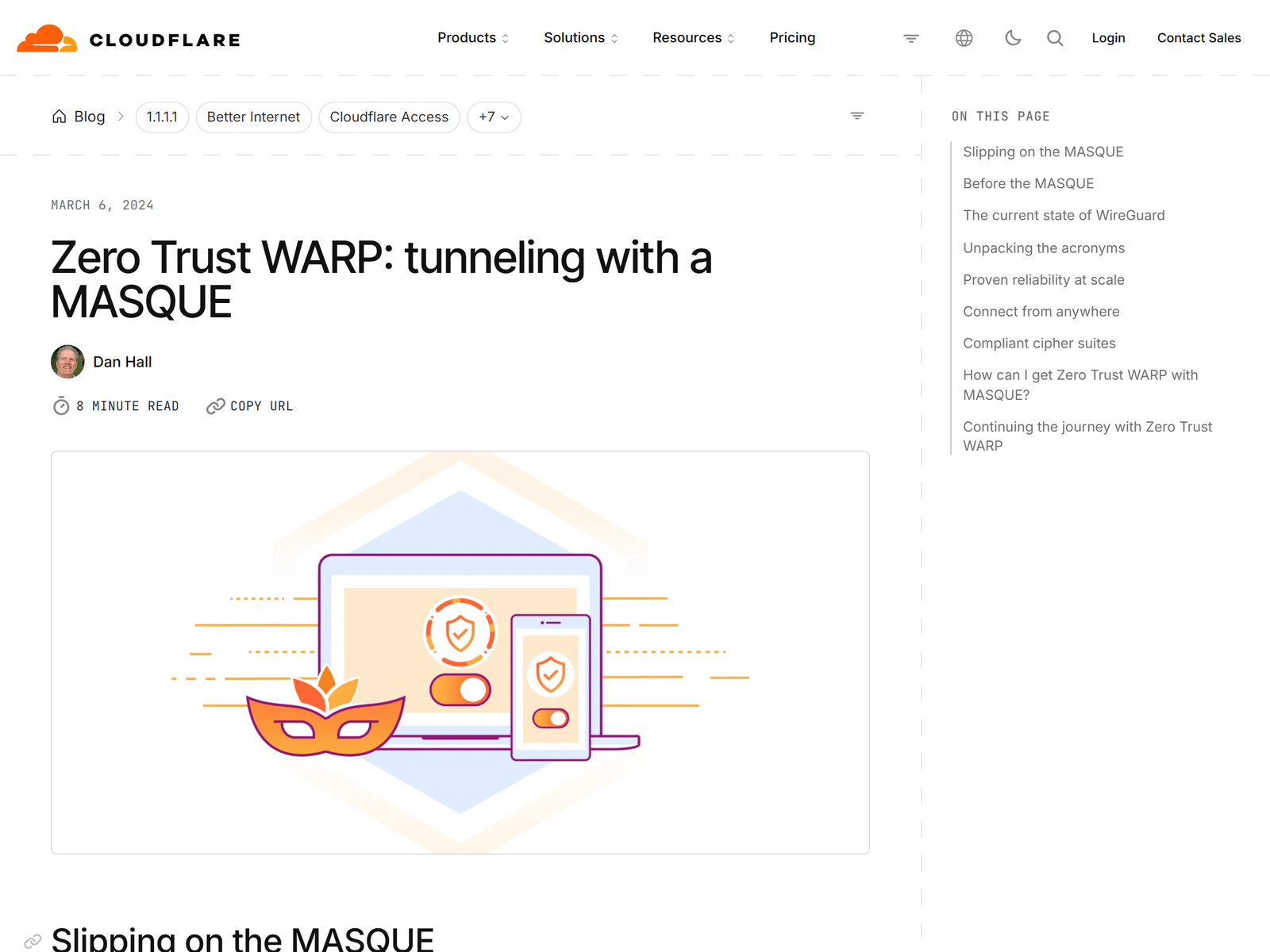
Under the hood the engineering has moved on considerably. WARP originally ran on BoringTun, Cloudflare's open-source Rust implementation of WireGuard. Since December 2024 new installations default to MASQUE instead — Multiplexed Application Substrate over QUIC Encryption — which carries the tunnel over HTTP/3 and behaves much better on networks that mangle or block classic VPN ports, such as hotel Wi-Fi and locked-down campus connections. MASQUE became the default for all new WARP device profiles in September 2025.
Speed & Performance
Speed is the whole pitch, and the architecture supports it. Cloudflare states its edge sits within roughly 10 ms of 95% of the world's population, and because WARP routes you to the nearest data centre rather than a distant exit node, you skip the latency penalty that makes conventional tunnels feel sluggish. In practice most users see something close to their raw line speed, with page loads often improving because DNS resolution gets faster.
The paid tier changes the routing rather than the encryption. WARP+ pushes your traffic across Argo, Cloudflare's private backbone, which reads live congestion data and steers around slow paths. Cloudflare's own figure for Argo Smart Routing is roughly a 30% improvement on average — a vendor claim, and one that swings hard depending on your geography and destination. If your local routing is already clean, expect the gain to be small or invisible.
Security & Privacy
The cryptography here is ahead of nearly every commercial provider. WARP now supports post-quantum key agreement, using ML-KEM in hybrid mode alongside classical elliptic-curve exchange, which defends against harvest-now-decrypt-later collection. Cloudflare shipped this to the free consumer client, not just the enterprise one. DNS-over-HTTPS traffic runs inside the tunnel by default on supported platforms, closing the DNS-leak gap entirely.
Now the honest part. Cloudflare's published commitments are that it will never write user-identifiable log data to disk, never sell browsing data, and never require personal information. KPMG has examined those commitments — but the examination covered the 1.1.1.1 DNS resolver, not the full WARP tunnel. Anyone citing "audited" as a blanket description of WARP is stretching the scope. The app does collect an installation ID, aggregate transfer volume, average speed, and regional traffic patterns for capacity planning. And the structural point stands: you are moving trust from your internet provider to Cloudflare, a company that already terminates a large slice of the web. That is a real reduction in exposure for most people, not an elimination of it.
Streaming & Unblocking: The Honest Answer
No. WARP intentionally preserves your approximate region, so websites still see an IP associated with your area. There is no country selector, no streaming-optimised server group, and Cloudflare does not position the service for peer-to-peer traffic either. If your goal is watching a library from another country while travelling, this is the wrong tool and no setting will change that. Readers who want that capability should start from our fastest VPN category or look at a free tier built for the job, such as the one covered in our PrivadoVPN free plan review.
Device Compatibility
Native clients cover Windows, macOS, Linux, iOS, and Android, which already beats most paid providers — Linux support in particular is missing from a lot of consumer VPNs. A command-line tool, warp-cli, is installed alongside the desktop app for anyone who wants to script connection state. There is no router firmware and no smart-TV app, though the absence matters less here given the service cannot unblock regional content anyway.
Pricing & Value: Free vs WARP+
The free tier is properly free: unlimited data, no account, no advertising, no time limit. That is rare enough to be worth stating twice. WARP+ is the paid upgrade, sold through your app store at roughly $5 per month depending on region, generally capped at five devices, and its only real addition is Argo routing plus access to a wider set of edge cities. The referral scheme that once let you earn WARP+ data by sharing the app has been wound down. Encryption, logging policy, and privacy behaviour are identical across both tiers — you are buying routing, not protection.
Pros & Cons
- Pros: Free with unlimited data and no sign-up; post-quantum key agreement in the consumer client; MASQUE over QUIC survives restrictive networks; encrypted DNS inside the tunnel by default; Linux and CLI support; almost no speed cost; one-tap operation with nothing to misconfigure.
- Cons: Cannot change your apparent country, so streaming libraries stay locked; the KPMG examination covers the DNS resolver rather than the tunnel; not positioned for P2P; no kill switch in the consumer sense; concentrates trust in a single large infrastructure company; WARP+ gains are unpredictable.
WARP vs Free VPN Tiers
| Feature | Cloudflare WARP | PrivadoVPN Free | X-VPN Free |
|---|---|---|---|
| Data cap | Unlimited | 10 GB/month | Limited, ad-supported |
| Choose exit country | No | Yes | Yes |
| Account required | No | Yes | Yes |
| Streaming libraries | None | Some | Some |
| Post-quantum crypto | Yes | No | No |
| Linux client | Yes | No | No |
| Best use | Always-on privacy floor | Occasional geo-switching | Casual free browsing |
FAQ
Is Cloudflare WARP a real VPN? It encrypts all your device traffic to a remote endpoint, which is the technical definition. It lacks the feature people actually mean by "VPN" — choosing which country you appear to browse from. Judge it as a privacy tunnel, not a location tool.
Does WARP hide my IP address from websites? Websites see a Cloudflare address rather than the one your provider assigned you, which blunts basic IP-based tracking. Because the exit stays near you, your approximate location remains visible.
Is the free tier genuinely unlimited? Yes. No data cap, no account, no expiry. WARP+ buys smarter routing over Cloudflare's backbone, not extra allowance or stronger encryption.
Can I use WARP for torrenting? Cloudflare does not market the service for peer-to-peer transfer and there are no P2P-optimised endpoints. Look elsewhere if that is your requirement.
Should I run WARP alongside another VPN? No — two tunnels on one device will fight over routing. Pick whichever matches the task: WARP for everyday encryption, a conventional provider when you need a specific country.
My Take / The Bottom Line
WARP is the most misunderstood product in this category, and the misunderstanding is mostly the fault of people reviewing it against the wrong yardstick. Measured as a Netflix unlocker it fails completely. Measured as what Cloudflare actually built — a free, always-on encryption layer with post-quantum key agreement, encrypted DNS, and effectively no speed penalty — it outclasses paid services that charge $60 a year for weaker cryptography and a longer server list. My advice is to stop treating the two as alternatives. Install WARP and leave it running as your baseline on every device, then subscribe to a location-switching provider only for the specific evenings you need a different regional library. The one caveat worth keeping in mind is concentration risk: routing your household through Cloudflare solves the untrusted-Wi-Fi problem while making a single company your entire view of the internet. For the trade-offs at the other end of the market, our Mozilla VPN review and our iTop VPN review cover paid and freemium approaches to the same problem.