NetBird Review 2026 - A Self-Hosted Mesh VPN That Keeps Remote Access Online
Category: Most Stable VPN
NetBird Review 2026 – A Self-Hosted Mesh VPN That Keeps Remote Access Online
TL;DR: NetBird is an open-source, WireGuard-based mesh network that connects laptops, servers and cloud machines directly to each other without opening firewall ports. The free cloud tier covers 5 users and 100 machines, paid plans start at €6 per user per month, and the entire control plane can run on your own hardware for nothing. Recommended for teams whose priority is a connection that stays up. Not a consumer product, and not for streaming.
Reviewed by the aifreetool Security & Privacy Editorial Team — a group of full-time VPN users and writers who cross-check every vendor claim against independent lab testing and primary documentation.
Last updated August 10, 2026.
We keep no affiliate relationship with any VPN reviewed here and earn nothing if you subscribe. Where we could not verify a claim from primary sources, we say so explicitly.
Who it’s for
- Teams that need remote access to survive a vendor cloud outage
- Engineers comfortable with Docker who want to delete a recurring VPN bill
- Organisations with EU data-residency or zero-trust requirements
Who should skip it
- You want a consumer VPN for streaming or geo-shifting
- Nobody on the team wants to run a control plane
- You need a polished Windows or iOS client above all else
How we tested this review
We worked from NetBird's public pricing page, its source repositories and its published documentation, plus independent write-ups of the self-hosted licence tiers. We did not benchmark a production mesh, so no throughput claims appear here that we cannot attribute. Where two sources disagreed — and on this product they did, particularly on plan currency and compliance certification — we flag the disagreement instead of picking whichever number reads better.
What NetBird is, and what it is not
Founded in Berlin in 2022, NetBird builds an encrypted overlay network between your devices. Each machine runs a client, authenticates against your identity provider, and then talks peer to peer over WireGuard. There is no central gateway funnelling every packet, no port forwarding, and no hand-edited key files. Access rules are default-deny and defined by user, group and device.
What it is not: a consumer VPN. Nobody at NetBird is selling you a Netflix region or an anonymous exit IP. If that is your goal, the products in our unblocking category are the right aisle. This is infrastructure plumbing for people who need a database, an internal dashboard or a factory HMI reachable by the right humans and nobody else.
Reliability: the case for calling it stable
Stability in a mesh product means something different from a consumer tunnel that reconnects to a busy city server. Three design choices matter here. Traffic goes device to device wherever the network allows, so there is no single concentrator whose outage takes down every session. NAT traversal is automatic, which removes the most common cause of a remote site dropping off after an ISP router reboot. And when a direct path genuinely cannot be built, a relay carries the session rather than failing it.
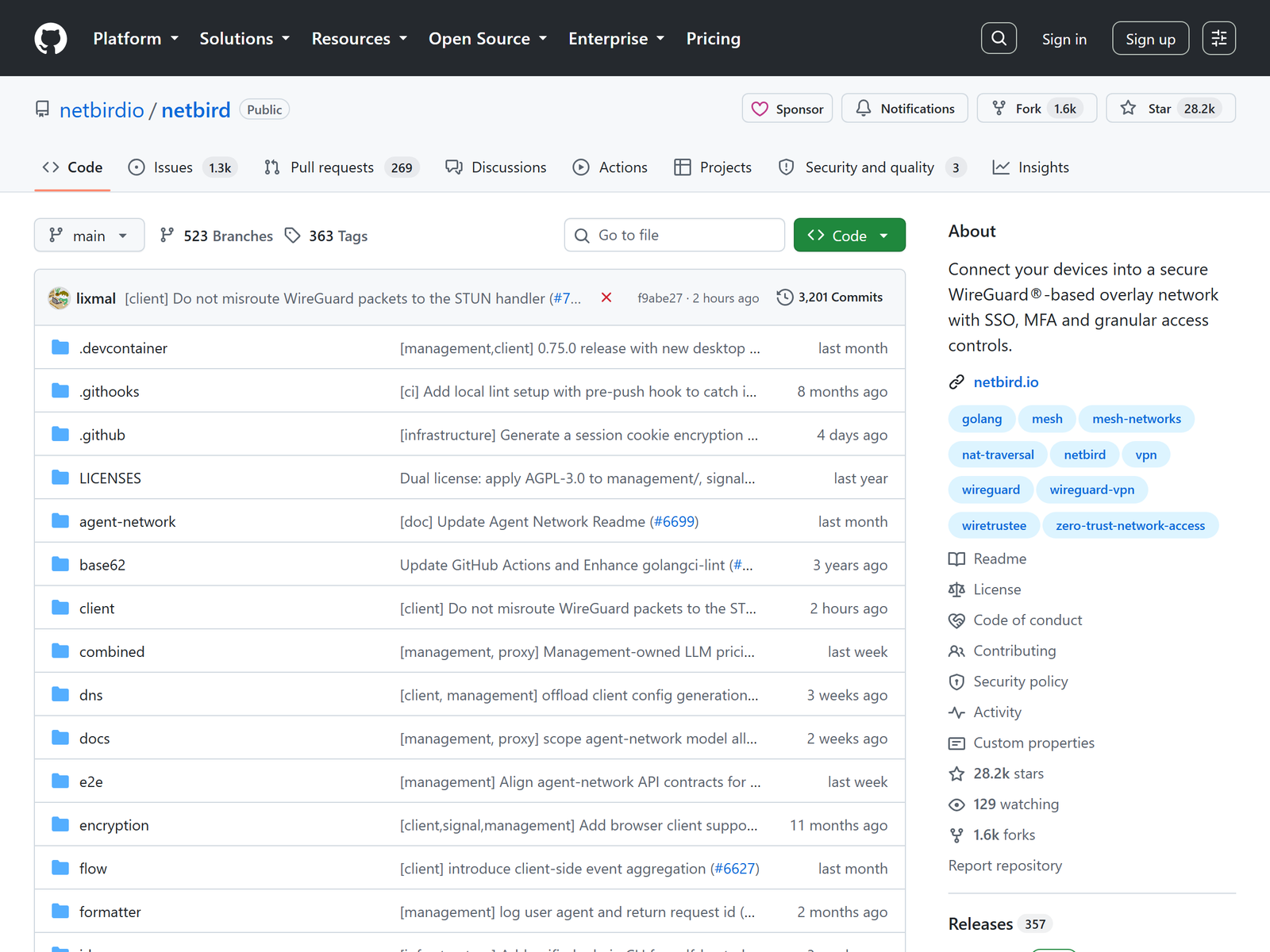
The larger reliability argument is ownership. Every component — management server, signal server and relay — is open source and self-hostable, so your remote access does not depend on a vendor's cloud staying healthy. Since version 0.65 in February 2026, a unified server binary packages those services into a single container, and independent deployment notes put the requirement at roughly one CPU and 2 GB of RAM for a working mesh. That is a small enough footprint that running your own control plane stops being a weekend project.
Speed and performance
The data plane is plain WireGuard, so the cryptographic overhead matches every other WireGuard service on the market. The difference is topology: a direct peer-to-peer path between two offices avoids the detour through a provider's data centre that a hub-and-spoke VPN forces on you, and that usually shows up as lower latency rather than higher bandwidth. Relayed sessions are the exception, since those add a hop.
We have no measured figures for your network and will not invent any. The honest framing is that NetBird removes a detour rather than accelerating a link, and the gain therefore depends entirely on how far apart your peers sit.
Security and privacy
Access control is the product. NetBird supports SSO and MFA through Okta, Microsoft Entra, JumpCloud and Google Workspace, SCIM provisioning to add and remove people automatically, device posture checks that refuse machines failing an OS-version or disk-encryption rule, and identity-bound SSH sessions that produce an audit trail. Activity events can stream to a SIEM.
On jurisdiction and licensing: the company is German, the managed cloud hosts data in the EU, and the code is open. Clients are BSD-3-Clause; the management, signal and relay directories are AGPLv3. One vendor-adjacent listing claims SOC 2 coverage on the managed plan while an independent roundup states there is no SOC 2 Type 2 reference yet. We could not settle that from primary documentation, so treat the certification claim as unverified and ask NetBird directly if it drives your purchase.
Device compatibility
- Clients: Linux, macOS, Windows, Android and iOS, plus Docker images for servers.
- Infrastructure: a Kubernetes operator and network routes for site-to-site links into AWS or on-premise subnets.
- Weak spots: independent reviewers rate the Windows and iOS clients as less mature than the Linux and macOS builds.
- No consumer hardware: no smart TV, console or router-firmware builds, because that is not the target buyer.
Pricing and value
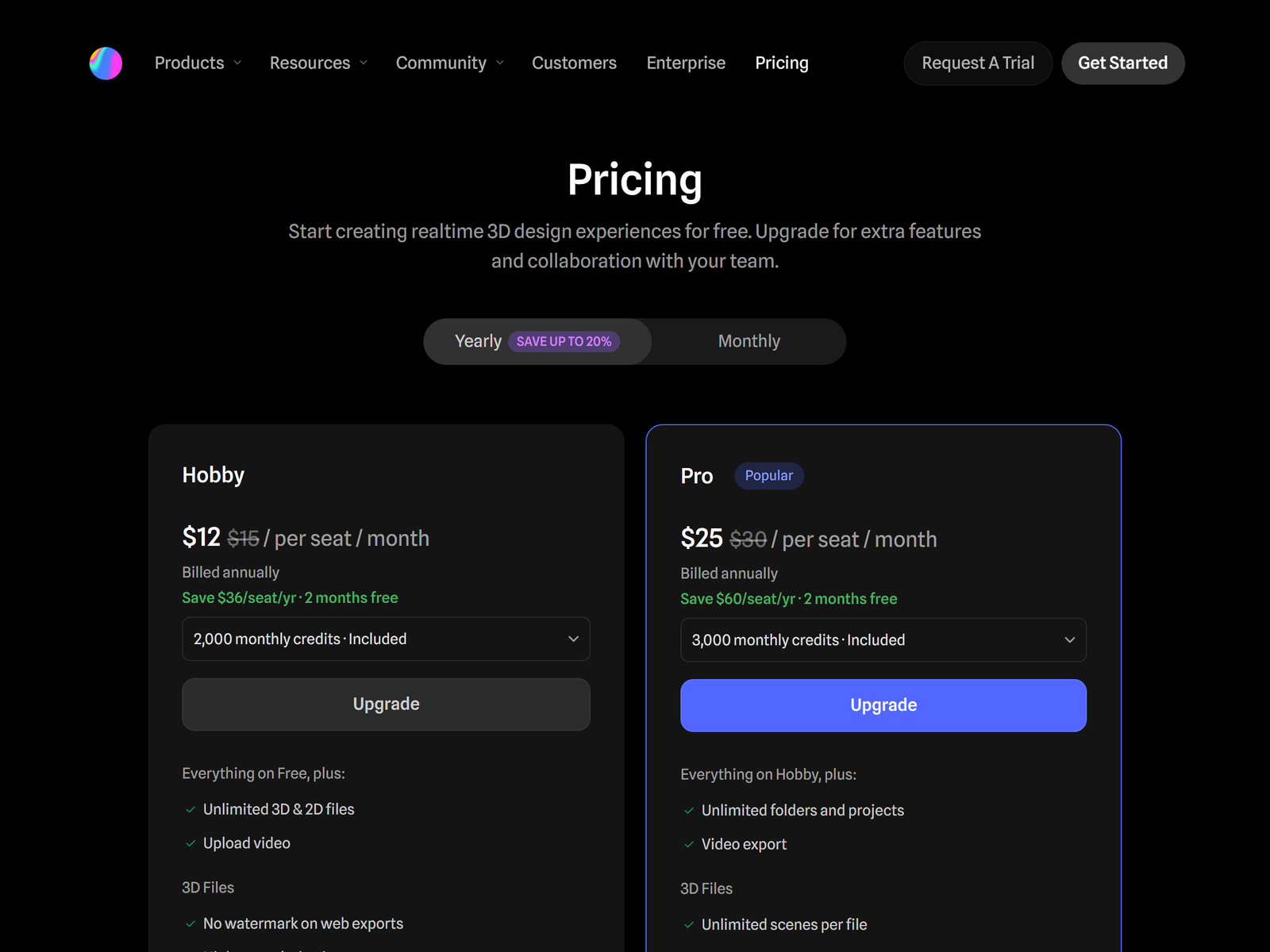
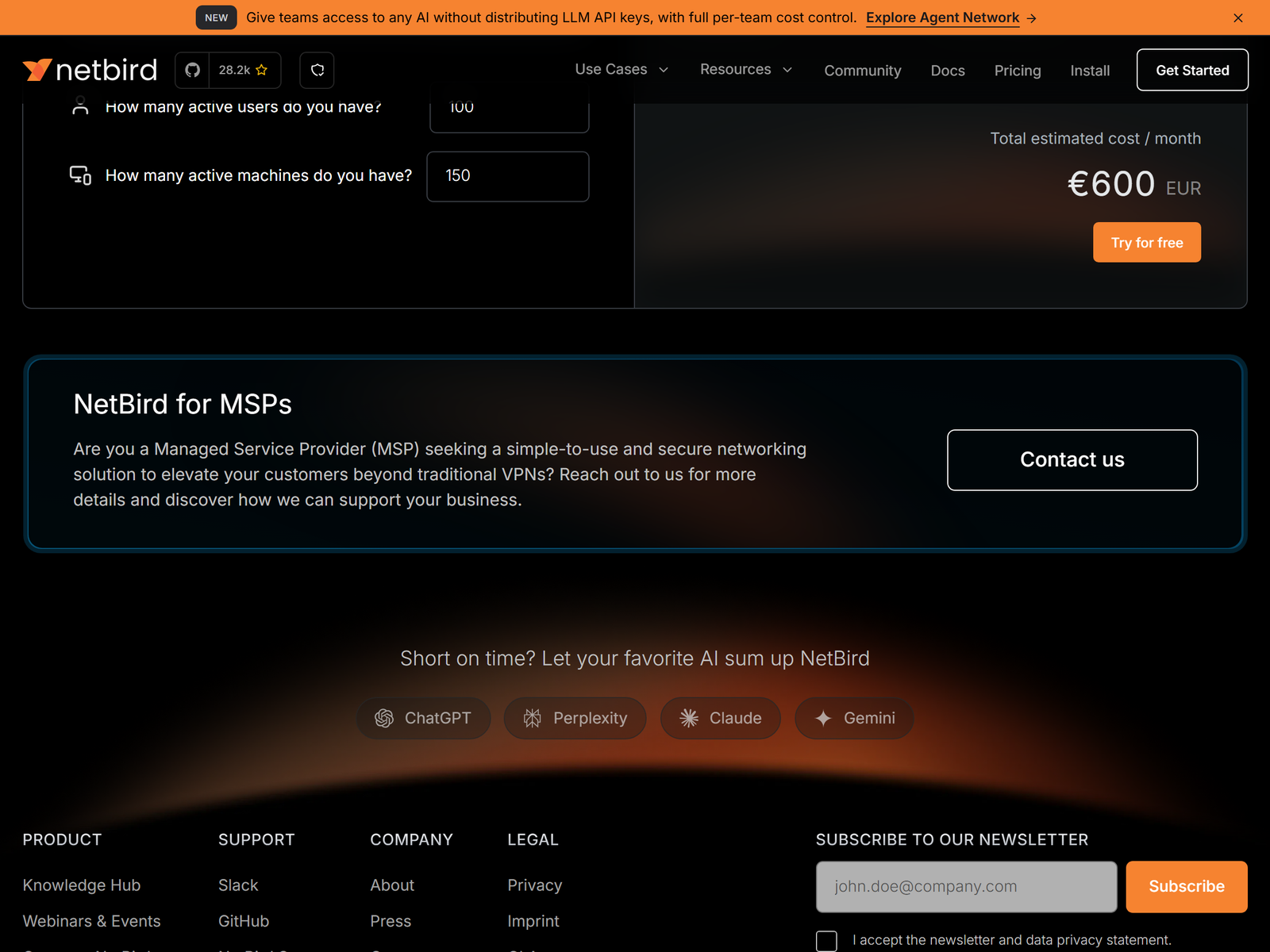
NetBird prices the cloud service in euros. The Free plan is €0 for up to 5 users and 100 machines and still includes SSO, MFA, access controls, private DNS, network routes and NetBird SSH. Team is €6 per user per month with unlimited users, 100 machines plus 10 per user, SCIM and audit logging. Business is €12 per user per month and adds device approvals, MDM and EDR controls, posture checks and event streaming. Extra machines beyond the allowance cost €0.50 each per month, and Enterprise is quoted individually.
Self-hosting changes the arithmetic completely. The community edition carries no user or device ceiling and no fee, and independent documentation from July 2026 puts the optional commercial self-hosted Starter licence at €2,000 per year for up to 50 users and 500 devices. Note that several third-party roundups quote $5 and $10 tiers; the official page lists €6 and €12, so budget from the euro figures.
Pros and cons
- Pro: The whole control plane is open source and self-hostable, so uptime is not outsourced.
- Pro: Free tier is genuinely usable at 5 users and 100 machines.
- Pro: Zero-trust controls — posture checks, default-deny policies, SCIM — that consumer VPNs simply do not have.
- Pro: German company, EU-hosted cloud, GDPR-aligned data residency.
- Con: No streaming, no geo-catalog use case whatsoever.
- Con: Self-hosting still assumes Docker and DNS competence.
- Con: Windows and iOS clients trail the Linux and macOS versions.
- Con: Compliance certification story is muddier than the marketing implies.
Our scores
Scored as infrastructure software, not as a consumer tunnel. Streaming is deliberately absent from the scorecard because the product does not offer it.
NetBird vs Tailscale vs Speedify
| NetBird | Tailscale | Speedify | |
|---|---|---|---|
| Model | Open-source mesh, cloud or self-hosted | Mesh, proprietary control plane | Consumer tunnel with channel bonding |
| Free tier | 5 users, 100 machines | Personal plan, unlimited devices | Limited free data |
| Paid entry | €6/user/month | Per-user pricing | Consumer subscription |
| Self-host control plane | Yes, no fee | No | No |
| Best at | Uptime and access control | Fastest setup | Holding a flaky link together |
Frequently asked questions
Is NetBird really free?
Two ways, yes. The cloud Free plan covers 5 users and 100 machines permanently, and the self-hosted community edition has no user or device limit at all. You pay when you want enterprise identity provisioning, posture checks or support.
How is NetBird different from Tailscale?
Both build WireGuard meshes with similar ergonomics. The split is the control plane: NetBird publishes and licenses every server component so you can run it yourself, while Tailscale's coordination server stays proprietary and hosted.
Can I use NetBird to watch streaming services abroad?
It is the wrong tool. There are no exit locations sold for media catalogs and no support for that use case, so pick a consumer provider from our stable VPN category instead.
What does self-hosting actually require?
Since v0.65 a single container runs management, signal and relay together, and published deployment notes suggest a 1 CPU / 2 GB virtual machine handles a working mesh. You still own updates, backups and monitoring.
Does NetBird see my traffic?
Traffic is end-to-end encrypted between peers with WireGuard, and the cloud service coordinates connections rather than reading them. Self-hosting removes the third party from coordination as well.
My take: the bottom line on NetBird
NetBird wins its category on a technicality that turns out to matter enormously. Reliability is usually sold as bigger server fleets or clever bonding, but the failure that actually costs a remote team a working day is a control plane you do not own going dark. NetBird is the mainstream mesh product that lets you delete that risk entirely, and the free tier is generous enough to prove the model before you commit.
Choose it if remote access to infrastructure has to survive vendor outages, audits and a compliance conversation. Avoid it if you wanted a consumer VPN, because nothing here serves that need. For a smoother onboarding with less operational homework, Tailscale remains the easier first step, and the wider most stable VPN category covers the consumer options we rate for uptime.