Cloudflare 2026: Machine Traffic Surpasses Humans on the Web
Category: Tech Deep Dives
By the AI Free Tool Editorial Team | Last updated: August 10, 2026
Cloudflare reported on August 6, 2026 that more than 50% of the traffic flowing across its global network now comes from machines, not humans. It is the first time in the company's history that non-human traffic has eclipsed human traffic, and CEO Matthew Prince says the crossover arrived a full year ahead of his own forecast. The implications for how the internet is built, monetized, and consumed are enormous.
TL;DR: Cloudflare's Q2 2026 earnings revealed that machine traffic surpassed human traffic in May 2026, a year earlier than predicted. AI agent traffic grew 7,851% year-over-year per HUMAN Security. OpenAI, Meta, and Anthropic generate 96% of AI bot traffic. Cloudflare is building pay-per-request infrastructure to replace the ad-funded web model.
The Numbers Behind the Crossover
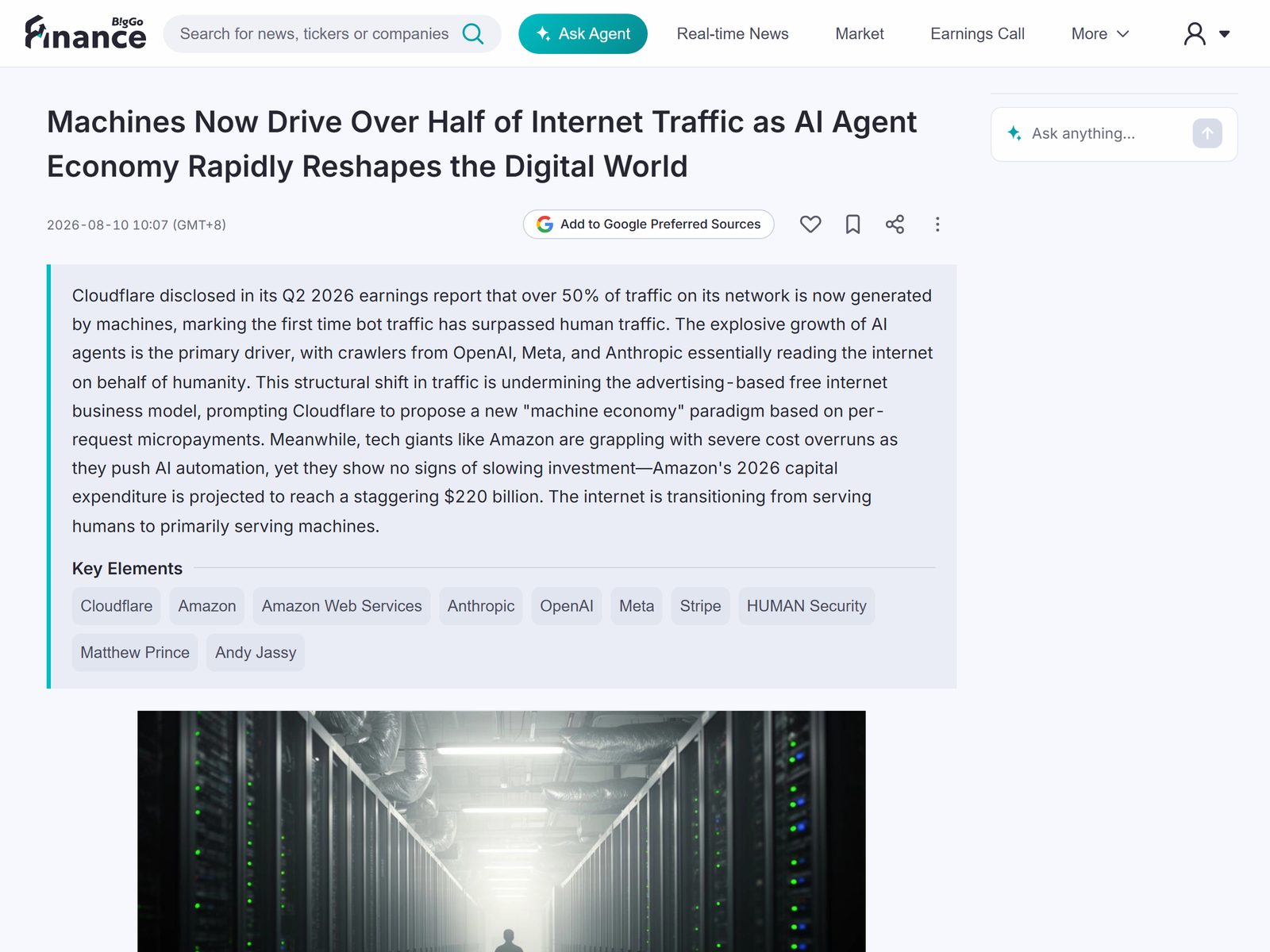
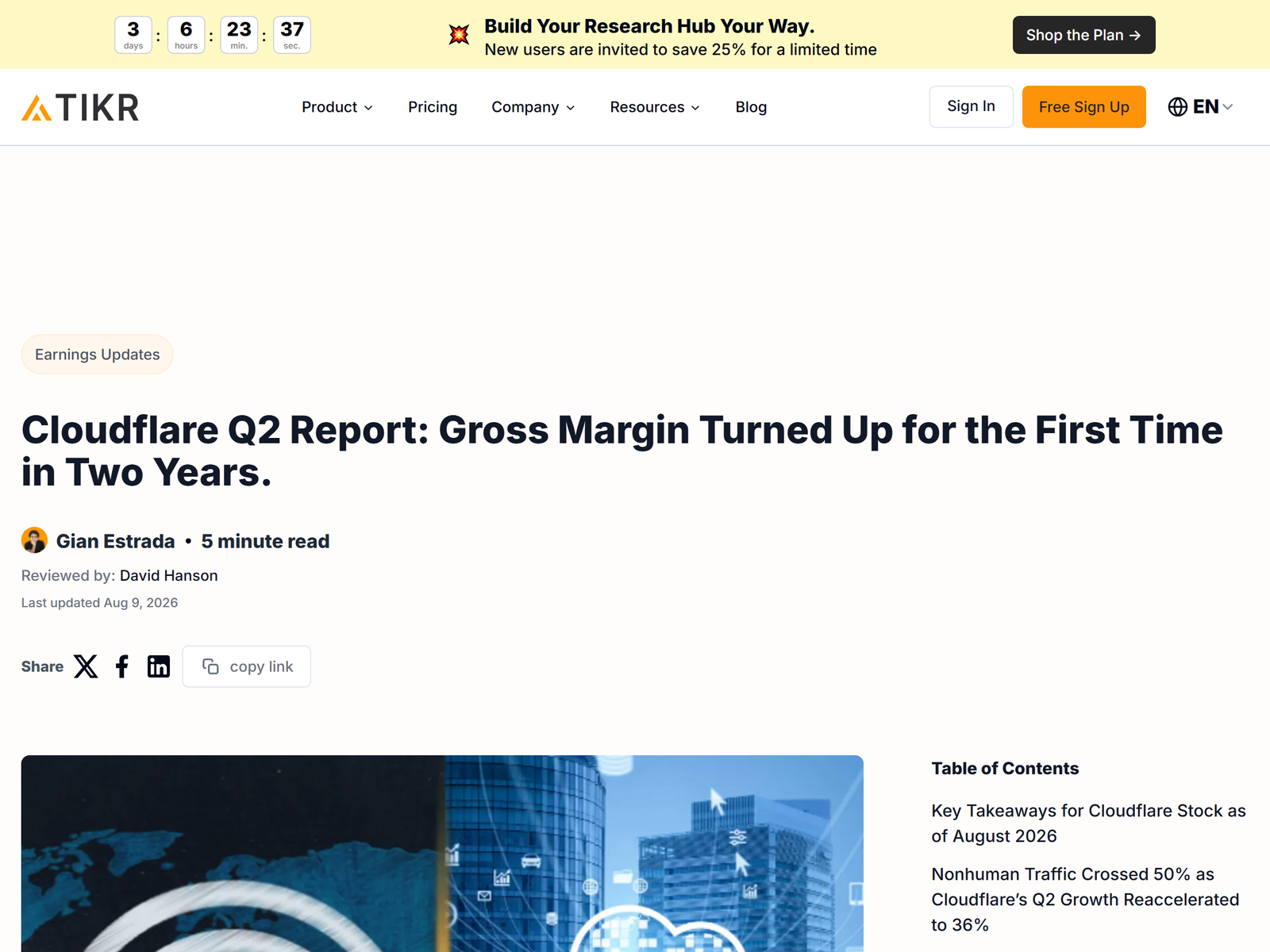
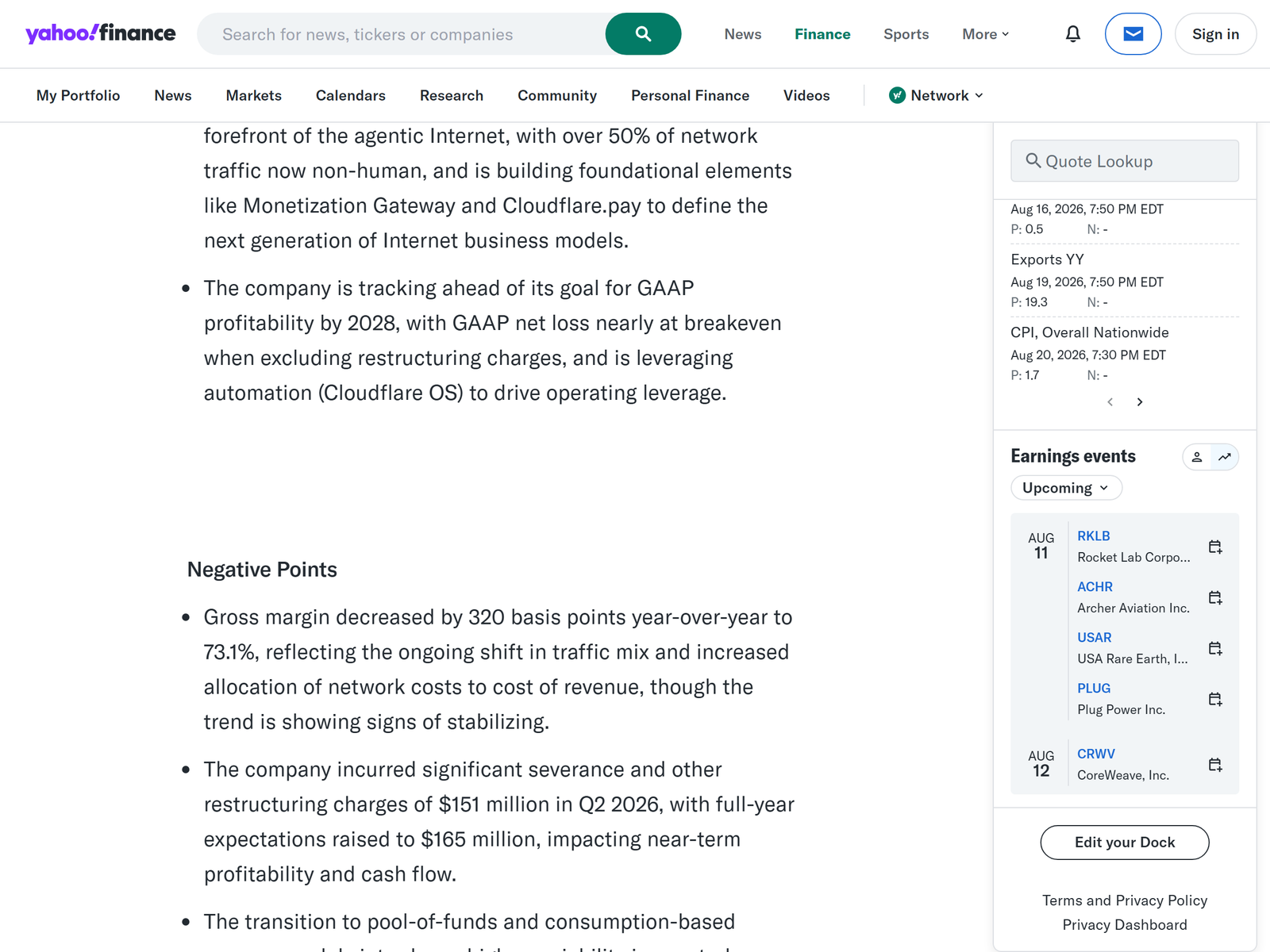
Cloudflare processes traffic for roughly one-fifth of all websites on Earth. During its Q2 2026 earnings call, Prince stated plainly: For the first time in human history, more than 50% of the traffic flowing across Cloudflare's network was not human. The crossover happened in May 2026. Prince had previously predicted late 2027. The Yahoo Finance earnings call transcript confirmed the milestone.
The numbers are stark. According to the 2026 AI Traffic and Cyber Threat Benchmark Report from HUMAN Security, AI agent traffic, defined as autonomous programs that click links, fill forms, and complete checkouts, surged 7,851% year-over-year. Real-time scraping crawler traffic grew 597%. Training crawlers still account for roughly 67.5% of AI-driven traffic, but their share is declining as agentic traffic explodes.
The sources of this machine traffic are highly concentrated. OpenAI alone accounts for approximately 69% of total AI bot traffic, Meta about 16%, and Anthropic about 11%. Combined, these three companies represent roughly 96% of all AI-driven web requests. A handful of AI giants are effectively reading the internet on behalf of all humanity.
Prince used a simple analogy: when a person shops for a camera, they might visit five websites. When they delegate the task to an AI agent, it might crawl 5,000. Every human intent gets amplified into thousands of machine requests.
Why This Breaks the Advertising Model
For nearly three decades, the free internet has rested on an implicit contract: users see ads, websites earn revenue, and that revenue subsidizes free content. Machines do not watch ads. They do not make impulse purchases. They do not click sponsored links. When the majority of traffic comes from agents rather than humans, the advertising model that funds most of the web starts to collapse.
Prince did not mince words on the earnings call. He said the advertising-supported model defined and dominated by Google is approaching its end. The new paradigm he proposed is machine-to-machine, pay-per-request, charging a fraction of a cent for each AI-initiated web request. Cloudflare is already building the infrastructure for this through its Monetization Gateway and cloudflare.pay initiatives, as reported by TIKR's financial analysis.
The company also rolled out new AI crawler controls that classify automated traffic into three categories: Search, Agent, and Training. Starting September 15, 2026, new domains onboarding to Cloudflare will get default settings that block Training and Agent crawlers on pages displaying ads while allowing Search crawlers. That positions Cloudflare as the gatekeeper, and potential toll collector, for the agentic web.
Key Takeaways
- Machines surpassed humans in May 2026. Over 50% of Cloudflare's network traffic is now non-human, a year earlier than CEO Matthew Prince predicted.
- AI agent traffic grew 7,851% year-over-year. HUMAN Security reports that autonomous agents capable of clicking, filling forms, and checking out are the fastest-growing traffic category.
- Three companies dominate AI bot traffic. OpenAI (69%), Meta (16%), and Anthropic (11%) together account for roughly 96% of all AI-driven web requests.
- The ad-funded web is at risk. Machines do not view ads or make impulse purchases, undermining the revenue model that subsidizes free content across the internet.
Cloudflare's Bet on the Agentic Internet
The Q2 2026 earnings report was not just about traffic milestones. Cloudflare posted revenue of $696.1 million, up 36% year-over-year, beating consensus by approximately 4-5%. Operating income reached $96.1 million at a 13.8% margin. Gross margin ticked up 30 basis points sequentially to 73.1%, its first sequential improvement in eight quarters. The company raised full-year 2026 guidance to $2.864-2.870 billion in revenue, according to BigGo Finance's comprehensive report.
The Workers developer platform crossed 7.4 million developers after adding nearly 2 million in Q2 alone, more than the company added in all of 2025. Cloudflare added a record 986 large customers paying over $100,000 annually, bringing the total to 4,698, up 27%. Dollar-based net retention climbed to 120%.
Prince compared the current shift to the transition from desktop to mobile, with one critical difference: the previous platform shift took a decade. This one took months. He predicted that in five years, machine traffic could be 1,000 times human traffic, reducing human activity on the internet to what CFO Thomas Seifert called a statistical rounding error.
Cloudflare also launched an Answer Engine Optimization (AEO) Visibility Dashboard that lets brands measure how AI assistants reference and recommend them, tracking Citation Rate, Mention Rate, and Share of Voice. The implication is clear: SEO is shifting from being found by humans to being cited by AI. Companies that ignore this shift will lose visibility not in search results, but in the answers that agents retrieve on behalf of their users.
My Take: The Bottom Line
Cloudflare is not just reporting a traffic milestone. It is positioning itself as the toll booth for the agentic internet. When machines generate most web traffic, the company sitting between every AI agent and the websites they access becomes structurally indispensable. The cloudflare.pay initiative, the crawler classification system, and the AEO dashboard are all pieces of a monetization strategy that could make Cloudflare the payment rail for machine-to-machine web commerce.
The risk is concentration. If 96% of AI bot traffic comes from three companies, and one CDN controls access to a fifth of all websites, the internet's power structure compresses to a handful of intermediaries. Publishers who depend on ad revenue face an existential question: when machines outnumber humans 1,000 to one, who pays for the content those machines are scraping? Prince's answer is micropayments per request. Whether that model generates enough revenue to replace advertising remains to be seen. Best for Cloudflare shareholders who own the infrastructure layer. Trade-off: publishers and content creators face a revenue cliff unless pay-per-request economics scale faster than ad revenue declines.
Frequently Asked Questions
What does it mean that machine traffic surpassed human traffic?
As of May 2026, more than 50% of HTTP requests returning HTML content on Cloudflare's global network originate from bots and automated programs rather than human users. This is the first time in history that non-human traffic has exceeded human traffic on a major CDN.
Why is AI agent traffic growing so fast?
AI agents amplify human intent. When a person asks an AI to compare products, research a topic, or book a service, the agent may visit thousands of websites on the user's behalf, generating exponentially more traffic than a human would browsing manually.
Which companies generate the most AI bot traffic?
According to HUMAN Security's 2026 report, OpenAI accounts for approximately 69% of AI bot traffic, Meta for 16%, and Anthropic for 11%. Combined, these three companies represent roughly 96% of all AI-driven web requests.
How does this affect the advertising model?
Machines do not view ads, click sponsored links, or make impulse purchases. As machine traffic dominates, the ad-funded model that subsidizes free content across the internet becomes unsustainable. Cloudflare is proposing a pay-per-request micropayment system as an alternative.
What is Cloudflare doing about AI crawlers?
Cloudflare introduced crawler controls that classify automated traffic as Search, Agent, or Training. Starting September 15, 2026, new domains will default to blocking Training and Agent crawlers on ad-displaying pages while allowing Search crawlers.
This analysis is based on Cloudflare's Q2 2026 earnings call (August 6, 2026), HUMAN Security's 2026 AI Traffic Benchmark Report, and coverage from Yahoo Finance, TIKR, and BigGo Finance. For more AI industry deep dives, visit our Tech Deep Dives section, or explore aifreetool.site for curated AI tools.