How to Make Money Selling T-Shirt Designs With Kittl
Category: Monetization Guide
Selling t-shirt designs made with Kittl is a slow-compounding way to make money, and anyone promising you $10,000 a month by Friday is lying. Here is the honest shape of it: the Pro plan costs $15 monthly or $10 a month billed at $120 annually, a print-on-demand shirt nets $5 to $10 profit, and client design work pays $35 to $120 per file. Months one and two typically return $0 to $150. Months four through six, with 80 to 150 listings live, land somewhere between $300 and $1,200.
Two revenue paths run in parallel here, and confusing them is the most common reason people quit. Path one is passive royalties from your own print-on-demand listings. Path two is active client work — designing files for other sellers who cannot draw. Path two pays this month. Path one pays next year. Run both.
What Kittl Gives You for the Money
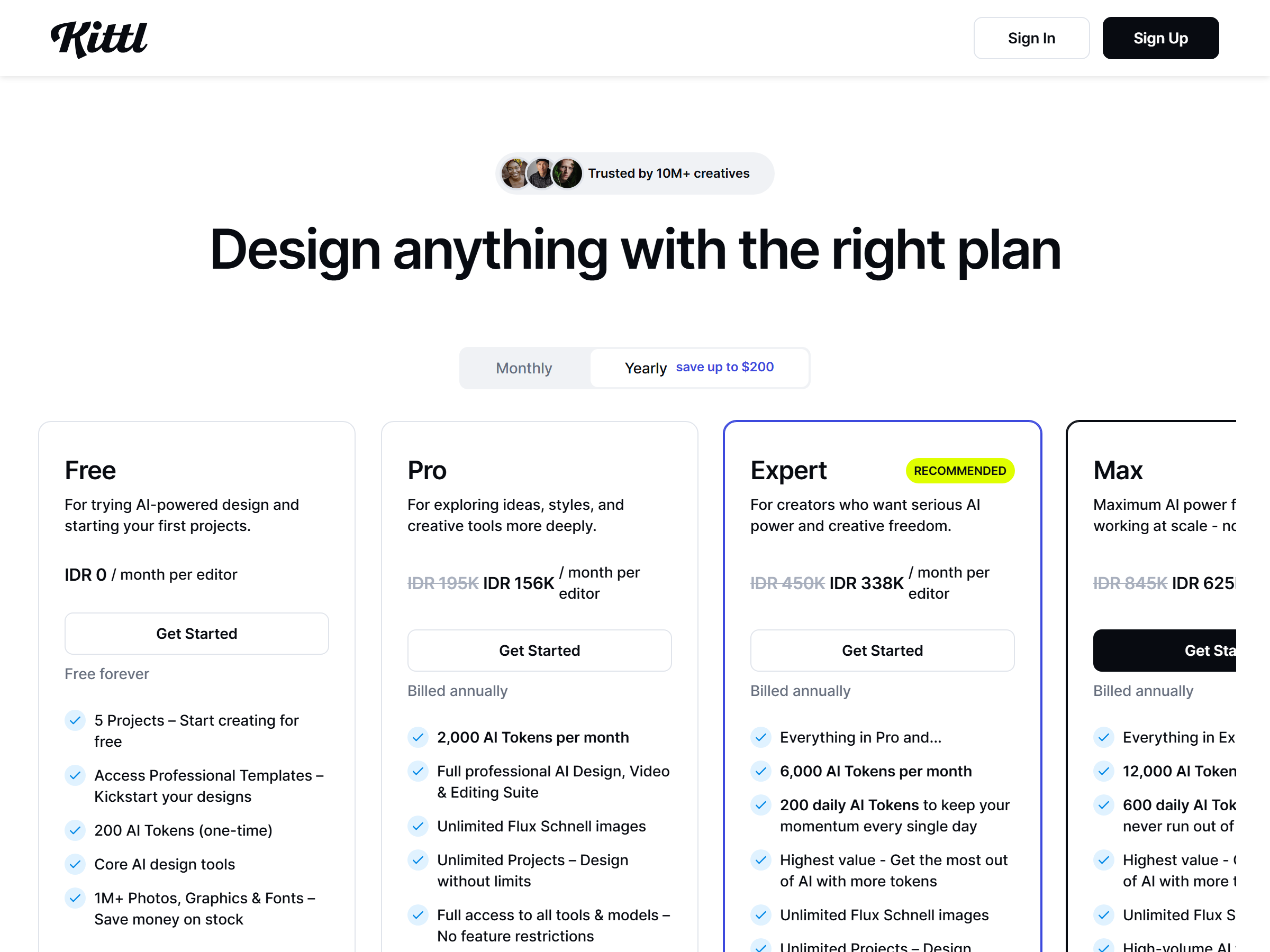
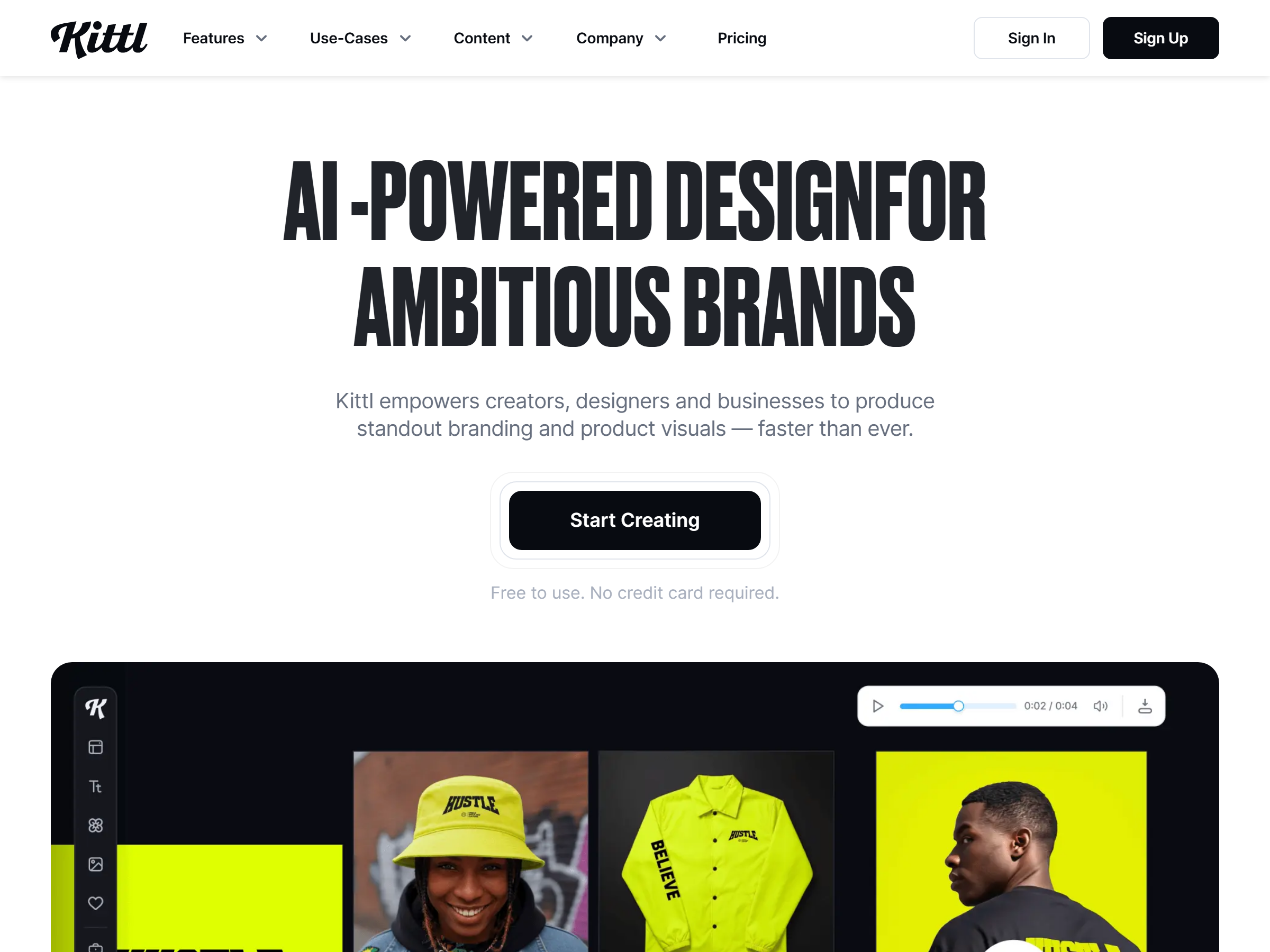
Kittl is a browser-based design platform built around typography, which matters because roughly 70% of what sells on apparel marketplaces is text-led. Its text engine does arching, warping, distressing, layered shadows and 3D extrusion without the manual vector work those effects normally demand. Around it sit 10,000+ templates, over a million photos, graphics and fonts, an AI image generator, a background remover, a raster-to-vector converter and a mockup renderer.
| Plan | Price | AI tokens | Export | Commercial license |
|---|---|---|---|---|
| Free | $0 | 200 one-time | Low-resolution raster | No |
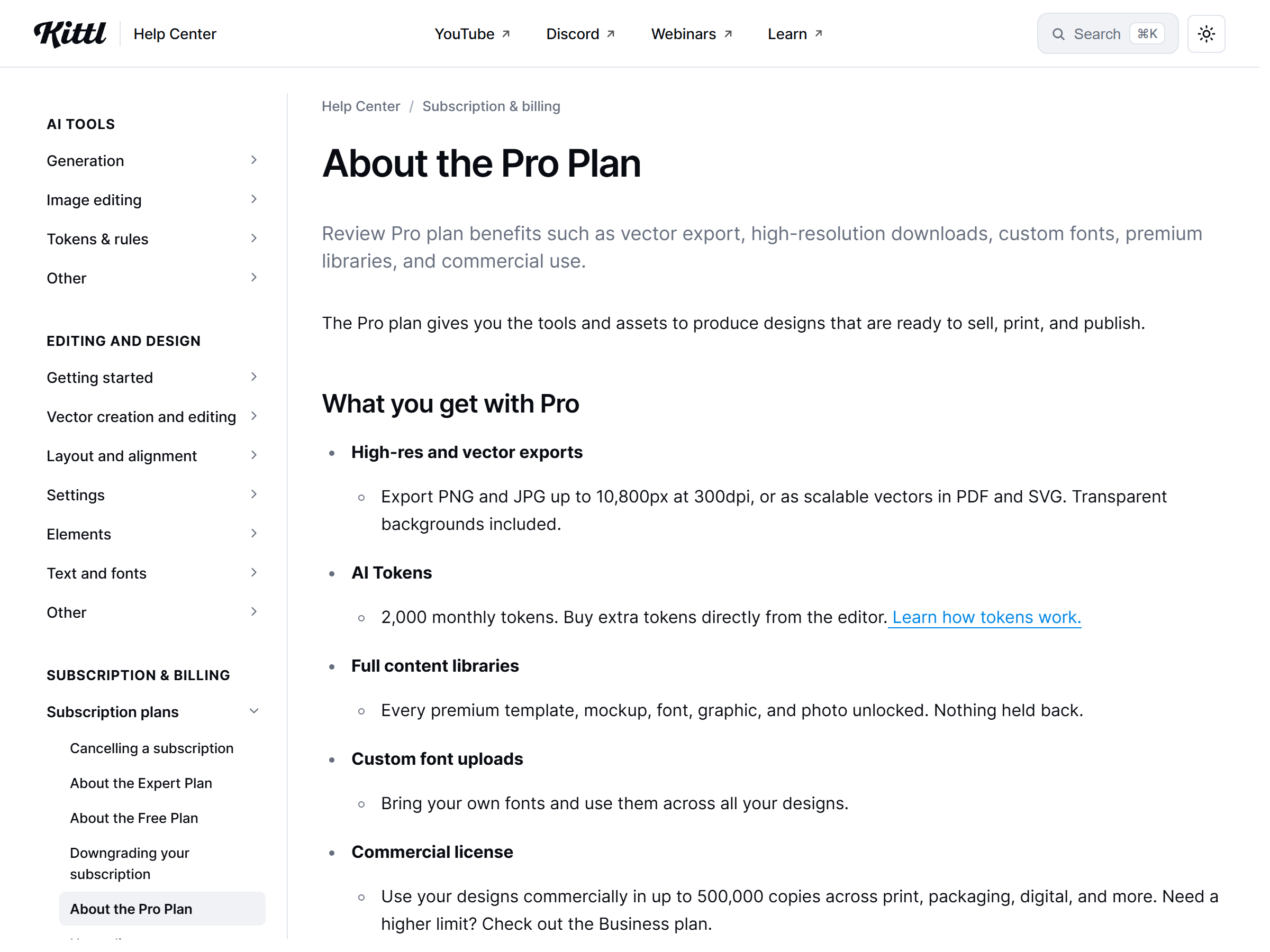
| Pro | $15/mo or $10/mo billed $120 annually | 2,000 / month | PNG and JPG to 10,800 px at 300 dpi, plus SVG and PDF vector | Yes, up to 500,000 copies |
| Expert | $30/mo or $24/mo billed $288 annually | 6,000 / month | Same, plus brand kits and 100 GB storage | Yes, extended |
The line that decides everything is the licence. The Free tier gives you no commercial rights and no print-resolution export, so it is a training environment and nothing else. Pro is the working plan: at $10 a month on annual billing, a single $15 shirt sale roughly covers it, and the 500,000-copy licence limit will not trouble anyone reading this.
Where the Money Actually Comes From
Pick your channels deliberately rather than uploading everywhere at once:
- Etsy — best for niche gift designs. Budget $0.20 per listing and a 6.5% transaction fee, and expect to need 60+ listings before the algorithm gives you consistent traffic.
- Amazon Merch on Demand — tiered account slots and hands-off fulfilment. Slower to get accepted, higher ceiling once you tier up.
- Printify or Printful plus Shopify — you own the customer and the margin, but you also own the traffic problem.
- Client design work on Fiverr or Upwork — $35 to $120 per design, paid within a week. This is your cash-flow engine while listings mature.
- Design packs — bundles of 20 to 30 print-ready SVG files sold to other sellers at $19 to $49, with the extended licence question answered clearly in the listing.
Realistic arithmetic on the passive side: 100 listings, a 1% to 2% monthly sell-through, $7 average profit per unit. That is $70 to $140 a month from a catalogue that took maybe 40 hours to build. Add one $80 client design a week and the same month becomes $390 to $460. That mix is what a working month looks like in year one.
Step by Step: From Signup to First Sale
- Spend the 200 free tokens learning the text engine specifically. Arch, distress and layered shadow are the three effects that carry apparel designs.
- Choose one narrow niche with an emotional hook — pickleball, NICU nurses, sourdough baking, bass fishing. Broad "funny quotes" catalogues do not rank.
- Research live demand before designing. Read the review text on the top 20 listings in your niche and note the exact phrases buyers repeat.
- Upgrade to Pro and build 20 designs in one sitting using a single visual style, exported as transparent PNG at 4,500 x 5,400 px, 300 dpi.
- Render mockups inside Kittl instead of paying for a separate mockup subscription, then write listing titles around the buyer phrases you collected.
- Publish 20 listings, wait 14 days, and keep only what got impressions. Delete or rework the rest — a dead listing costs you nothing but teaches you nothing either.
- In parallel, list a Fiverr gig for "print-ready t-shirt design, 24 hour delivery, SVG plus PNG" at $45. Client cash funds the catalogue build.
Quality, Rights and the Traps Nobody Warns You About
Three mistakes account for most account suspensions and refund requests. First, trademarked phrases: run every slogan through the USPTO search before uploading, because "Live Laugh Love" style phrases are frequently registered in apparel class 25. Second, low-contrast art on coloured garments — what looks rich on a white canvas turns to mud on heather grey. Third, AI-generated raster art scaled up past its native resolution, which prints as visible mush at 300 dpi.
On rights, be precise with clients. Your Kittl Pro licence covers your own commercial use up to 500,000 copies. If a client wants exclusive ownership of a design you sold them, price it as an exclusivity buyout at three to five times your normal rate, remove it from your own catalogue, and put that in writing.
One workflow habit worth adopting immediately: keep every design as an editable project, not just a flat export. Recolouring an existing file for a new holiday takes four minutes. Rebuilding it from scratch takes forty.
Frequently Asked Questions
Can I sell designs made on Kittl's free plan?
No. Commercial rights start on Pro, and the free tier exports at web resolution only. Treat the free plan as a two-week training course.
How many designs do I need before sales become predictable?
Most sellers report a shift somewhere between 80 and 150 live listings in a single niche. Below 50, results are mostly noise.
Is the AI image generator good enough for apparel printing?
For textures, backgrounds and illustrative elements, yes. For the main type treatment, build it with the text tools — AI-generated lettering still produces malformed characters often enough to be risky on a printed product.
Which pays faster, print-on-demand or client work?
Client work, by a wide margin. A Fiverr design order pays inside seven days; a new Etsy listing may take two months to see its first sale.
Do I need to know graphic design already?
No, but you need taste and patience. Kittl removes the technical barrier, not the judgement about what a pickleball player would actually wear in public.
My Take: The Bottom Line
Kittl is the best value in this category for one specific person: someone who will treat design as inventory and commit to 100 listings before judging the results. At $10 a month on annual billing it is cheaper than a single stock-asset licence, and the typography engine genuinely closes the skill gap between a beginner and a mid-level apparel designer.
Who should walk away: anyone who needs income within 30 days from passive listings alone, and anyone unwilling to do trademark checks. The market is crowded, the algorithms are unforgiving, and the sellers who win are the ones who picked a narrow audience and stayed there for six months. My recommendation is to fund the catalogue with client design work from week one so the slow part never feels like a loss. You can review the full feature list at aifreetool.site/tool/kittl/ before committing to a plan.
Start free, learn the text effects this week, then move to Pro the day you list your first product — try Kittl here and see the full tool profile at aifreetool.site/tool/kittl/.