How to Make Money Mastering Music With LANDR in 2026
Category: Monetization Guide
Written by the aifreetool.site editorial team. Last updated August 10, 2026. We verified LANDR's plan structure against its own pricing page before publishing, and we take no affiliate commission on anything mentioned here.
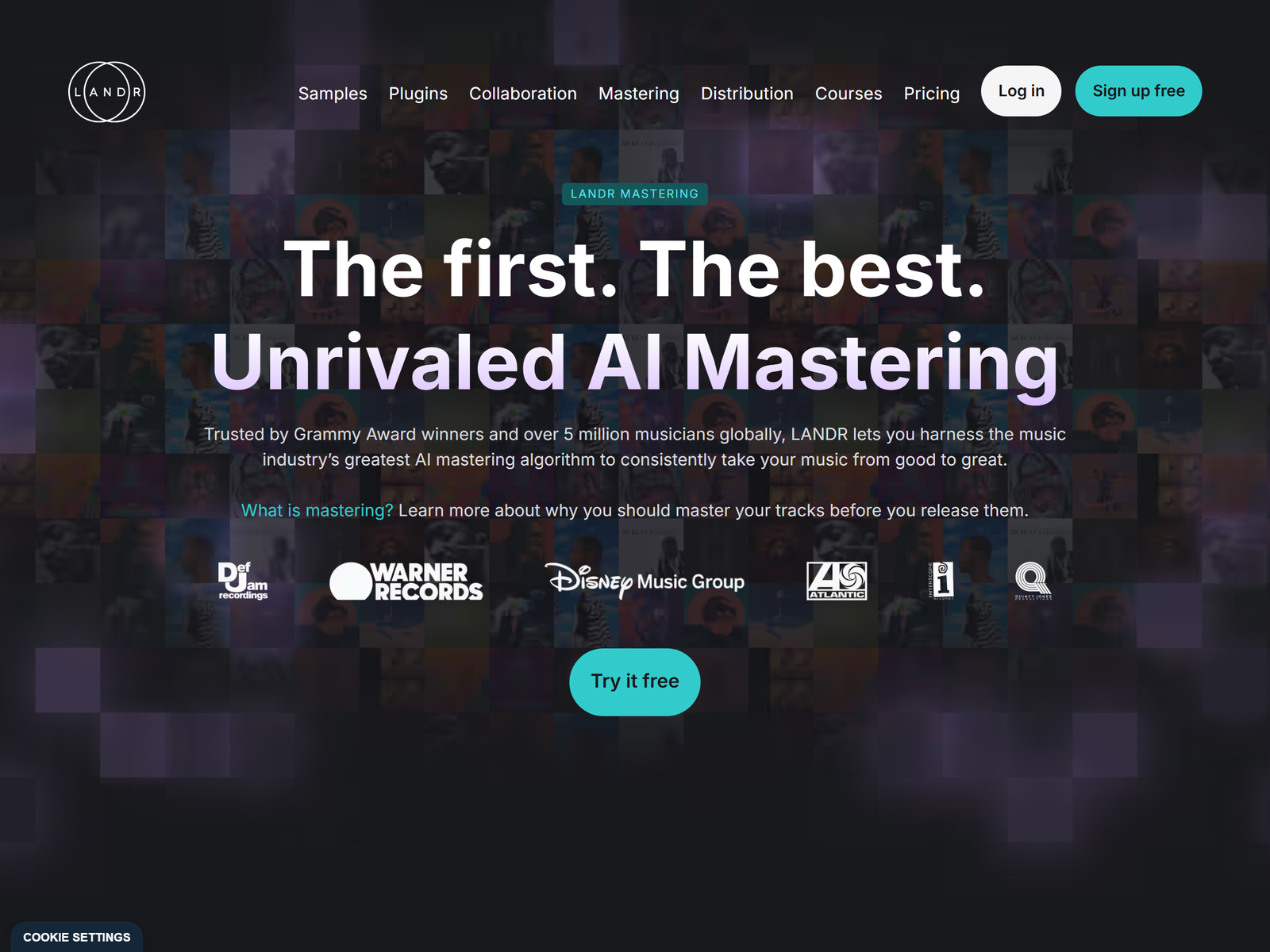
TL;DR: Mastering music with LANDR costs about $10 per track on pay-as-you-go, or roughly $13 to $25 a month on a subscription. Independent artists happily pay $25 to $60 for a finished, release-ready master. Thirty tracks a month puts you near $750 to $1,800 in revenue on well under $50 of tool cost.
You can make money mastering music with LANDR without a treated room, a $3,000 monitor pair, or ten years of ear training. What you sell is not the algorithm, which anyone can rent. You sell turnaround speed, loudness compliance, and the plain fact that most bedroom artists have no idea what a release-ready file should look like.
What LANDR Does, and What It Will Not Fix
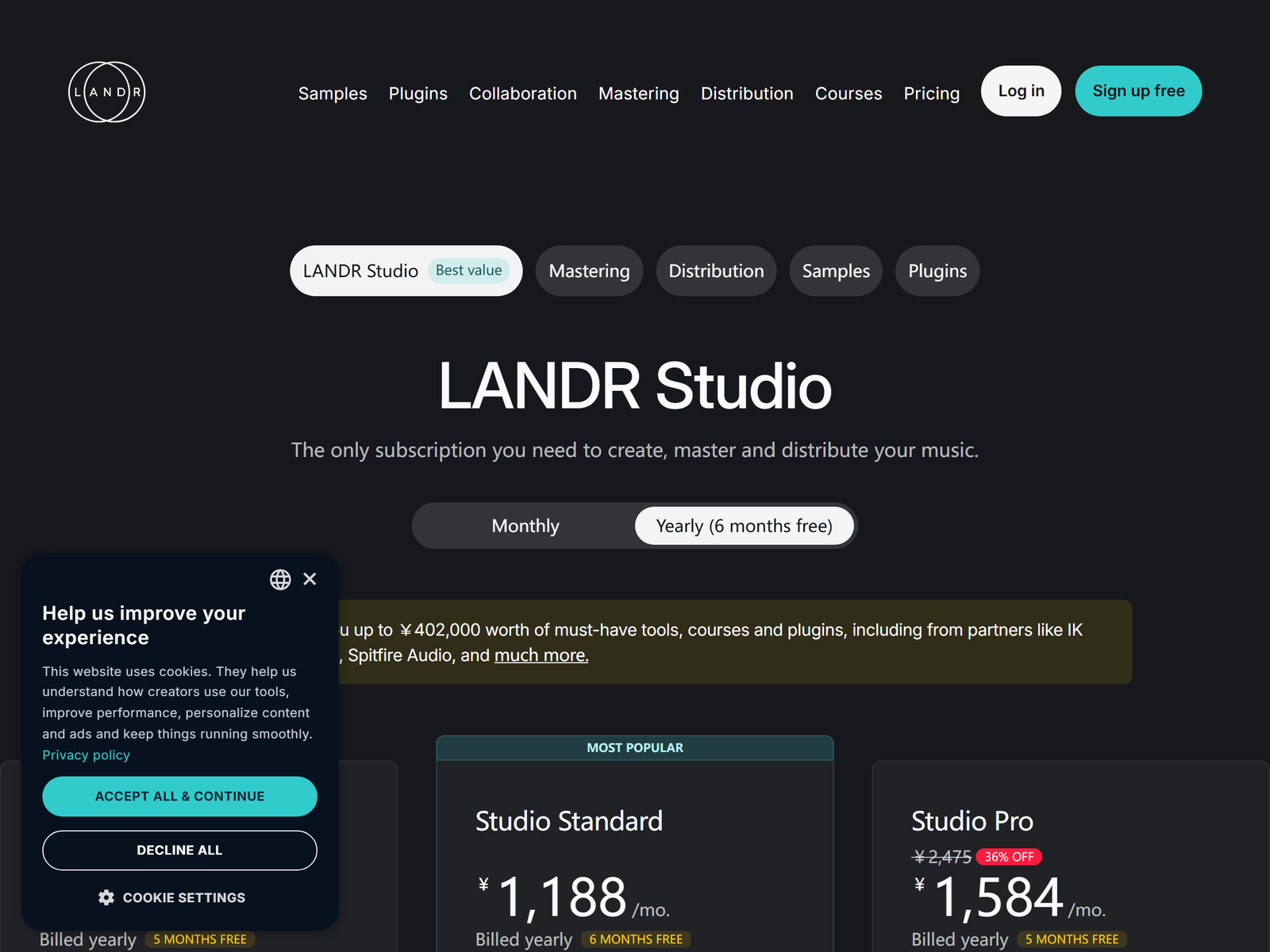
LANDR is an online mastering service. You upload a stereo mixdown, pick a style — Warm, Balanced, or Open — choose an intensity, and a processed file comes back in about a minute. Album mastering analyses a whole tracklist and holds loudness and tone consistent across every song on it.
Higher tiers add a plugin that runs inside your DAW, and every subscription bundles distribution to streaming platforms. The engine performs most reliably on modern beat-driven material: pop, hip-hop, electronic, and R&B. On sparse acoustic, jazz, or orchestral recordings it can push loudness harder than the music wants, which is precisely why the lower intensity settings exist.
Two hard limits deserve your attention. It will not rescue a bad mix, because muddy low end and clashing frequencies survive mastering intact. And stem mastering sits on the top subscription tier only, capped at four stems.
The Service You Sell and What It Pays
Your product is a release package, not a file. For one flat fee the artist receives a mastered WAV for distribution, an MP3 for previews, their loudness figures written out in plain language, and a short note on what the mix is doing well and badly.
| Line item | What it costs you | What you charge |
|---|---|---|
| Single track master | About $10 per track, or pennies on a subscription | $25 to $60 |
| Four-track EP | One month of a Studio plan | $120 to $200 |
| Rush 24-hour turnaround | $0 | Add $15 to $25 |
| Written mix feedback | 15 minutes of your time | Add $20 |
The gap that makes this viable is the price of a human engineer. A professional mastering session still runs roughly $50 to $200 per track, with turnaround measured in days. You sit deliberately underneath that, at a price where a hobbyist releasing a single every six weeks does not need to think twice.
Thirty tracks a month at an average of $35 is $1,050 in revenue against a subscription in the $13 to $25 band. That volume is reachable by month four if you work one genre community hard and keep your reply times short.
Your First 30 Days, Step by Step
- Days 1 to 3: master ten mixes of your own. Free previews carry a watermark, which is fine for study. Note which intensity setting suits which genre and write those pairings down.
- Days 4 to 7: build a before-and-after page. Two audio players per example, level-matched so the comparison is honest. That page closes more sales than any copy you will ever write.
- Days 8 to 14: pick one community and live in it. A subreddit for your genre, a producer Discord, or a local scene. Answer mixing questions for free and keep the service in your signature, not in every reply.
- Days 15 to 21: run a founding-client offer. Five masters at $20 each in exchange for a written testimonial and permission to use the audio. Deliver inside 24 hours, every time.
- Days 22 to 30: raise the price and list the gig. Move to $35, publish a package on a freelance marketplace such as Fiverr or Upwork, and keep showing up in the community, because that is where repeat buyers come from.
Setting Expectations Without Overpromising
Tell clients you use AI-assisted mastering. Some will shrug, a few will walk, and the ones who stay can never accuse you later of hiding it. That single sentence prevents nearly every refund argument in this line of work.
Write your targets down. Streaming platforms normalise playback, and Spotify's published recommendation sits around -14 LUFS integrated with true peaks below -1 dBTP. Delivering to that target, and saying so in the handover email, makes you read as a professional rather than someone clicking a button.
Cap revisions at two and define what a revision is: a different style or intensity pass, not a re-mix. If the mix itself is the fault, say so, refund the fee, and offer a paid mix repair instead. Turning down bad source material protects the before-and-after page that earns you everything else.
Pro Tips and Pitfalls
- Never send a watermarked preview by accident. Download the clean file and listen to the first ten seconds before it leaves your outbox.
- Ask for a 24-bit WAV with at least 3 dB of headroom and no limiter on the master bus. Half of all quality complaints vanish once clients stop sending crushed MP3s.
- Handle distribution carefully. LANDR bundles it, but the artist should own their release account rather than sitting inside yours.
- Do not fight free tools on price. BandLab masters for nothing, so your fee has to buy judgement, a written note, and a fast human reply.
- Widen the offer into adjacent audio work. Podcast cleanup with Cleanvoice reaches the same inbox and the same client base.
Who Should Skip This
Skip it if you cannot hear the difference between a good master and a merely loud one. Clients will hand you dense, dynamic, or unusual material, and somebody has to decide when the algorithm made a track worse. Without that judgement you are reselling a $10 upload with extra steps.
Skip it too if you wanted passive income. This is a volume service built on relationships inside one music community, and it stops paying the week you stop showing up.
FAQ: Making Money With LANDR
Is reselling AI mastering allowed? You pay for the service and deliver the resulting audio to a client, which is ordinary freelance practice. Read the current terms before you scale, and never resell access to somebody else's subscription seat.
Do I need a studio? No, but you need honest playback. A modest pair of headphones you know intimately beats expensive monitors in an untreated room.
How many clients until this pays real money? Roughly eight to ten repeat artists releasing on a regular schedule gets you past $1,000 a month. Repeat buyers, not new ones, are what make the maths work.
What about mastering AI-generated songs? That is a growing slice of the market. Tracks from Suno often arrive harsh and over-loud, and a careful master genuinely improves them.
Should I offer mixing as well? Only once you can actually mix. It pays more per job, but it costs real hours and demands a very different skill set.
My Take: The Bottom Line
Mastering with LANDR is a small, honest business rather than a windfall. The margin is excellent and the workflow is quick, yet the ceiling is set by how many artists you can reach, and every one of them has a free alternative one click away.
I would run it as a second income stream beside other audio services rather than as a standalone plan. Start from the LANDR listing on aifreetool.site, compare it against the rest of our AI audio tools category, then read the current plans on LANDR's pricing page and master ten tracks before you charge anybody a cent.