How to Make Money Building Internal Tools With Replit Agent
Category: Monetization Guide
Reviewed by the aifreetool Editorial Team — a group of full-time AI-tool researchers and writers who verify every product claim against primary sources and independent testing.
Last updated August 12, 2026.
We keep no affiliate relationship with the products covered here and earn nothing if you click through. Where a claim could not be verified, we say so.
Building internal tools with Replit Agent is one of the few AI side businesses where a single sale is worth four figures. One custom job-quoting app for a contractor bills at $1,200 to $2,500. A multi-role tool with logins and email alerts bills at $3,000 to $6,000. Your platform cost while you make money on that work is $20 to $25 a month plus metered credits. The gap between those two numbers is why this is worth reading carefully.
The catch is that nobody buys "an app". They buy the death of one specific spreadsheet, and finding that spreadsheet is the actual job.
What Replit Agent Does and What It Costs
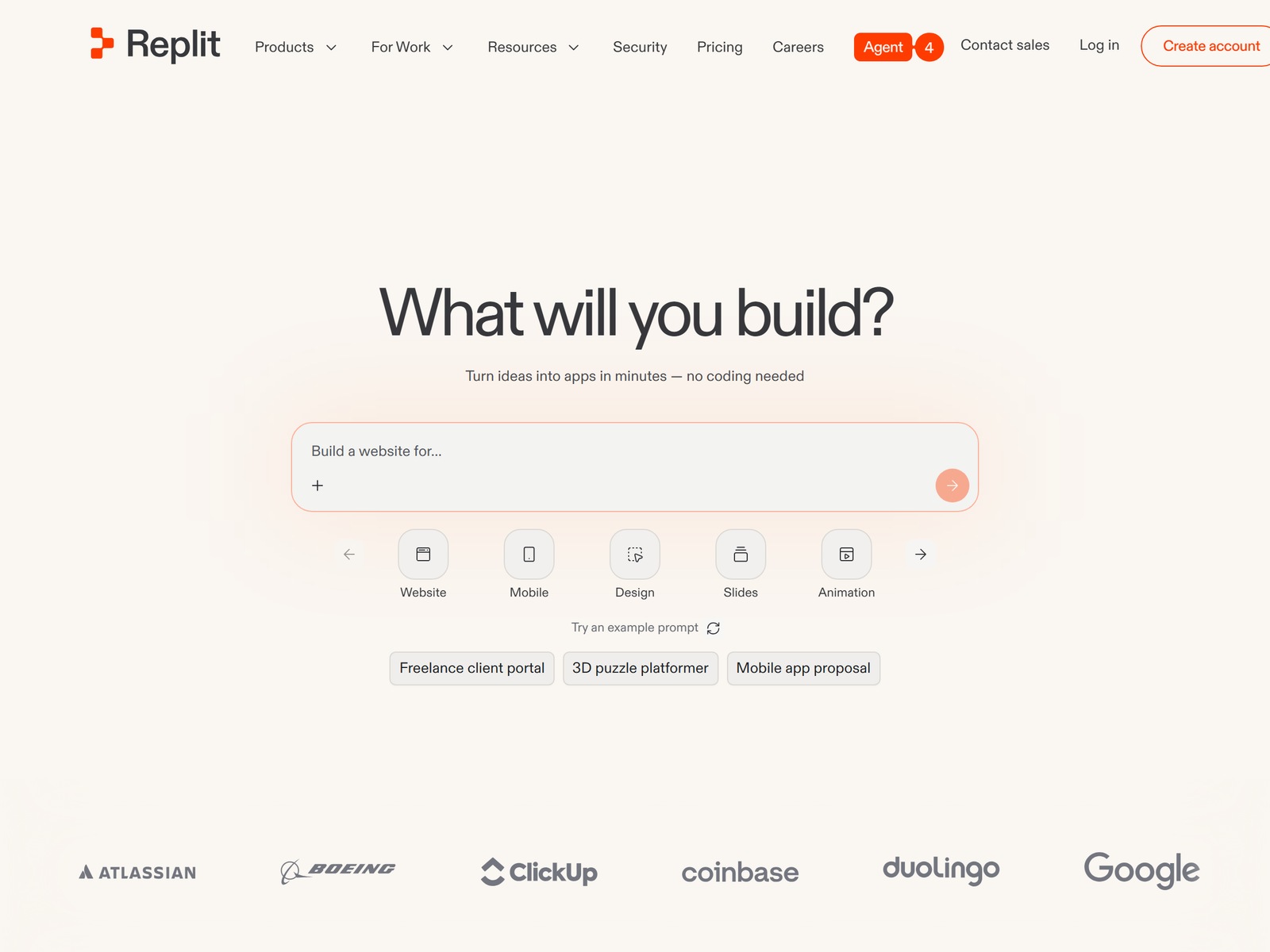
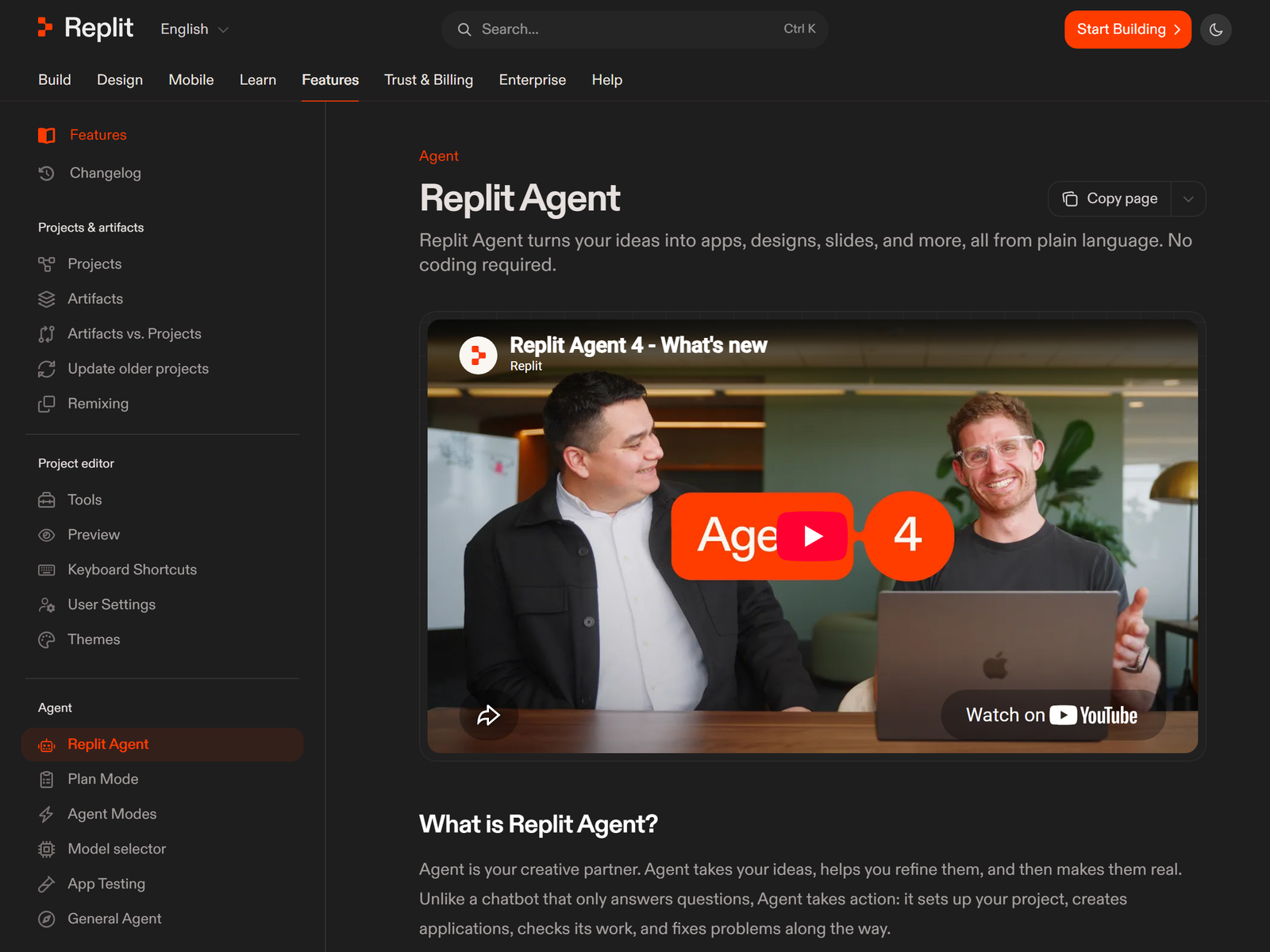
Agent 4 arrived in March 2026 and replaced Agent 3. It takes a plain-language brief, scaffolds the application, provisions a database, writes the code, runs real-browser tests, fixes its own failures and deploys to Replit hosting. Planning and execution run concurrently, so you can open a second chat to scope the next feature while a build is still running, and the pricing is effort-based: a one-line copy change costs far fewer credits than a multi-hour build. The planning stage itself is free, and you are only charged once the Agent implements changes you approved. It can output a website, a web app, a mobile app or slides, imports from Figma, and supports background workers, cron jobs and webhooks.
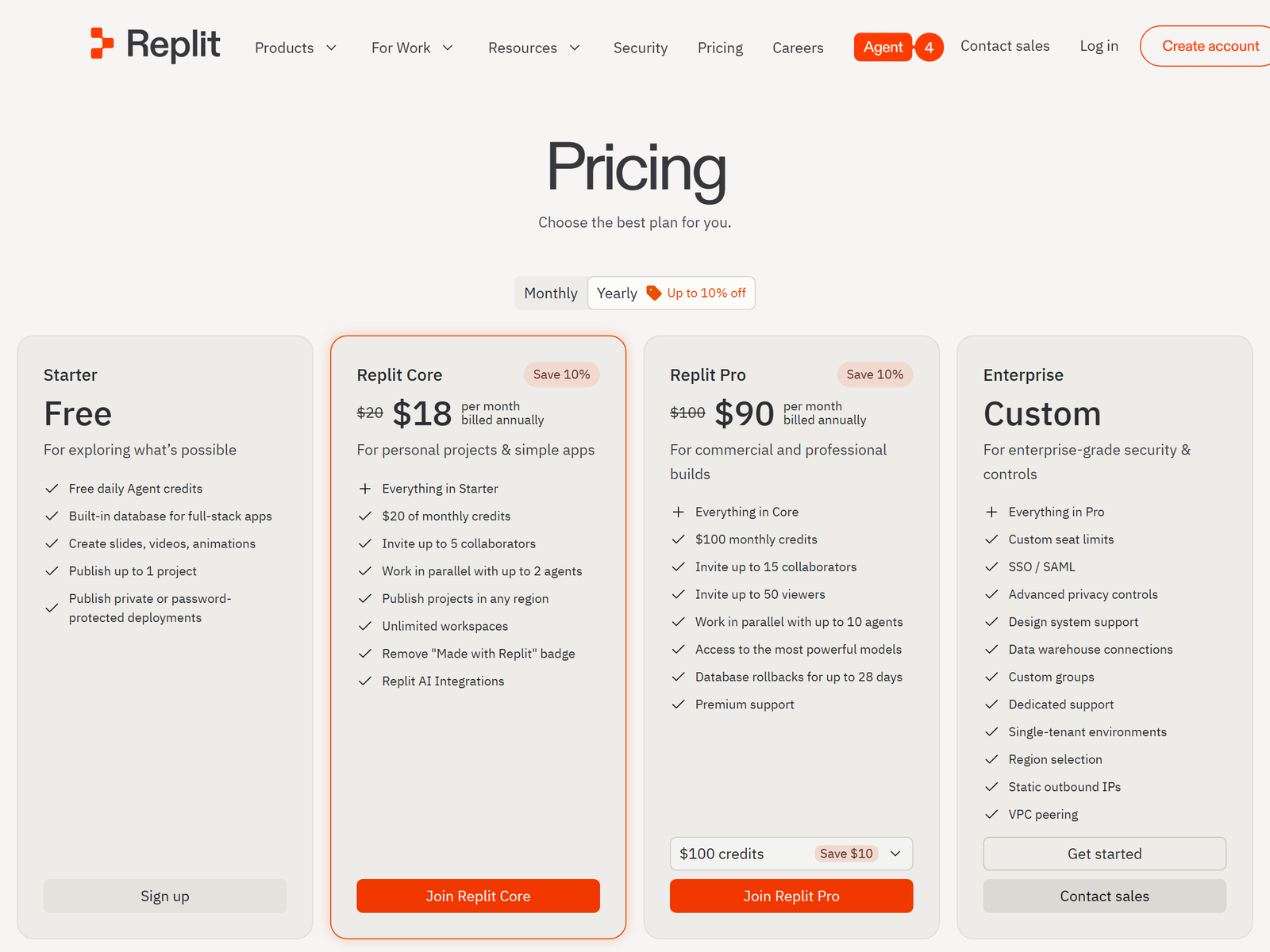
| Plan | Price | Included credits | Notes |
|---|---|---|---|
| Starter | Free | Free daily Agent credits | Public apps only, publish 1 app, limited Agent intelligence |
| Core | $25 / month, or $20 billed annually | $25 monthly credits | Private apps, up to 5 collaborators, 2 parallel agents, badge removal, always-on deployments |
| Pro | $100 / month, or $95 billed annually | $100 monthly credits | 15 collaborators, 50 viewers, 10 parallel agents, credit rollover, 28-day database restore |
| Enterprise | Custom | Custom | SSO and SAML, VPC peering, static outbound IPs, single-tenant environments |
Budget honestly: working builders commonly spend an extra $50 to $150 a month in usage credits on top of the base plan once they ship regularly. Quote with that in your cost line. For a sense of scale on what "internal tools" means at the top end, Rokt reported building 135 internal applications in 24 hours using Replit Agent.
The Service You Sell and What It Pays
Pick one painful spreadsheet and replace it. A job-quoting calculator for a roofing contractor. A shift roster for a three-site restaurant group. A client intake form with a review queue for a small law firm. An inventory reorder dashboard for a shop that currently guesses. Each of those is a real conversation, and each is small enough to finish in under two weeks.
- Paid discovery session: $250 to $500, credited against the build if they proceed.
- Single-table tool with a form and a report: $1,200 to $2,500.
- Multi-role tool with authentication and email notifications: $3,000 to $6,000.
- Care plan: $150 to $400 a month for hosting oversight, small changes and backups.
- Hourly change work beyond scope: $120 to $180 an hour.
One build a month plus four care plans lands between $2,000 and $4,500 in monthly revenue. On a $2,500 project the platform side typically comes to $60 to $120 in credits against a $25 base plan, so the threat to your margin is scope, never tooling. Delivery runs three to ten days rather than three months, and that speed is the part clients find genuinely surprising.
Step-by-Step: From Free Starter to a Paid Build
- Build two demos on the free Starter tier. A quoting calculator and a booking dashboard cover most first conversations, and public demo apps are perfectly fine at this stage.
- Upgrade to Core at $20 billed annually the moment money changes hands. You need private apps and the Made with Replit badge gone.
- Prospect where spreadsheets hurt: trades, clinics, property managers, small logistics firms, event companies.
- Sell a $350 discovery first. One call, a one-page spec listing every field, every user role and one report, then a fixed price.
- Feed the spec into the Agent's free planning stage and read the plan before you spend a single credit.
- Build in slices. Data model, then one screen, then authentication, then the report, testing after each slice instead of at the end.
- Deploy on Replit hosting and hand over with a 20-minute recorded walkthrough plus a written change-request process.
- Sell the care plan at handover while the client is happy, not three weeks later when something breaks.
Where This Breaks, and How to Protect Your Margin
Scope creep destroys these projects. Write a fixed field list into the contract, cap revision rounds at three, and bill anything past that hourly. Credits are metered, so a client who triggers forty rebuild prompts over a weekend eats the profit on a job you already priced.
Two things deserve a flat no. Do not take regulated data such as health records or card numbers on a first build unless you price the compliance work in properly. And do not accept a brief written as "an app like Uber" from someone comparing you to an agency. Quote against the spreadsheet they already hate, where the value is obvious and the scope is bounded.
Be straight about the platform too. The application lives on Replit hosting, and clients deserve to hear that before signing, ideally with a GitHub export clause in the contract so they never feel trapped. Finally, the Agent produces working code, which is not the same as good code. Read the authentication logic yourself. If you cannot read code at all, pay a developer for a two-hour review before handover, because that review costs $200 and a leaked customer list costs the business.
FAQ
Do I need to know how to code?
Not to start, yes to sell safely. You should be able to read authentication logic and a database query well enough to notice something alarming. Subcontract the review until you can.
What does a real build cost in credits?
Core includes $25 of credits a month, and a three to five day internal tool usually lands within $40 to $120 of credit spend. Regular builders report $50 to $150 a month in total usage.
Should I pay for the platform or should the client?
For a one-off build, pay yourself and fold it into the price. For an ongoing care plan, move the workspace onto the client's own Core or Pro account so the asset is clearly theirs.
How is this different from other AI app builders?
Background workers, cron jobs, webhooks, a database and hosting sit in one place. Internal tools need scheduled jobs and integrations far more often than they need a pretty landing page.
How fast can I realistically deliver?
Three to ten working days for a bounded tool, assuming the spec is written and the client answers questions within a day. Slow clients, not slow software, cause almost every overrun.
My Take: The Bottom Line
The money here is not in prompting. It is in being the person who reads a messy spreadsheet, asks what happens when two people edit it at once, and comes back a week later with something that works. AI collapsed the build time; it did nothing to discovery, scope control or handover, and those are precisely the parts clients pay for.
My honest read: this is the highest-ticket item in this whole category, and also the one with the most ways to lose money. Charge for discovery, cap revisions, refuse regulated data early on, and never quote a price before the spec is written. The tool profile is at https://aifreetool.site/tool/replit-agent-4-build-and-ship-full-apps-by-conversation/ and current plans are on replit.com. Build two demos this weekend on the free tier, then go and find the spreadsheet.