How to Make Money Training Custom AI Models With Astria in 2026
Category: Monetization Guide
Quick answer: You can make money training custom AI models with Astria by building branded image packs for e-commerce stores, influencers, and real-estate teams. Operators typically earn $800-$3,000 a month because each generated image costs only cents after the first fine-tune.
Last updated by the aifreetool.site editorial team on August 31, 2026. This guide is independent; we have no affiliate relationship with Astria, and our income figures come from public API pricing and freelancer rate data.
What Astria Does and the Plan You Would Use
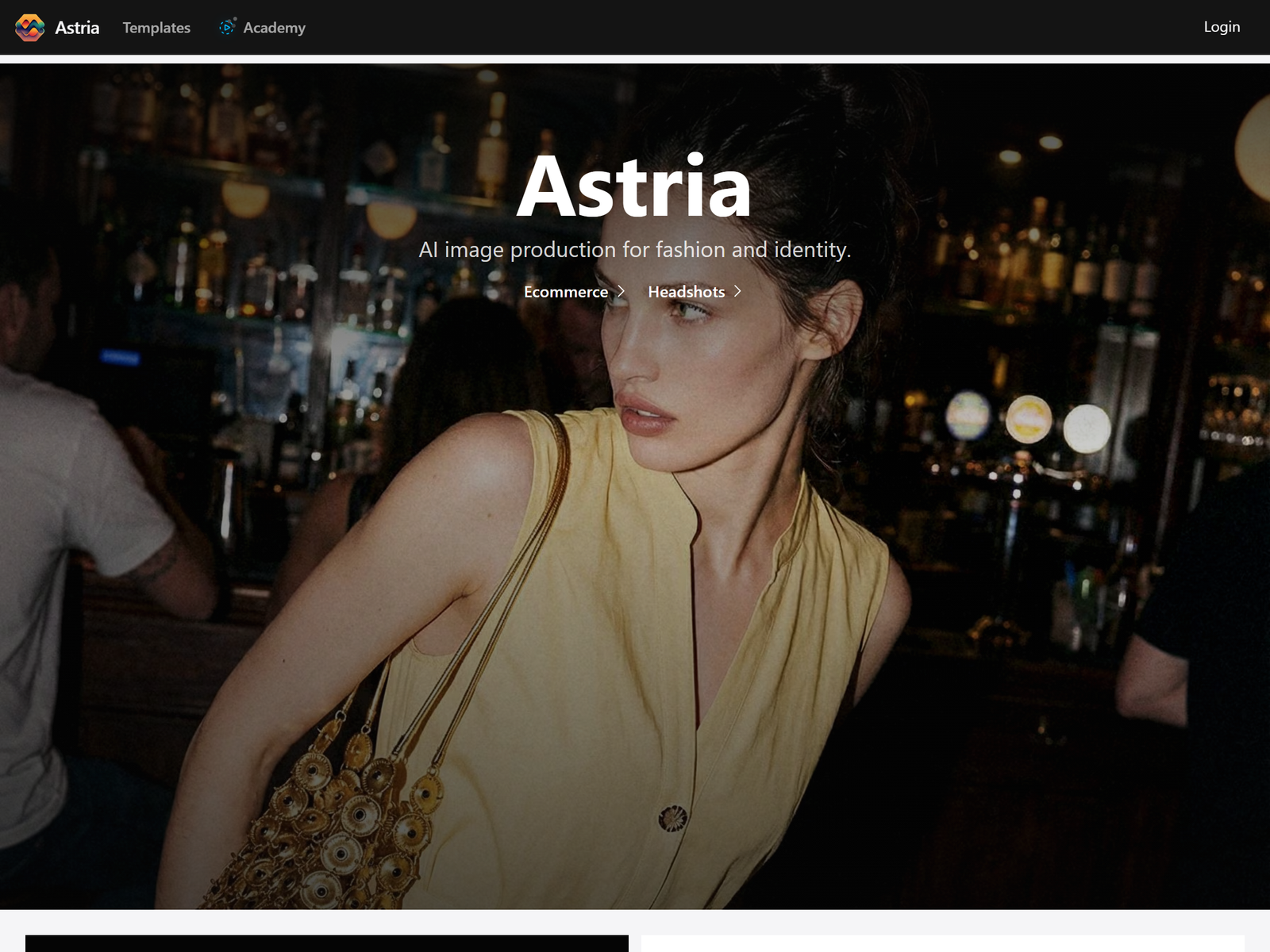
Astria is a Dreambooth fine-tuning API built on Flux, Stable Diffusion 1.5, and SDXL. You upload about 16 reference images of a product, a person, or a style, and Astria trains a private model that can then generate unlimited on-brand images from text prompts. It needs no GPU setup; the platform auto-scales. Pricing is pay-as-you-go: a fine-tune costs $1.50 (300 steps, 1,200 effective), a prompt pack of 8 images costs $0.23, background removal is $0.01 per image, and super-resolution or face correction is $0.0125 per image. Storing a model beyond 30 days costs $0.50 per model per month.
Use cases listed by the platform include AI photoshoots, product shots, virtual try-on, interior design, pet portraits, and avatars. Those are also your paid service lines.
| Action | Price | What you get |
|---|---|---|
| Fine-tune | $1.50 | One trained model (1,200 effective steps) |
| Prompt pack | $0.23 | 8 generated images from a model |
| Background removal | $0.01 | One cleaned image |
| Face correction | $0.0125 | One enhanced image |
The Monetization Idea: A Custom-Model Service Bureau
Instead of selling one-off images, you sell a trained model plus a delivery pack. A fashion brand gets a model of its clothing line and 200 catalog shots; an influencer gets a model of their face and 100 promo images; a realtor gets a model of a property and staged interior variants. You charge $150-$600 to train and deliver the first pack, then $50-$200 for each refill pack.
Because generation costs about $0.03 per image, your margin is enormous. A part-time operator with three to six clients a month earns roughly $800-$3,000. The work is setup-heavy but repeatable, which is ideal for a small agency.
A real example shows the spread. A small jewelry brand shares 30 product photos. You fine-tune a model on those images, then generate 200 styled catalog shots on neutral and lifestyle backgrounds for a $300 fee plus a few dollars of compute. The brand receives a full season of imagery without hiring a photographer, and you keep the model for monthly $50 refill packs of 50 images each. Three such clients a month already clears $900, and the refill packs compound that into recurring revenue.
Step-by-Step Action Plan
- Create an Astria account and run one test fine-tune on a friend's product to learn the prompt pack.
- Define two offers: "Brand model + 100 images $300" and "Influencer model + 50 images $200".
- List on Fiverr and Upwork as "custom AI product photography" to catch e-commerce buyers.
- Approach three local shops or creators with a free 5-image sample built from their social photos.
- Deliver a shared gallery, offer monthly refill packs, and document the style for consistency.
Client Management and Quality Control
- Collect 16 to 25 consistent reference images; mixed lighting ruins the model's resemblance.
- Tell clients models expire after 30 days unless storage is paid, and price that into retainers.
- Use background removal and face correction to lift raw outputs to sellable quality.
- Keep a written license that transfers image rights to the client but retains your service fee.
Pro Tips and Pitfalls to Avoid
- Specialize in one vertical, such as product photography, so your prompts and samples stay sharp.
- Do not train on copyrighted characters or unreleased products without permission.
- Avoid promising exact photorealism; fine-tunes capture style and likeness, not perfect physics.
- Watch the 30-day model window; set a calendar reminder before a client's model expires.
Who This Is and Isn't For
This fits operators who can manage a technical workflow and sell to businesses, and who want high margins per client. It is a poor fit for anyone wanting fully passive, no-client work, because each model needs a brief and approval. You do not need to code, since the GUI covers training. For comparison on generative art, see Midjourney on aifreetool.site.
Your First Client This Week
Browse Etsy and Instagram for small product brands with weak catalogs, then send the owner a free 5-image sample built from their public photos. The sample proves the model quality faster than any written pitch. One converted brand funds the fine-tune cost many times over, and the monthly refill packs keep them on your books.
Frequently Asked Questions
Q: Do I need to know coding to use Astria?
A: No. The web GUI handles fine-tuning and prompt packs; the API is optional for advanced users.
Q: How much does one client project really cost me?
A: About $1.50 to train plus $0.23 per 8 images, so a 100-image pack costs roughly $4 in compute.
Q: What can I legally sell?
A: You can sell images generated from a model you trained with the client's permission, under a clear license.
Q: Why not just use Midjourney?
A: Midjourney cannot lock onto a specific product or face; Astria's fine-tune is what makes branded packs possible.
My Take / The Bottom Line
Astria is the highest-margin AI service of the three because you sell a reusable asset, not a single file. The $1.50 fine-tune and cent-level generation turn a $300 client project into mostly profit. The catch is that it is a client service, not passive income, so your sales skill sets the ceiling. Study the numbers at strmr.com/pricing and the demand at Fiverr. Start from Astria's profile on aifreetool.site or the Monetization Guide category.