How to Make Money Selling Research Reviews With Elicit in 2026
Category: Monetization Guide
Quick answer: You can make money selling research reviews with Elicit by offering literature-review and evidence-synthesis packages to Master's and PhD students, consultants, and small R&D teams. Operators typically earn $500-$2,000 a month, charging $150-$600 per review on an Elicit Pro plan that costs $39-$49 a month.
Last updated by the aifreetool.site editorial team on September 1, 2026. This guide is independent; we have no affiliate relationship with Elicit, and our income figures come from public platform pricing and freelancer rate data.
What Elicit Does and the Plan You Would Use
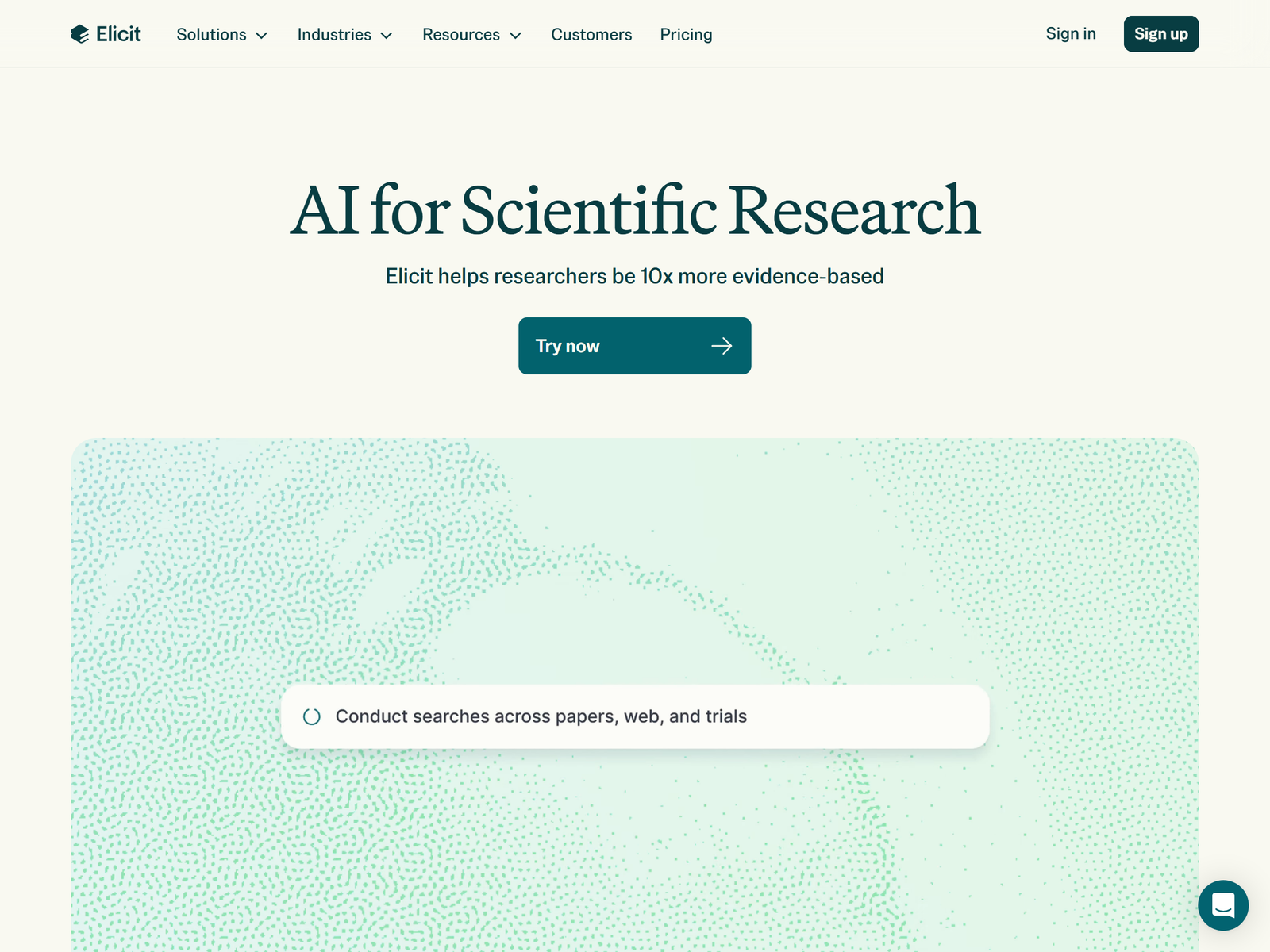
Elicit is an AI research assistant built for academic literature review. It searches a database of more than 138 million papers plus 545,000 clinical trials, then extracts findings into tables with sentence-level citations back to the exact source. Instead of reading 200 PDFs by hand, a researcher asks a question, screens results, and exports a structured table. For a freelancer, that speed is the product you resell.
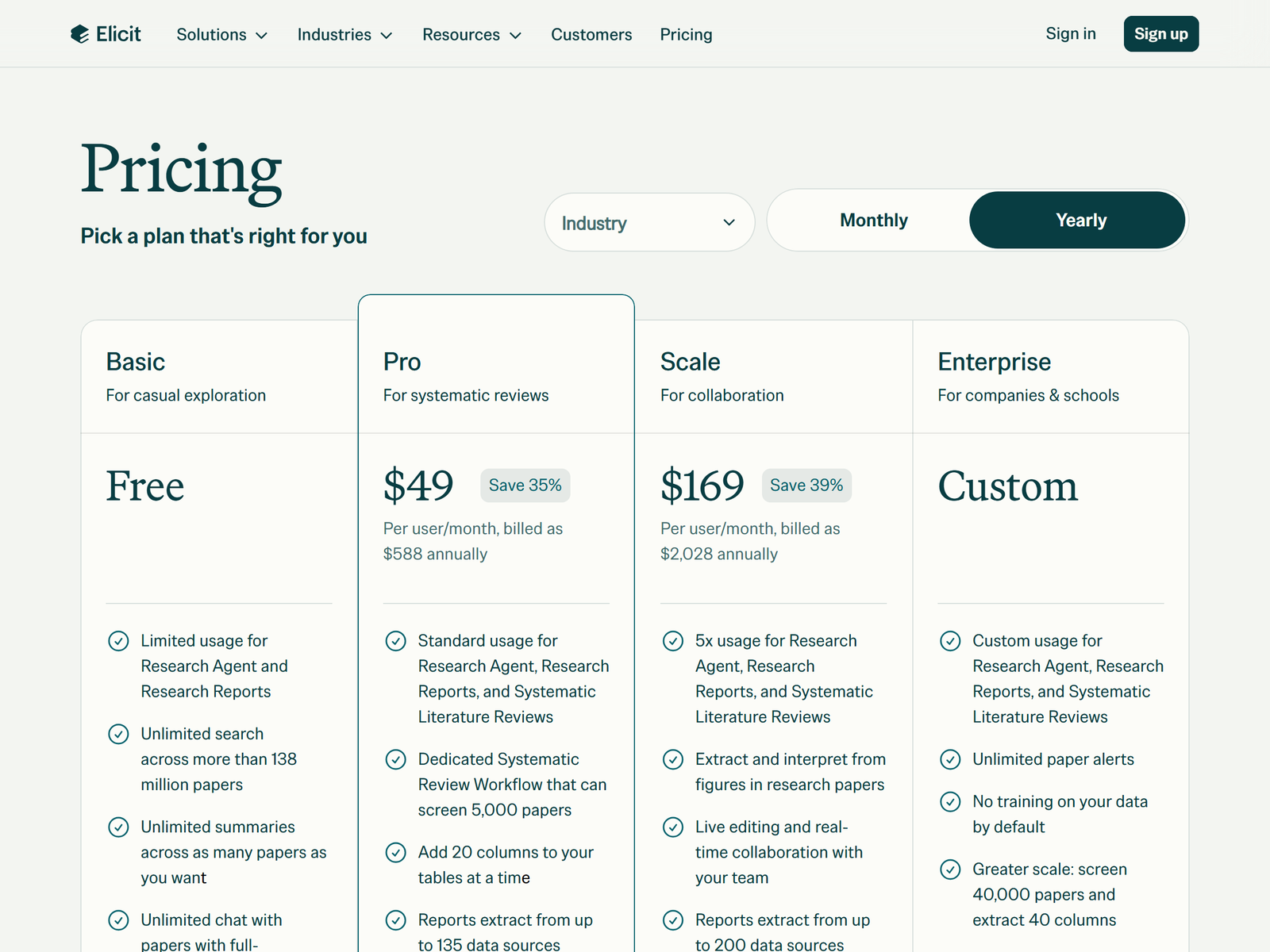
Pricing in 2026 has a free Basic tier with unlimited search and two automated reports a month, which is enough to test. Plus is about $11-$12 a month billed annually and adds exports and clinical-trial search. Pro is $39-$49 a month annually ($49 monthly) and unlocks the guided Systematic Review workflow that can screen up to 5,000 papers, 20-column extraction tables, research alerts, and API access. Scale and Enterprise tiers exist for teams. For client work, Pro at $39-$49 a month is the plan that makes the service legitimate, because the workflow and exports are what clients pay for.
| Plan | Monthly price (annual) | Reports / month | Best for |
|---|---|---|---|
| Basic | $0 | 2 | Testing and students |
| Plus | $11-$12 | 4 | Individual researchers |
| Pro | $39-$49 | Up to 144/yr | Paid review service |
The Monetization Idea: A Literature-Review Service
The offer is a finished evidence summary: a client sends a research question and inclusion criteria, and you return a screened set of papers, a data-extraction table, and a cited narrative they can drop into a thesis, grant, or report. Master's and PhD students face tight review deadlines. Consultants need market or policy evidence. Small R&D teams need a fast read on a technical field.
Income breaks down like this: $150-$300 for a scoped mini-review of 30-50 papers, $300-$600 for a full systematic-style review of a few hundred, and $300-$800 a month for an ongoing evidence retainer. A part-time operator handling four to six projects a month earns roughly $500-$2,000. Since Elicit screens thousands of papers in minutes, your time goes into framing the question and checking the table, not manual reading.
A concrete project makes the math clear. A Master's student needs a review of 200 papers on a treatment, with effect sizes extracted into a table. You define inclusion rules, run Elicit's workflow, clean the 20-column table, and write a 6-page cited summary. At $400 that project takes you under three hours because the screening is automated, and the Pro plan cost is already covered by the first two clients of the month. Three such clients clear $1,200, and retainers compound that into recurring revenue.
Step-by-Step Action Plan
- Open an Elicit Pro account and run one practice review on a topic you know, to learn the screening and extraction workflow.
- Define two offers: "Mini review 50 papers $200" and "Full review 300 papers $500".
- List on Upwork and Fiverr as "literature review assistant" to catch student and researcher buyers.
- Pitch three thesis coaches and small consultancies with a free 1-page sample built from a public question.
- Deliver a cited table plus narrative, offer a monthly alert retainer, and collect a five-star review.
Client Management and Quality Control
- Agree on inclusion and exclusion criteria in writing before screening; vague briefs produce unusable tables.
- Always human-check extractions; Elicit cites sources but a wrong column still needs your eye.
- Keep client data off public notebooks; use private projects and delete after delivery.
- Set a revision limit; re-screening after a changed question is a new project, not a tweak.
Pro Tips and Pitfalls to Avoid
- Specialize in one field, such as health, education, or a niche market, so your extraction columns and samples stay sharp.
- Do not claim the review is peer-reviewed or published-ready; sell it as a structured first draft the client verifies.
- Avoid presenting Elicit output as your own expertise; frame it as assisted synthesis with citations.
- Watch the Pro paper cap on very large reviews; beyond 5,000 papers you need the Enterprise tier.
Who This Is and Isn't For
This fits operators comfortable with academic reading who can frame a question and check a table, and who want high-margin knowledge work. It is a poor fit if you dislike dense papers or cannot explain citations clearly. You do not need a research degree, but you do need judgment. For broader literature discovery you can also compare Consensus's profile on aifreetool.site, and review Elicit's profile on aifreetool.site for the feature list.
Your First Client This Week
Browse LinkedIn and university forums for students stuck on a "literature review" step, then send one a free 1-page sample built from their exact question. The sample proves the speed faster than any written pitch. One converted student funds the Pro plan many times over, and their program peers become a steady referral stream.
Frequently Asked Questions
Q: Do I need a research degree to sell this?
A: No, but you need to read papers and frame questions well; the tool does the screening, you do the judgment.
Q: How much should I charge for a review?
A: Mini reviews of 30-50 papers sell for $150-$300; full systematic-style reviews run $300-$600.
Q: Which Elicit plan do I need?
A: Pro at $39-$49 a month, because the guided workflow and exports are what paid client work requires.
Q: Is the output safe to submit?
A: Treat it as a structured first draft with citations; the client must verify facts and meet their institution's rules.
My Take / The Bottom Line
Elicit turns a service that used to take weeks into an afternoon, and that speed is exactly what students and small teams will pay for. The Pro plan at under $50 a month keeps your margin high while the citation transparency makes the deliverable defensible. The catch is that you sell assisted synthesis, not original research, so your framing skill sets the price. Study the numbers at elicit.com/pricing and the demand at Fiverr, then start from Elicit's profile on aifreetool.site or the Monetization Guide category.