Orchid VPN Review 2026 - Decentralized Nanopayment Privacy Without a Subscription?
Category: Best Privacy VPN
Reviewed by the aifreetool Security & Privacy Editorial Team — a group of full-time VPN users and writers who cross-check every vendor claim against independent lab testing and primary documentation.
Last updated August 12, 2026.
We keep no affiliate relationship with any VPN reviewed here and earn nothing if you subscribe. Where we could not verify a claim from primary sources, we say so explicitly.
TL;DR – The 30-Second Verdict
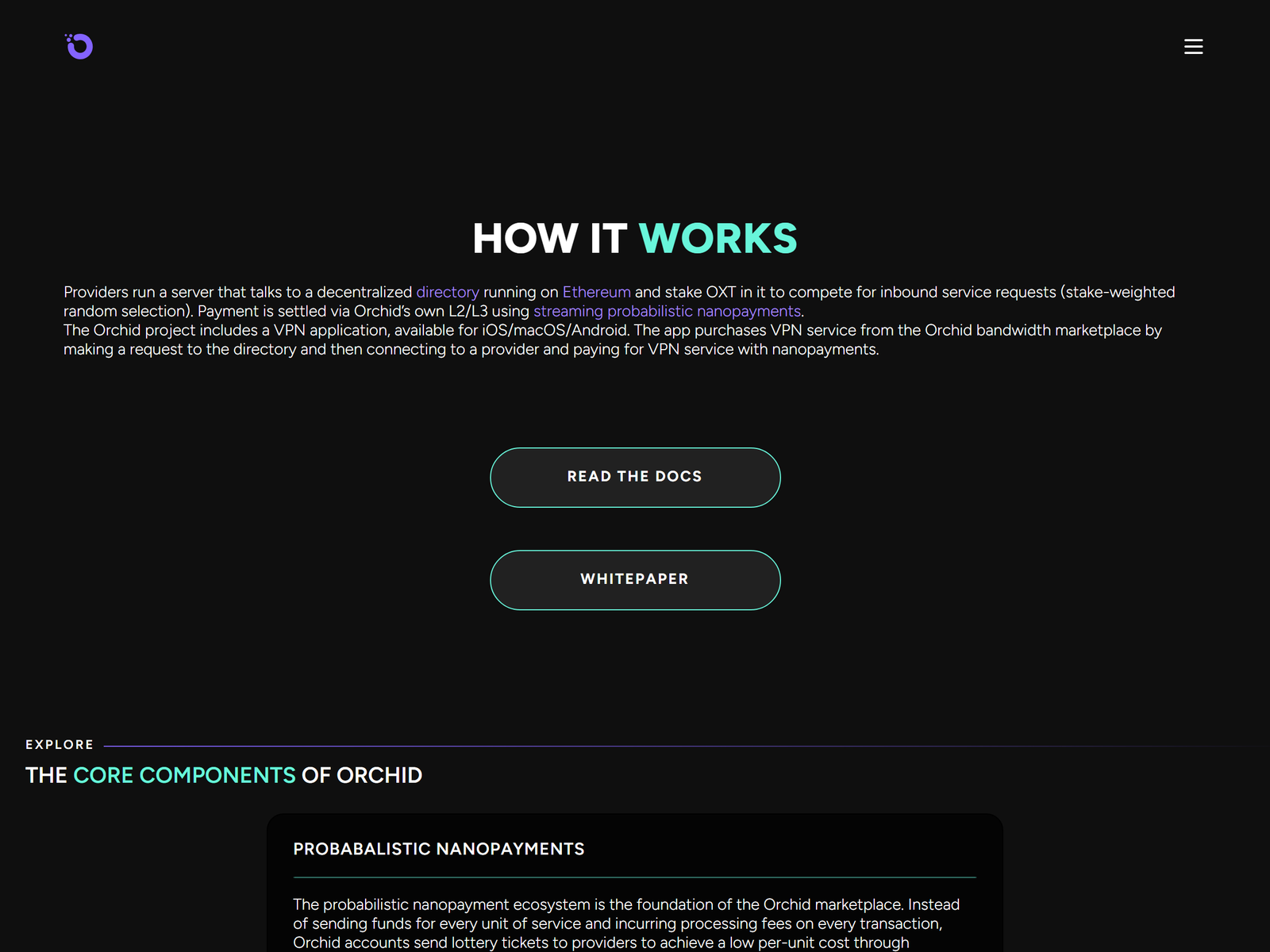
Orchid is a decentralized bandwidth marketplace wearing a VPN app's clothing. There is no subscription and no renewal date: you fund an account, the client picks a provider through a stake-weighted lottery, and payment streams out as tiny probabilistic nanopayment tickets while you browse. For privacy readers who dislike handing one company both their identity and their traffic, that structure is genuinely interesting. For everyone else, the crypto onboarding, the missing desktop clients and the absence of any published per-gigabyte rate make this a specialist tool rather than a default choice. Our verdict: fascinating engineering, narrow audience, and rising project risk in 2026.
How We Assessed Orchid
Because Orchid sells access to a rotating marketplace rather than a fixed fleet, benchmarking one hop would be close to meaningless. We instead read the current protocol documentation, walked the account funding flow, examined how provider selection and payment settle, and cross-checked the project's 2026 status against exchange and market-tracker reporting. Our checks focused on four questions:
- Who can see what, at each stage of a session?
- What does the user actually pay, and can that number be predicted?
- Which platforms get a maintained client?
- Is the underlying network healthy enough to rely on this year?
How the Nanopayment Model Actually Works
Providers stake OXT, an ERC-20 token on Ethereum, into a directory contract. When your client requests bandwidth, it is matched to a provider through linear stake-weighted random selection, so a larger stake buys a larger share of inbound traffic. Payment then flows through what Orchid calls probabilistic nanopayments: rather than settling every few megabytes on chain, the client streams lottery-style tickets, most of which are worth nothing, while the rare winner settles a real macro-payment. Statistically the provider earns the expected rate; practically, gas costs collapse to a fraction of what per-packet billing would demand.
Two account concepts trip up newcomers. The deposit sets the value of your tickets, equal to half the deposit amount, while the balance determines how many tickets you can spend before service stops. Funds in the balance withdraw instantly; deposit funds sit behind a 24-hour unlock window. It is elegant and it is fiddly, which sums up the product.
Security and Privacy: Multi-Hop Without a Central Log
The native Orchid protocol runs over WebRTC and sits alongside support for OpenVPN and WireGuard hops, so you can mix marketplace nodes with traditional providers inside one circuit. Single-hop use hides your address from destination sites and hides destinations from your ISP. The more interesting configuration is multi-hop, where traffic is chained through several independent operators so that no single one learns both who you are and what you are reading. Orchid's documentation labels this an advanced feature to use at your own risk, and that candour is worth more than a marketing badge.
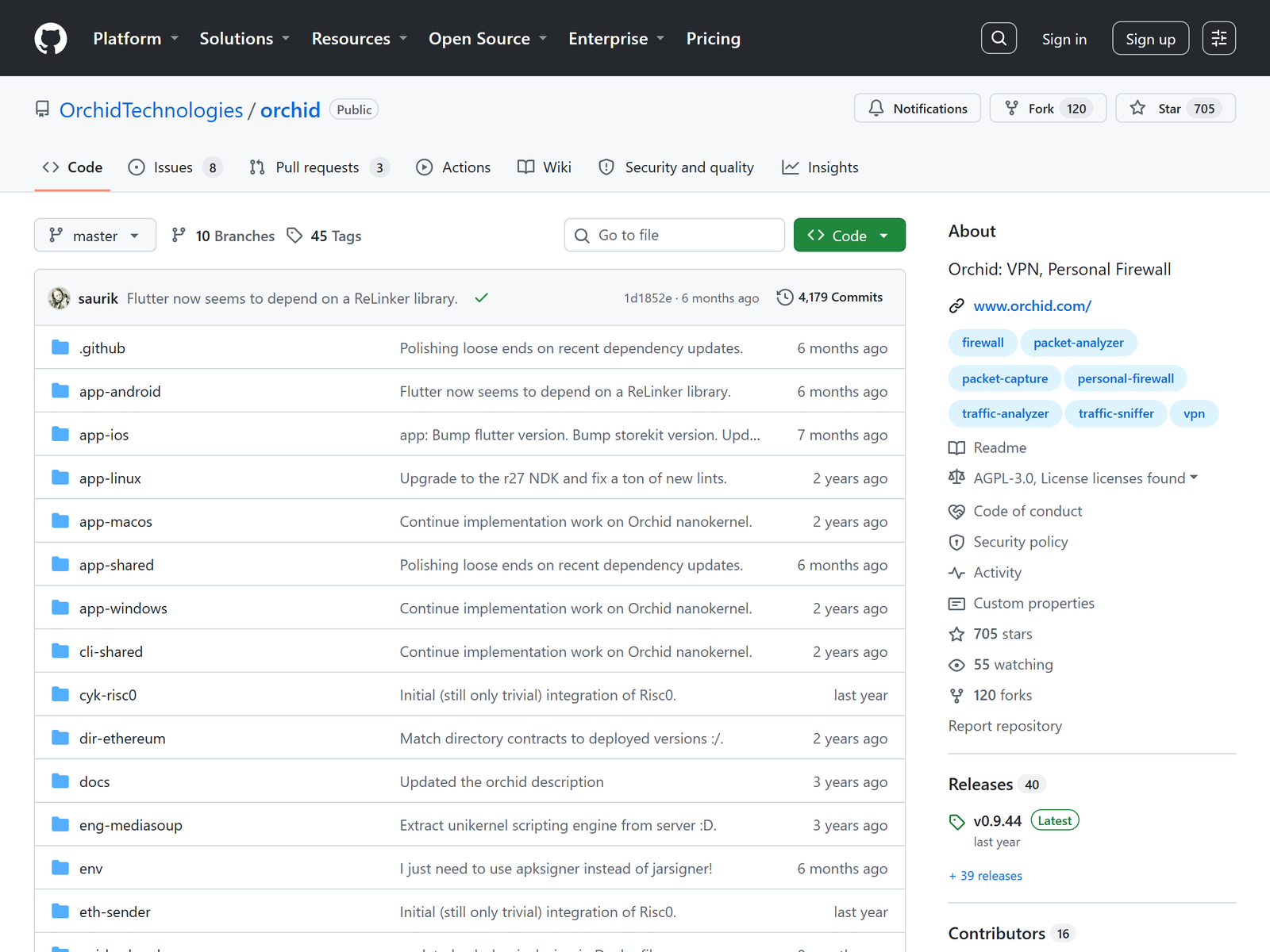
The structural win is the absence of a company-wide log store: there is no central operator holding a session database, and the client code is open source under AGPLv3. The structural weakness is that individual providers are still third parties, curated by a verified-provider list rather than by any published audit programme. That is a different bargain from the audited, single-operator model used by services such as IVPN, and a different one again from mixnet designs like NymVPN.
The On-Chain Privacy Caveat Nobody Advertises
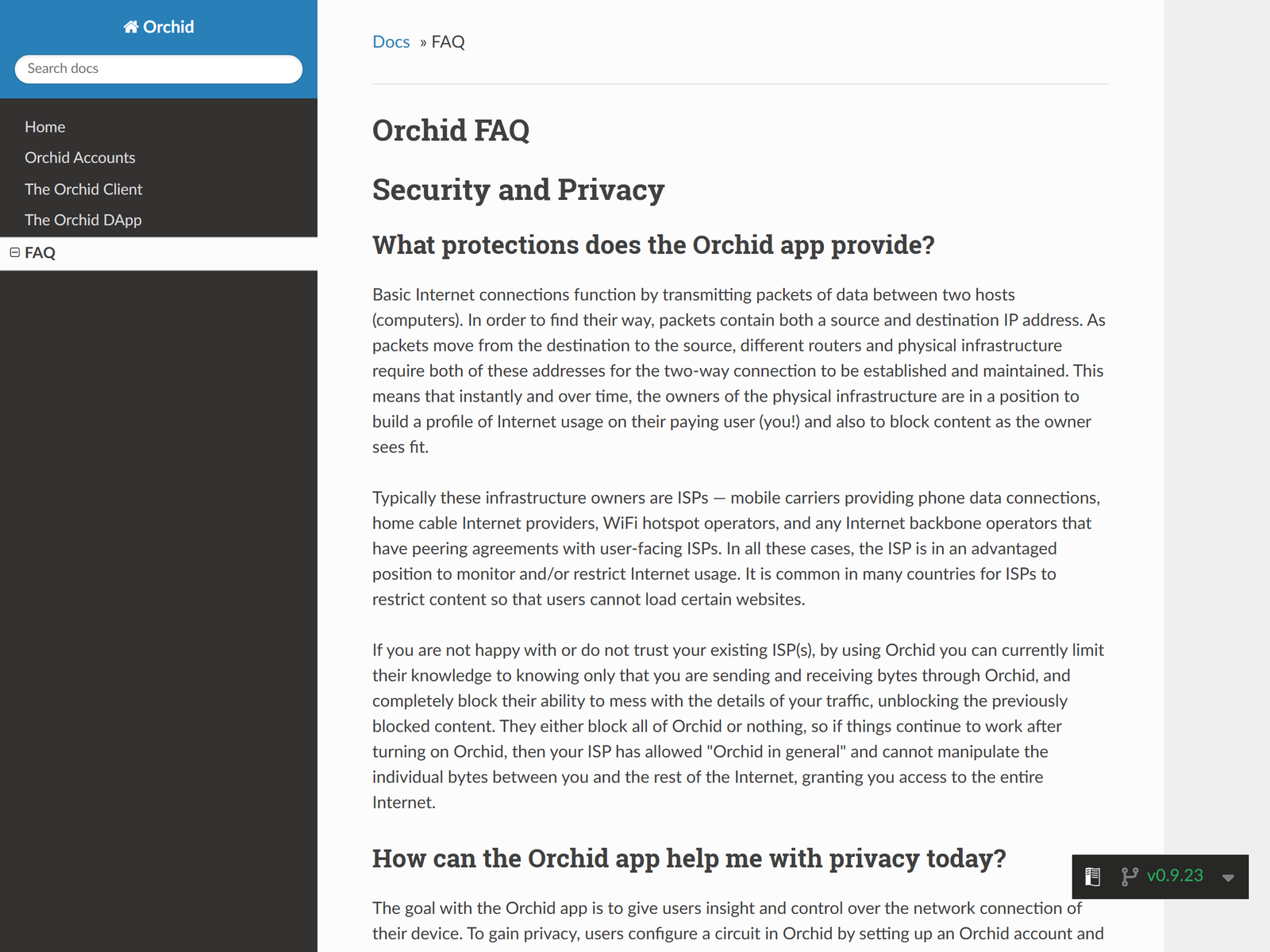
Here is the detail we wish more write-ups led with. When a winning ticket settles, three things land permanently on the public Ethereum ledger: your account's address, the provider's address and a timestamp. Individual sessions are not published, but a funded account that was topped up from a know-your-customer exchange creates a chain of breadcrumbs a determined analyst can follow. Orchid's own FAQ addresses this openly. If on-chain linkability matters to your threat model, fund the account carefully — and understand that a token-metered privacy tool carries a transparency trade-off a flat monthly fee does not.
Speed, Streaming and Everyday Use
Throughput depends on whichever provider the lottery hands you, so consistency sits below what a conventional service delivers, and multi-hop circuits add latency with every extra link. Streaming is not a stated priority: there are no catalogue-optimised pools, no smart-DNS layer and no guarantee that today's exit works with the same platform tomorrow. Treat Orchid as a privacy and public Wi-Fi tool for browsing, messaging and account access while travelling, not as a Netflix key. Readers hunting reliable unblocking will do better with the mainstream picks we track on aifreetool.site.
Devices: The Desktop Gap
The maintained app targets iOS, macOS and Android. There is no first-party Windows or Linux consumer client, which rules the service out for a large share of desktop users unless they are comfortable building from the public repository. The mobile app includes a built-in wallet for managing credits, and non-crypto users can buy Orchid Credits through standard in-app purchase, which removes the exchange step for anyone who simply wants to try it.
Pricing: What “No Subscription” Really Costs
| Model | Orchid | Typical subscription VPN |
|---|---|---|
| Billing | Pay per unit of bandwidth consumed | Flat monthly or annual fee |
| Commitment | None — funds sit in your account | 1–24 months, auto-renewing |
| Published rate | No official per-GB figure | Advertised at checkout |
| Entry friction | Wallet, deposit, gas — or in-app credits | Card details |
| Cost predictability | Low, floats with the market | High |
Light users win here. If you switch a tunnel on for two hours a week, paying $4.79 or $12 a month for unused capacity is money burned, and Orchid's meter is honest about that. The missing piece is a published rate card: the project documents the mechanism thoroughly and the price per gigabyte barely at all, leaving you to discover the cost empirically. Heavy users almost certainly pay less on a flat plan.
Pros and Cons
- Pro: No subscription, no auto-renewal, no cancellation maze.
- Pro: Multi-hop circuits that split knowledge across separate operators.
- Pro: Fully open source under AGPLv3, with public protocol docs.
- Pro: Backed by a credible founding team and $48 million in early funding.
- Con: No published per-gigabyte pricing.
- Con: No maintained Windows or Linux client.
- Con: Winning-ticket settlements are publicly visible on Ethereum.
- Con: Token and roadmap risk grew through 2026.
Project Risk in 2026: The AI Pivot
Orchid Labs launched in San Francisco with an unusually strong bench — Steven Waterhouse, Cydia author Jay Freeman, Brian Fox and Ethereum security engineer Gustav Simonsson — and raised roughly $48 million from investors including Andreessen Horowitz and Sequoia before the OXT sale in December 2019. The 2026 picture is more complicated. The team has pushed hard into Orchid GenAI, a decentralized marketplace claiming more than 30 AI models paid for through the same ticket system, and market trackers recorded Binance applying a Monitoring Tag to OXT on 6 March 2026, a label reserved for assets with elevated volatility or review risk. Commentators have read the narrative shift as a move away from a bandwidth business that stopped growing. None of that breaks the VPN today, yet the marketplace is denominated in OXT, so token health and your service quality are not independent variables.
Orchid vs NymVPN vs Mysterium VPN
| Criterion | Orchid | NymVPN | Mysterium VPN |
|---|---|---|---|
| Billing | Pay per use, token metered | Flat subscription | Flat subscription |
| Routing | Stake-weighted marketplace, multi-hop | Mixnet or fast dVPN mode | Residential peer nodes |
| Desktop clients | macOS only | Windows, macOS, Linux | Windows, macOS, Linux |
| Public ledger exposure | Yes, on settlement | No | No |
| Best suited to | Occasional, crypto-comfortable users | Metadata-resistant browsing | Residential exit addresses |
Frequently Asked Questions
Do I need cryptocurrency to use Orchid?
Not strictly. OXT settles provider payments underneath, but the mobile app sells Orchid Credits through ordinary in-app purchase, so you can skip wallets and exchanges entirely.
Is Orchid a no-logs VPN?
There is no central operator collecting logs, which removes the usual single point of failure. Individual providers remain independent parties, and no public audit programme covers them, so multi-hop is the sensible configuration for sensitive browsing.
Does Orchid work on Windows?
Not through a maintained consumer client. Official builds target iOS, macOS and Android; Windows and Linux users would need to work from the open-source repository.
Is Orchid cheaper than a normal VPN?
For light, occasional sessions it can be, because you fund only what you consume. Daily heavy use is likely to cost more than a $3 to $5 monthly plan, and the lack of a published rate makes budgeting awkward.
Is the project still active in 2026?
Yes, though its centre of gravity has shifted toward the GenAI marketplace. Weigh that against the exchange monitoring flag applied to OXT in March 2026 before you park significant funds in an account.
My Take – The Bottom Line
Orchid remains the most intellectually honest attempt to remove the trust bottleneck from consumer privacy tooling. Stake-weighted selection, streaming tickets and multi-hop circuits address a real problem, and the documentation admits limitations that most vendors bury. What stops me recommending it broadly is the everyday texture: no Windows build, no rate card, a public settlement trail and a parent project whose attention has drifted to AI infrastructure. Try it as a second tunnel if you value pay-per-use metering and already hold crypto. If you want privacy you can audit and speeds you can plan around, start with AirVPN or the shortlist in our Best Privacy VPN archive instead.