How to Make Money With D-ID Talking Avatars in 2026
Category: Monetization Guide
By the aifreetool.site editorial team. This is an independent guide with no affiliate links — we earn nothing if you sign up for D-ID or any tool named here.
Quick answer: You can make money with D-ID in 2026 by selling talking-avatar spokesperson videos to small businesses, course creators, and agencies. A realistic solo operator earns $600–$2,500 a month once they land three to five recurring clients, charging roughly $40–$150 per finished video.
D-ID turns a single photo into a lip-synced talking head. You type a script (or paste audio), pick a face and a voice, and the platform animates the portrait to speak. That one capability opens a service business that needs no camera, no studio, and no on-camera talent.
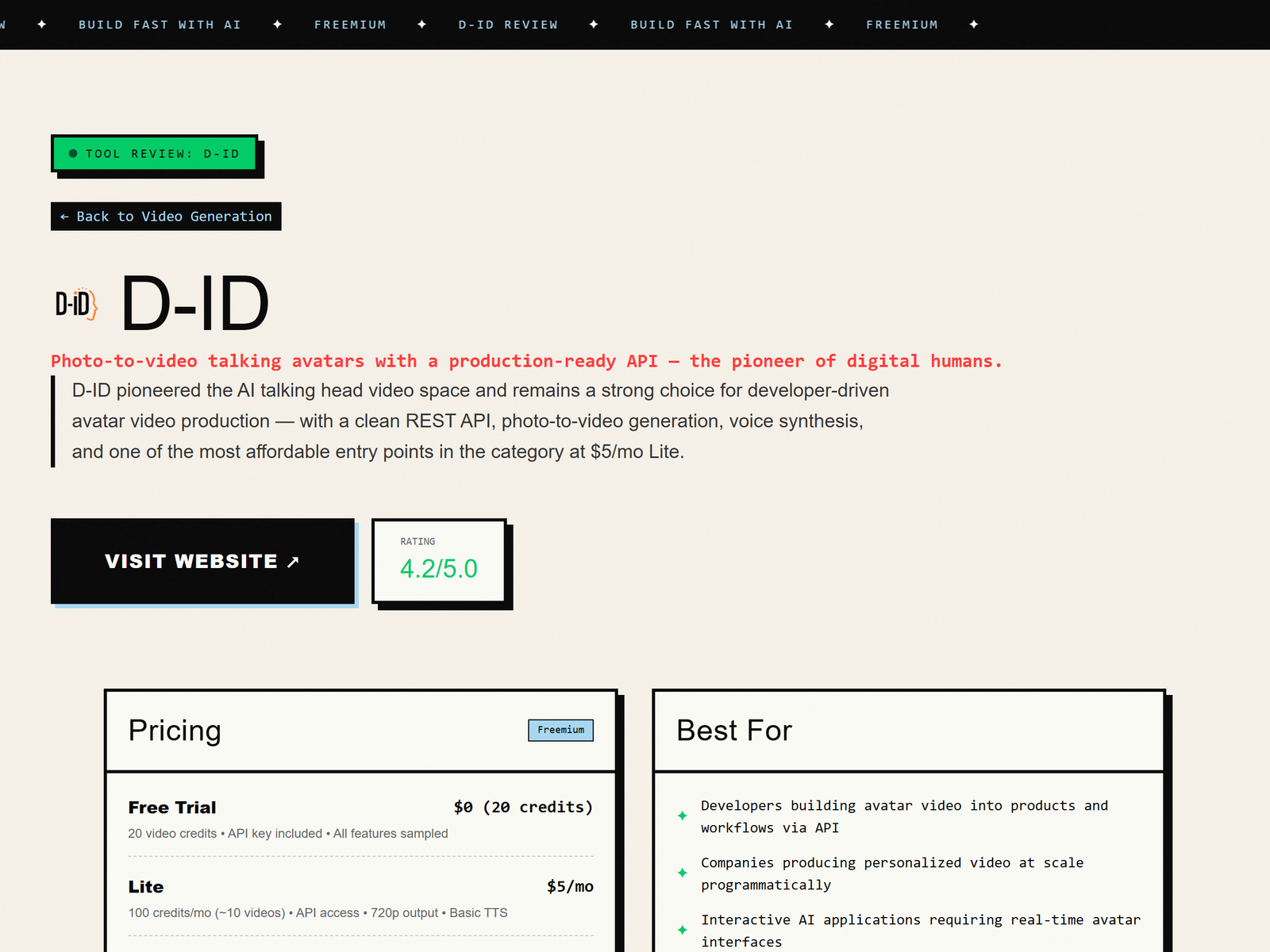
What D-ID is and what it actually does
D-ID, the company behind the “talking photo” trend, offers the Creative Reality Studio plus a developer API. Key features:
- Photo-to-video avatars — animate any portrait, stock or uploaded.
- Text-to-speech and voice cloning in many languages.
- Video Translate — dub an existing clip into other languages.
- Interactive Avatars — a real-time conversational face for web or CRM.
- A REST API for programmatic, personalized video at scale.
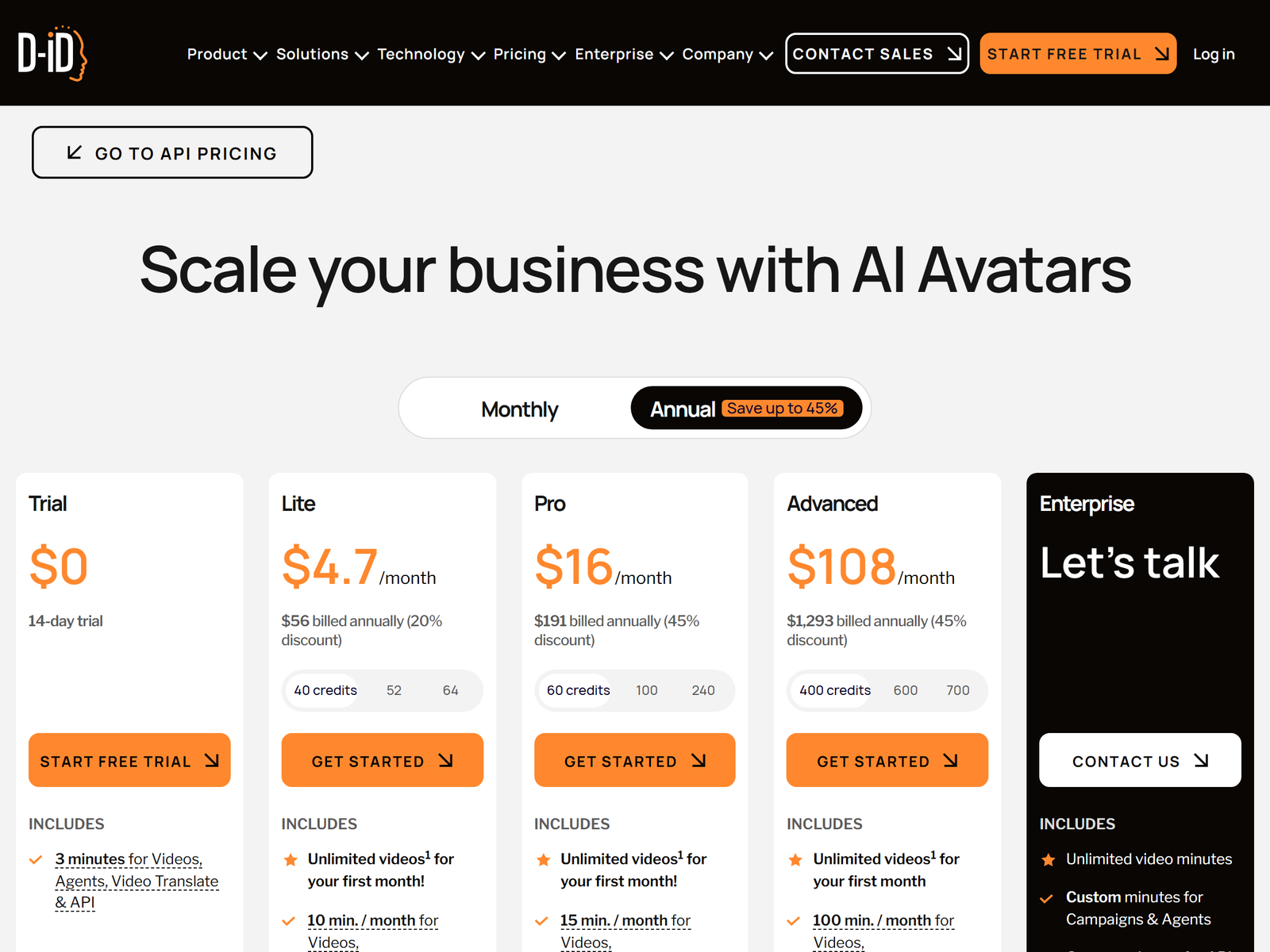
Pricing is credit-based; one credit covers about 15 seconds of generated video. The Lite plan runs about $5–$6 a month (personal use only), while the Pro tier at roughly $16–$29 a month unlocks a commercial license, one voice clone, and three personal avatars. The Advanced plan (about $108/month) adds a custom logo and heavier volume. For a service business you need at least Pro for the commercial license.
See our full D-ID tool page, browse more ideas in our AI tools directory, the SOUNDRAW music guide, or the ChatPDF document service guide, or browse the Monetization Guide archive.
The monetization idea: a talking-avatar video service
Here are four services you can sell with D-ID:
- Spokesperson videos for local businesses — homepage heroes, explainers, and offers.
- Personalized video messages — name-drop each recipient for outreach and thank-yous.
- Multi-language explainers — one script, several dubbed languages for global training.
- Real-estate or product tours — a branded face that walks through the pitch.
Pricing that works: $40–$90 for a 30–60 second clip, $120–$250 for a localized package, and $200–$600 a month for a retainer of 4–8 videos. Three retainers put you at $600–$1,800 monthly; five puts you near $2,500.
Step-by-step: from sign-up to first paid client
- Open a Pro account so every video carries a commercial license.
- Build two demo avatars — one neutral professional, one friendly presenter.
- Produce three sample clips (a local cafe promo, a course intro, a bilingual thank-you).
- List the service on Fiverr and Upwork with the demos as your portfolio.
- Run 20 cold messages a week to agencies and coaches offering a $49 starter video.
- Deliver fast (under 48 hours) and ask every happy client for a testimonial.
Pricing that protects your margin
| Plan | Monthly (annual) | Video minutes | License |
|---|---|---|---|
| Lite | ~$5–$6 | 10 min | Personal only |
| Pro | ~$16–$29 | 15 min | Commercial |
| Advanced | ~$108 | 100 min | Commercial + logo |
At $16–$29 a month you get ~15 minutes of video — enough for 15–30 short clips. Even if you sell just two $90 videos, the tool pays for itself. The Interactive Avatar (Advanced) is a premium upsell for companies wanting a live face on their site.
Client management and quality control
Set expectations early. D-ID faces look best as presenter-style spokespeople, not as deep emotional actors — tell clients you deliver clear, branded explainer video, not a Hollywood actor. Always secure rights to the photo you animate (use paid stock or the client's own headshot). Keep raw scripts so revisions are quick, and watermark a low-res preview until the invoice is paid.
Pro tips and pitfalls to avoid
- Batch-generate: write ten scripts, then render them in one sitting to stretch credits.
- Use Video Translate to resell the same clip in three languages for one fee plus a markup.
- Avoid the uncanny valley by picking calm, well-lit source photos.
- Don't promise photorealistic actors — HeyGen and Synthesia beat D-ID there; lean into speed and photo simplicity.
- Never animate a person's likeness without written permission.
Who this is for (and who should skip it)
D-ID suits freelancers, video editors adding a new line, and agencies that need spokesperson video without booking talent. Skip it if you need fully photoreal human actors (use a studio tool) or if your clients require SCORM or LMS training exports (Synthesia is stronger). It is also a poor fit for high-volume 4K film work — D-ID is a presenter tool, not an editor.
My Take / The Bottom Line
D-ID is the cheapest, fastest on-ramp to a talking-avatar video service I have tested. The $16–$29 Pro plan with a commercial license is all most solo operators need, and the photo-to-video workflow means you can serve a client who has nothing but a headshot. The risk is under-selling: at $40–$150 per clip the margin is enormous, so price for the business outcome, not the render time. Land three retainers and this is a $1,500-a-month side business with near-zero overhead.
FAQ
Do I need the client's permission to animate their photo? Yes. Always get written rights to the likeness, and prefer the client's own headshot or licensed stock.
Can I sell videos made on the Lite plan? No. Lite is personal-use only. The Pro plan (commercial license) is the minimum for paid work.
How long does one video take? A 30-second clip renders in minutes. Most client deliveries are same-day if the script is approved.
Is D-ID better than HeyGen or Synthesia? D-ID wins on price and photo simplicity. The others win on photoreal avatars and training features. Pick by client need.
What should I charge first? Start at $49–$90 for a 30–60 second spokesperson video, then move to monthly retainers once you have three happy clients.