Claude Opus 5.5 vs GPT-6 Sol 2026 Review
Category: Tool Dynamics
This analysis was written by the aifreetool Editorial Team — a group of full-time AI-industry researchers and writers who verify every claim against primary sources. Last updated September 23, 2026. We keep no affiliate relationship with the companies covered here.
TL;DR: This review compares Claude Opus 5.5 and GPT-6 Sol, both launched on September 22, 2026. Anthropic priced Claude Opus 5.5 at $4/$20 per million tokens, while OpenAI shipped GPT-6 Sol at $2/$10 and GPT-6 Luna at $0.10/$0.50. Both labs are racing to make frontier inference cheaper before the other can own the default enterprise slot. For most production coding and agentic work, Opus 5.5 looks like the better value today; Luna is the cheapest way to run high-volume tasks, but its planning errors make it a specialist, not a generalist.
What Just Happened on September 22, 2026
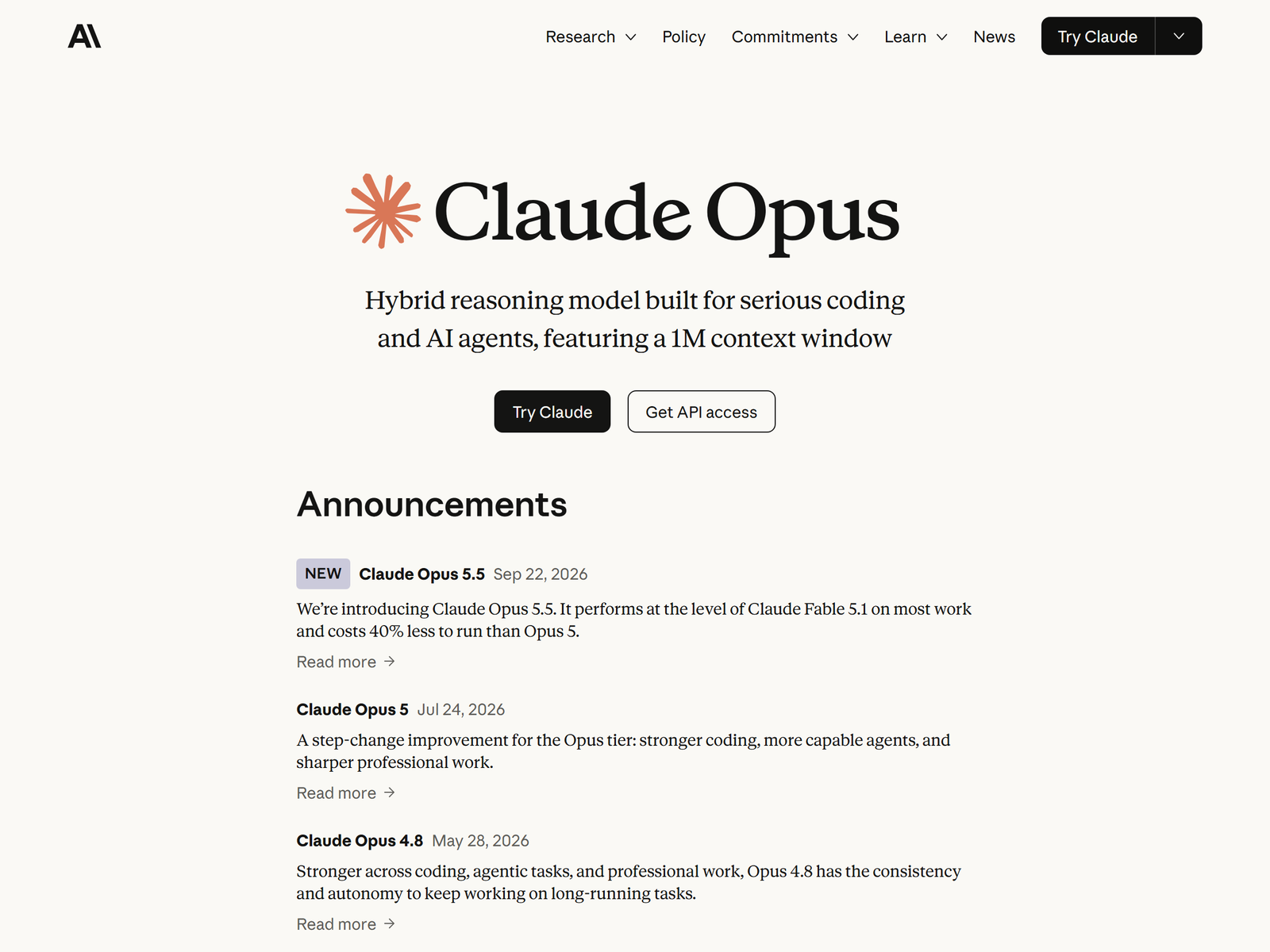
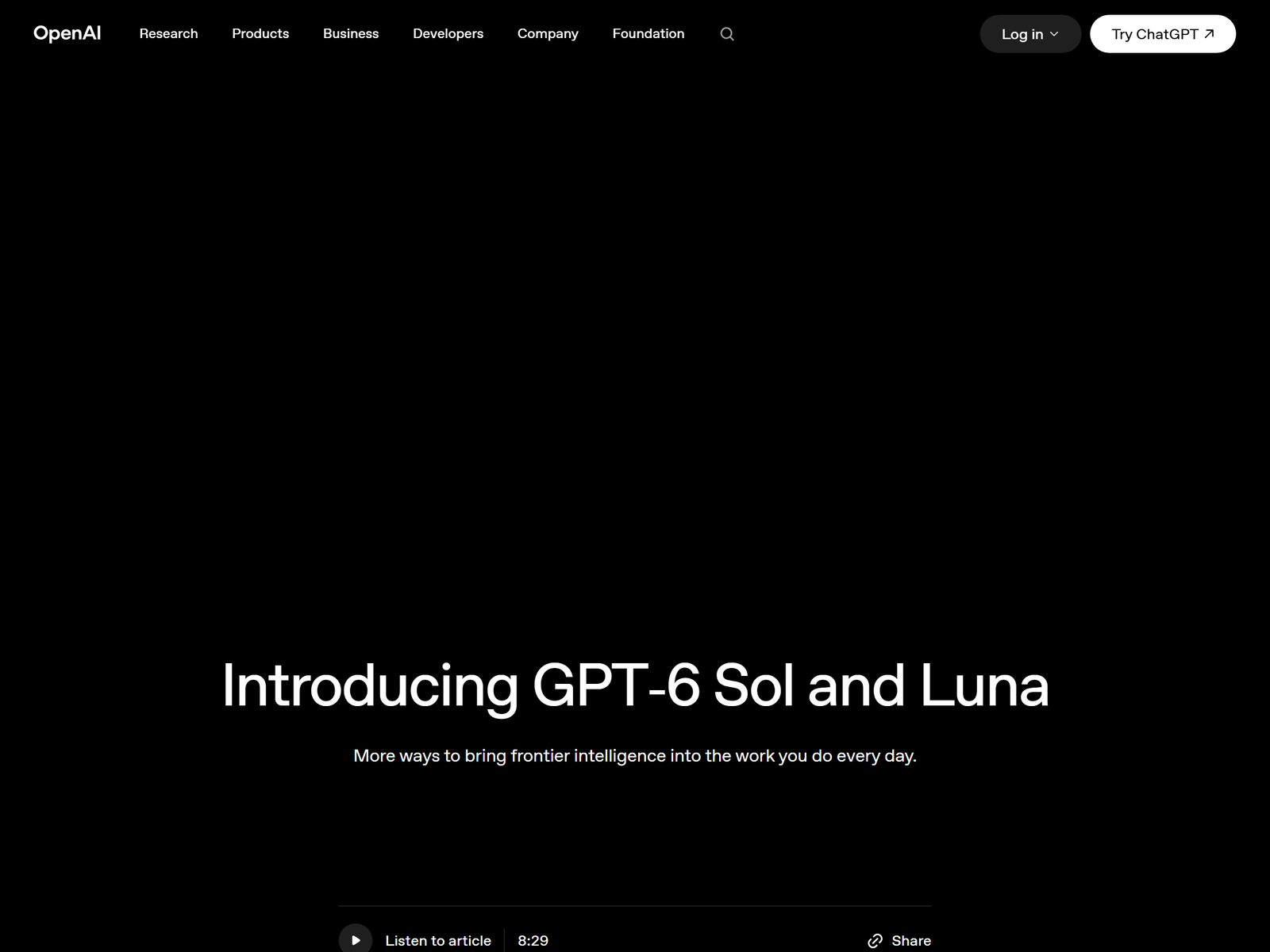
For the first time, two major frontier labs announced competing models within hours of each other and led with price, not capability. Anthropic released Claude Opus 5.5 at $4 per million input tokens and $20 per million output tokens, a 20% list-price cut from Opus 5. Cache reads fell 60% to $0.20 per million. OpenAI countered with GPT-6 Sol and GPT-6 Luna, both priced at half the promotional rates of their GPT-5.6 equivalents: Sol at $2/$10 and Luna at $0.10/$0.50.
The timing matters. Anthropic had spent the previous week calling for the industry to slow down, with CEO Dario Amodei publishing a 4,000-word essay on pacing the frontier. Its first move after that essay was a price cut. OpenAI, which had already disclosed six misalignment incidents and asked Congress whether an industry slowdown would violate antitrust law, answered with cheaper models anyway. The message from both sides: safety debates are loud, but the price war is louder.
Price and Specs at a Glance
| Model | Input / 1M tokens | Output / 1M tokens | Context window | Best suited for |
|---|---|---|---|---|
| Claude Opus 5.5 | $4.00 | $20.00 | 1M tokens | Long coding agents, enterprise workflows |
| GPT-6 Sol | $2.00 | $10.00 | Up to 272K input tiers | Complex coding, computer use, automation |
| GPT-6 Luna | $0.10 | $0.50 | Up to 272K input tiers | High-volume extraction, summaries, simple tasks |
Opus 5.5 also adds a fast mode at $8/$40 per million tokens for up to 2.5x speed, plus a US-only inference option at 1.1x standard pricing. OpenAI's cached reads carry a 90% discount, which matters enormously for agent loops that re-read the same codebase or document context.
How the Benchmarks Actually Compare
Anthropic says Opus 5.5 matches Claude Fable 5.1 on most tasks while costing roughly 40% less to run than Opus 5. On Terminal-Bench 4.0, Opus 5.5 scored 66.4% at highest effort, ahead of GPT-6 Astra's 57.9% as reported by OpenAI. It also hit 1846 Elo on GDPval-AA v2.1, a test of real-world professional work across 44 occupations, and 57.8% on CursorBench 4.0 against GPT-5.6 Sol's 41.7%.
OpenAI's own numbers paint a different picture. On AutomationBench, GPT-6 Sol scored 33.2% with a single-task cost of about $0.27, while Claude Opus 5 scored 26.9% at roughly 11x the cost per task. On DeepSWE v1.1, Sol reached 68.8%, close to Claude Fable 5's 69.9%, and OpenAI estimates Sol cost about 80% less per task. GPT-6 Luna is the budget story: it scored 66.6% on DeepSWE v1.1, within two points of Sol, at one-twentieth of Sol's price. But Luna dropped to 20.7% on AutomationBench and carried a 7.6% factual error rate in OpenAI's internal evaluation, compared with Astra's 3.9%.
The honest read is that no single benchmark wins. Opus 5.5 looks strongest on long-horizon coding and professional knowledge tasks. Sol looks strongest on cost-sensitive automation. Luna is a scalpel for high-volume, low-stakes work, not a replacement for either flagship.
Breaking Changes and Platform Availability
Switching to Opus 5.5 is not a drop-in replacement. Anthropic's release notes list four breaking changes: thinking mode cannot be disabled, tool_choice: "any" now returns a 400 error, thinking blocks are bound to the model and conversation so replays fail, and the older computer_20251124 tool is rejected in favor of computer_toolset_20260801. The model is available through the Claude API, Amazon Bedrock, Google Cloud, and Microsoft Foundry, plus Claude Pro, Max, Team, and Enterprise plans.
OpenAI's GPT-6 Sol and Luna are available in the API as gpt-6-sol and gpt-6-luna, and inside ChatGPT Work and Codex for Plus, Pro, Business, Enterprise, and Edu users. Free and Go users can access Luna in the desktop app. Notably, neither Sol nor Luna is available in the standard ChatGPT chat interface yet.
My Take / The Bottom Line
This was the day the AI infrastructure business stopped pretending price was a secondary metric. Anthropic and OpenAI both cut prices because they have to: enterprise buyers are comparing per-task cost, not model prestige, and open-weight pressure from DeepSeek, Qwen, and Llama keeps setting a lower floor.
If I were choosing today, I would put Opus 5.5 in front of senior engineering teams that need long-context agents and consistent reasoning. I would put GPT-6 Sol in front of automation teams that want the best per-dollar score on multi-tool workflows. And I would reserve Luna for batch extraction, classification, and internal tools where a 7.6% error rate is acceptable because a human is still in the loop. The real winner is not a model; it is any team that re-runs its cost model this quarter.
For readers building with these models, our AI programming and development tools directory tracks the latest coding agents, IDEs, and evaluation platforms.
Frequently Asked Questions
Q: Is Claude Opus 5.5 cheaper than GPT-6 Sol?
List price says no: Opus 5.5 is $4/$20 per million tokens versus Sol's $2/$10. But Anthropic claims typical workloads cost 40% less than Opus 5 because of faster output, fewer tokens per task, and 60% cheaper cache reads. The cheaper model depends on your actual usage pattern.
Q: Can GPT-6 Luna replace GPT-6 Astra?
No. Luna is positioned for high-throughput, low-cost tasks. It scores close to Sol on some coding benchmarks but makes far more planning errors on multi-step agent workflows and has a higher factual error rate.
Q: What are the biggest migration risks for Opus 5.5?
The four API changes: disabling thinking fails, tool_choice: "any" is removed, thinking blocks are not portable across models, and the older computer-use tool name is rejected. Teams using older tool schemas need to update before deploying.
Q: Which model is best for coding agents?
Opus 5.5 leads on Terminal-Bench 4.0 and CursorBench 4.0 in Anthropic's reported numbers. Sol is competitive on DeepSWE v1.1 and AutomationBench in OpenAI's numbers. The best choice depends on whether your codebase rewards long-context reasoning or multi-tool execution.
Q: Why did both labs launch on the same day?
Because pricing is now the primary battlefield. Each lab wants to be the default inference provider before the other can lock in enterprise contracts for 2027 budgets.