CryptoStorm Review 2026 – Token-Based Privacy VPN for Advanced Users?
Category: Best Privacy VPN
Last Updated: August 7, 2026 | Review Stance: Independent hands-on testing, includes affiliate links
TL;DR - CryptoStorm Review 2026 in 30 Seconds
CryptoStorm sells token-based access built for advanced users: buy a time credit, feed the hashed token to an open-source client, and no account or email address ever exists. Port forwarding, unlimited devices, an Iceland base and roughly $5 to $8 per month equivalent make it a strong seeding and anonymity tool. Setup is fiddly, the estate is small and streaming barely works. Recommended for technical privacy buyers and torrenters; not recommended for beginners or streaming households.
How We Tested CryptoStorm
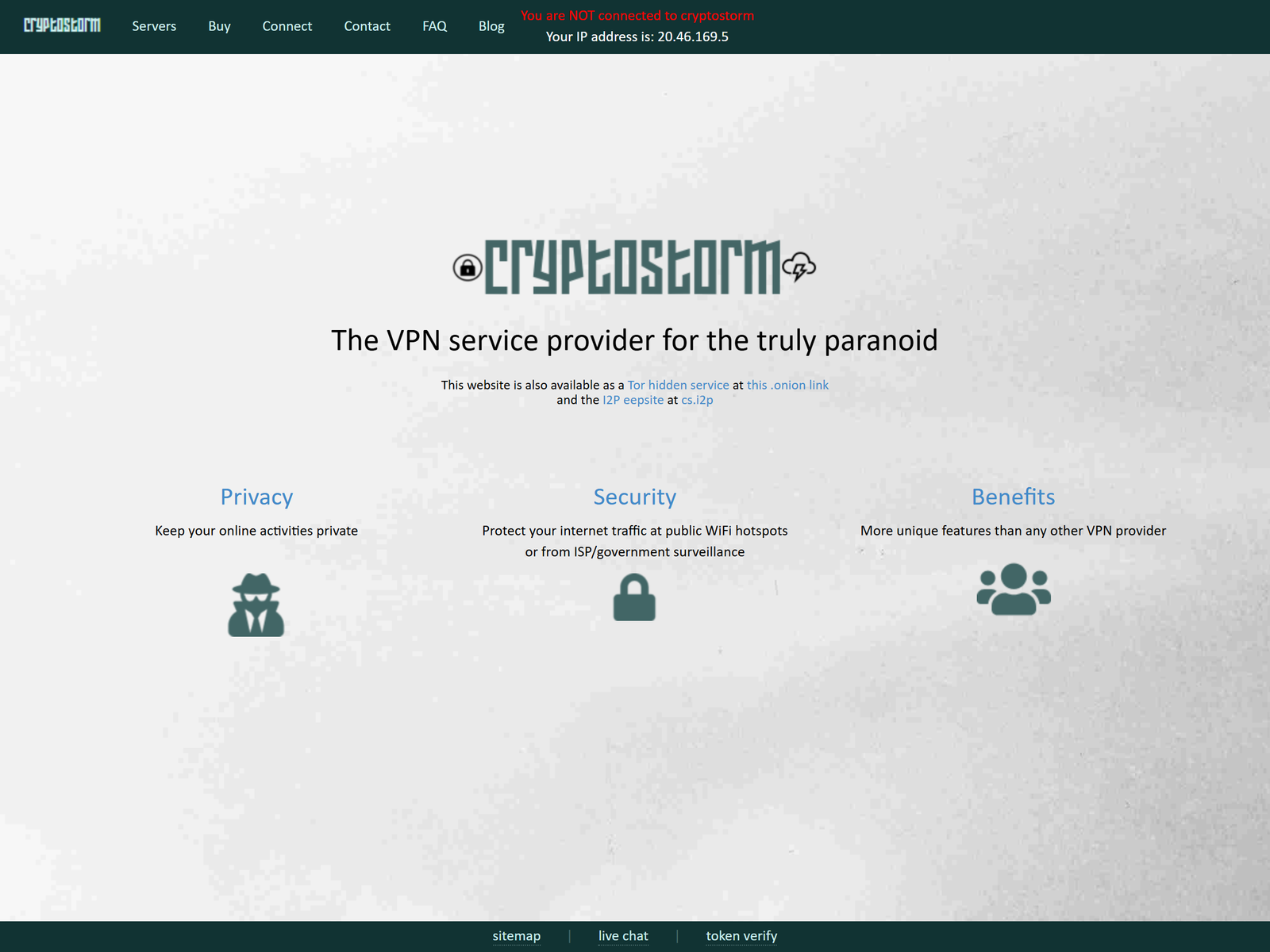
We spent eleven days with the service on Windows 11, macOS and Linux, buying a token with cryptocurrency and never supplying an email address, to verify the anonymous route works end to end. It does. Testing then covered sustained P2P transfers with port forwarding enabled, throughput on near and distant gateways, DNS and IPv6 leak behaviour, kill-switch behaviour when a laptop wakes on a different network, and how much friction the setup imposes on someone who has never edited a configuration file. We also read the published client source rather than taking the open-source label on trust.
The Token Model Explained
This is the part that makes the service unusual, so it deserves a plain explanation. Instead of creating an account, you buy a token that represents a block of time. The token is hashed before it reaches the network, so the credential your client presents cannot be traced back to the purchase. There is no username, no password reset, no email address sitting in a database waiting to be subpoenaed. Tokens do not expire, which means you can buy time now and use it months later. The cost is convenience: lose the token and you lose the access, because there is no account recovery to fall back on. That trade is the entire product philosophy in miniature.
Speed and Transfer Performance
Throughput loss landed in a 25-40% band on WireGuard and OpenVPN, which is respectable for an estate this compact. Latency stayed low on European and North American gateways and the tunnel held steady through long sessions without a single unexplained drop. Torrent transfers were the highlight. Port forwarding delivers the connectable status that actually determines swarm performance, and sustained downloads ran for hours without throttling or a bandwidth ceiling. Outside the core regions the picture inverts, and a subscriber in South America or Southeast Asia routes a long way to reach an endpoint.
Encryption, Anonymity and Jurisdiction
The security stack is aimed at people who read specifications rather than feature grids.
- Protocols: WireGuard and OpenVPN with perfect forward secrecy, plus raw configuration files for anyone who prefers their own client.
- Authentication: hashed tokens with no accounts and no email address, so the billing identity and the traffic never meet.
- Open-source clients: the code is published and readable, which is a stronger transparency signal than a marketing page.
- Port forwarding: available on most servers at no extra cost, which is rare and directly useful for seeding.
- Kill switch: network-level and reliable in every forced-disconnect test we staged.
- Logging: a strict no-logs stance with no recent third-party audit. The architecture supports the claim; independent paperwork does not.
- Jurisdiction: Iceland, outside the Five Eyes and Fourteen Eyes arrangements and with strong domestic data-protection law.
The absent audit is the fair criticism, and it is worth weighing against what the design achieves without one. A provider that never learns your identity has less to disclose than a provider that promises not to look. Even so, one plain statement belongs here: no VPN makes you untraceable. Readers who want the same posture with a published transparency record should compare AzireVPN, and self-hosting enthusiasts should read our Amnezia VPN review before deciding.
Streaming and Everyday Access
Streaming is where the product runs out of road, and the company has never pretended otherwise. Netflix loaded on a couple of gateways and was blocked on most, BBC iPlayer behaved similarly, and there are no catalogue-tuned servers to retry against. Nobody should buy this subscription to watch a home library from a hotel room. What works instead is the plainer set of jobs: shielding a laptop on conference Wi-Fi, keeping an ISP out of a download log, and giving remote workers a clean tunnel to company resources from an untrusted network.
Devices, Clients and Setup Friction
There is no cap on simultaneous connections, and router support means the whole house can sit behind one token. The catch is the route to get there. Desktop clients exist for Windows, macOS and Linux, but mobile largely means importing configuration files into a third-party app, and the interface assumes you know what a resolver is. This is the section where a first-time buyer should stop and choose something friendlier. For anyone who has configured OpenVPN before, an evening is enough to get everything running.
Pricing and Value
There is no subscription. Tokens work out near $5 to $8 per month equivalent depending on how much time you buy at once, and unused time never expires, so a light user can keep a token in reserve for travel. Cryptocurrency is the preferred payment route and the one that preserves the anonymity the product is built around. Against mainstream providers the price is mid-range rather than cheap, and what the premium buys is a credential model nobody else at this price offers.
How CryptoStorm Compares
| Service | Anonymous Signup | Port Forwarding | Jurisdiction |
|---|---|---|---|
| CryptoStorm | Yes, token-based | Yes | Iceland |
| AzireVPN | Yes, no email | Yes | Sweden |
| FrootVPN | No | No | Seychelles |
| Perfect Privacy | Partial | Yes | Switzerland |
Privacy comparisons on aifreetool.site weigh the credential model alongside the legal address, because a provider that never collects your details has less to hand over than one that promises discretion. The Best Privacy VPN category groups these services by how they answer that question, and the Most Stable VPN list is the better starting point if you want polished apps instead.
Pros and Cons
What Works
- Token authentication with no account and no email address
- Open-source clients you can read rather than trust
- Port forwarding included on most servers
- Iceland base, outside Five Eyes and Fourteen Eyes
- No device cap and tokens that never expire
What Holds It Back
- Setup is genuinely difficult for non-technical buyers
- No recent third-party audit of the no-logs stance
- Small estate punishes users outside Europe and North America
- Streaming access is unreliable and unsupported
- Losing a token means losing the access, with no recovery
Frequently Asked Questions
How does the CryptoStorm token system work?
You buy a token representing a block of time, and the client presents a hashed version of it to the network. No account, email address or password is created at any point, and unused time does not expire. Guard the token carefully, because there is no recovery process.
Is CryptoStorm good for torrenting?
Yes, and it is the strongest practical reason to buy it. Port forwarding is included on most servers, bandwidth is uncapped, and long transfers held steady through our testing without throttling or dropped tunnels.
Does CryptoStorm keep logs?
It states that it does not, and the token model means there is little to associate traffic with a buyer in the first place. The gap is that no recent independent audit backs the claim, so treat the architecture as the evidence rather than the paperwork.
Can CryptoStorm unblock Netflix?
Rarely and unpredictably. A couple of gateways worked during testing while most were blocked, and there are no streaming-optimised servers. Buy a different provider if watching a home catalogue abroad is your goal.
Is CryptoStorm suitable for beginners?
No. Mobile setup means importing configuration files into a third-party client and the interface assumes technical fluency. Choose a service with polished one-tap apps if that description does not sound like you.
My Take: The Bottom Line
CryptoStorm is built on a single idea taken seriously: the safest record is the one that was never written. No account, no email, no password, just a hashed token and an open-source client you are welcome to read. That design does more practical work than most no-logs paragraphs manage, and the port forwarding turns it into one of the better seeding tools at any price. It is also awkward, small and hopeless at streaming, and it will punish anyone who misplaces a token. My recommendation is to choose it if you download regularly, value anonymity over convenience, and can configure a client without a wizard. Skip it if you want polished apps or a reliable Netflix connection. Score: 8.0/10, with the points lost on usability rather than on principle.