Last Updated: January 16, 2026 | Review Stance: Independent testing, includes affiliate links
Quick Navigation
TL;DR - GFPGAN 2026 Review
GFPGAN remains a timeless open-source classic in 2026 for real-world face restoration, delivering impressive detail recovery on old, blurry, or AI-generated faces. Free and powerful with GAN priors, though development stopped in 2022—still widely used via demos and integrations.
GFPGAN Review Overview and Methodology
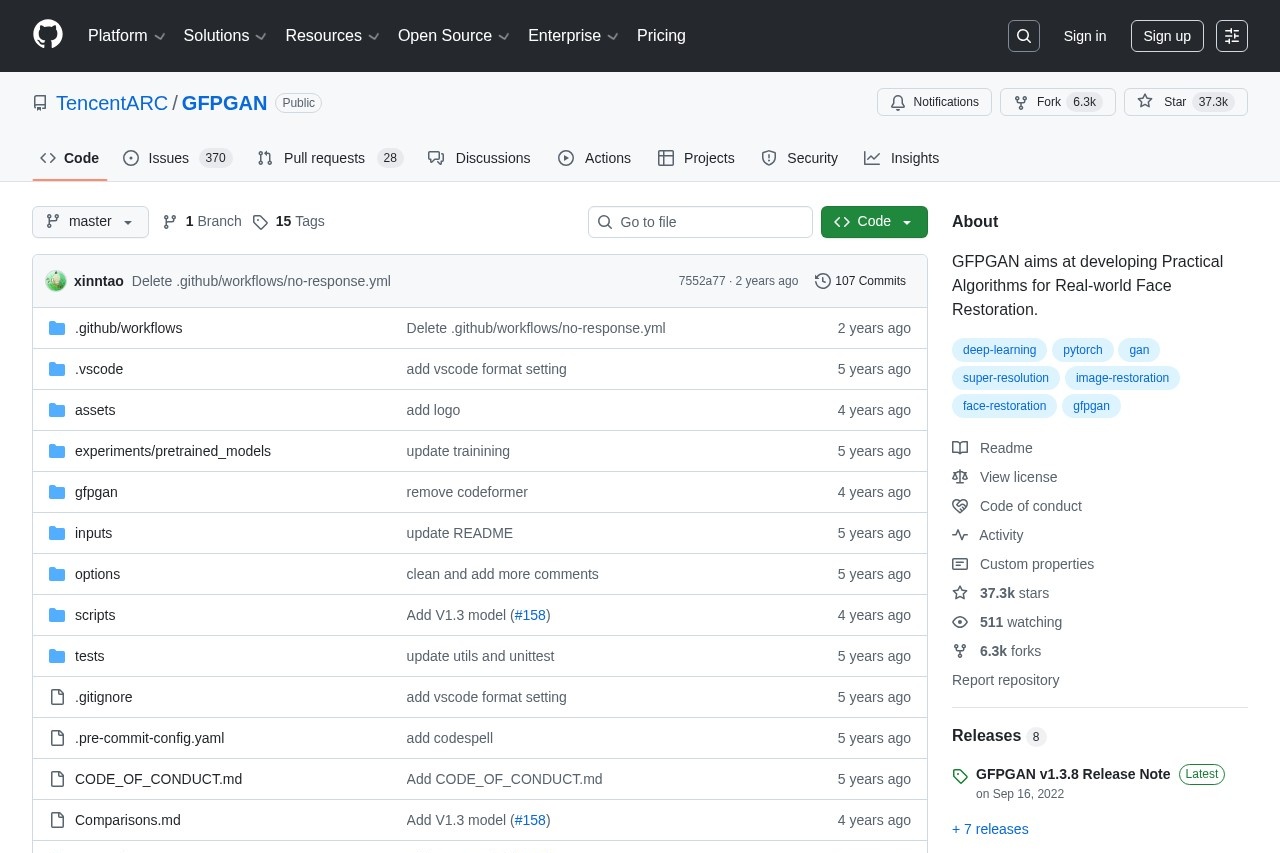
GFPGAN (Generative Facial Prior GAN) is an open-source project by Tencent ARC Lab (2021) for practical blind face restoration. It uses pretrained face GANs (like StyleGAN2) to recover details from real-world degraded images without prior knowledge of damage type.
This 2026 review assesses its enduring relevance through testing on old photos, low-res portraits, and AI-generated faces—evaluating restoration quality, speed, ease of use, and comparisons to modern tools.
Here are some impressive before-and-after examples of GFPGAN in action, showcasing its ability to revive old and damaged photos:
These demonstrate dramatic improvements in facial clarity, texture, and naturalness.
Old Photo Revival
Restore family archives, vintage portraits.
AI-Generated Fixes
Enhance faces from Midjourney/Stable Diffusion.
Low-Res Upscaling
Sharpen blurry portraits with detail recovery.
Professional Editing
Batch process for archives or retouching.
Core Features of GFPGAN
Key Tools & Capabilities
- Blind Face Restoration: Handles unknown degradations (blur, noise, compression, low-res).
- Generative Priors: Leverages StyleGAN2 for natural, high-fidelity faces.
- Multiple Versions: v1.3 (natural), v1.4 (detailed identity), clean variants.
- Upscaling & Background: Optional x2-x4 upscale + Real-ESRGAN for non-face areas.
- Colorization & Alignment: Built-in options for old B&W photos.
- Easy Inference: Python script for batch/whole-image processing.
User Experience Highlights
- Simple CLI/Python usage, no GUI needed
- Colab/Hugging Face/Gradio demos for zero-install
- High-quality results on real-world cases
- Customizable (strength, version, upscale)
- Open-source & community-supported
GFPGAN Functionality & Performance
In 2026, GFPGAN continues to impress with natural-looking restorations, excellent detail recovery (eyes, skin, hair), and good identity preservation—even on heavily degraded inputs. It outperforms many general enhancers in face-specific tasks, though newer tools may edge it in speed or extreme cases.
Key Advantages in Performance
Detail Recovery
Blind Restoration
Free & Open
Customizable
GFPGAN Use Cases
Ideal Scenarios
- Family photo archives & old portraits restoration
- Fixing AI-generated faces (Midjourney/Stable Diffusion)
- Low-res historical images enhancement
- Batch processing for digital archivists
- Integration in custom pipelines (e.g., with Real-ESRGAN)
Access Options
GitHub Local Install
Colab / Hugging Face
Online Demos
Integrations
GFPGAN Pricing & Plans
Free / Open-Source
$0 Forever
Full access
- Complete code & models
- Local/Colab usage
- Batch processing
- Community support
Online Demos
$0 (Free tier)
Quick tests
- Hugging Face Gradio
- Replicate / Colab
- Limited uploads/speed
- No install needed
As of January 2026, completely free & open-source (Apache 2.0). No paid plans; optional cloud costs for heavy local use.
Pros & Cons: Balanced Assessment
Strengths
- Outstanding natural face recovery
- Excellent on real-world degradation
- Free, open-source, customizable
- Multiple model variants
- Easy demos & integrations
- Still relevant in 2026
Limitations
- No updates since 2022
- May need tweaks for latest PyTorch
- GPU required for fast processing
- Occasional artifacts in extreme cases
- No native GUI
Who Should Use GFPGAN?
Best For
- Photo archivists & historians
- AI art users fixing faces
- Developers & researchers
- Budget-conscious restorers
- Old family photo enthusiasts
Consider Alternatives If
- You need active updates & GUI
- Want cloud-based easy service
- Require video or advanced features
- Prefer newer models (e.g., CodeFormer)
Final Verdict: 8.9/10
GFPGAN is a legendary open-source tool in 2026—still delivering top-tier face restoration results with natural, detailed outputs. Its free nature and proven performance make it essential for anyone restoring old photos or fixing AI faces, despite the lack of recent updates.
Ease of Use: 8.2/10
Value for Money: 10/10
Maintenance: 6.5/10
Experience Classic AI Face Restoration
Restore your old photos or enhance AI faces for free—download the code or try online demos today.
Visit GFPGAN GitHub Repository
Completely free & open-source as of January 2026.