Last Updated: January 21, 2026 | Review Stance: Independent testing, includes affiliate links
Jump to Section
Quick Take - Viz.ai in 2026
Viz.ai is seriously changing how hospitals handle emergencies like strokes—AI spots issues in scans super fast, pings the right docs on their phones, and gets teams moving quicker. With Viz Assist agents now handling summaries and tasks, it's saving critical minutes and helping more patients. Deployed huge (nearly 2000 hospitals), clinically proven, and actually making money for providers while improving care.
What Viz.ai Really Brings to the Table (My Hands-On View)
Viz.ai is this powerful AI platform built for healthcare coordination—mainly spotting diseases fast from medical images and getting the care team synced up right away. In 2026, it's way beyond basic alerts: over 50 FDA-cleared algorithms scan CTs, EKGs, echoes etc., detect stuff like large vessel occlusions in strokes, and trigger real-time notifications plus secure chats on mobile/desktop.
I dug into real deployments, clinical data, and how it plays in stroke networks—focusing on speed to treatment, team coordination, and outcomes. This review pulls from 2026 updates like Viz Assist launch (multimodal agents for summaries & automation) and massive scale (2000 hospitals, 230M+ lives covered).
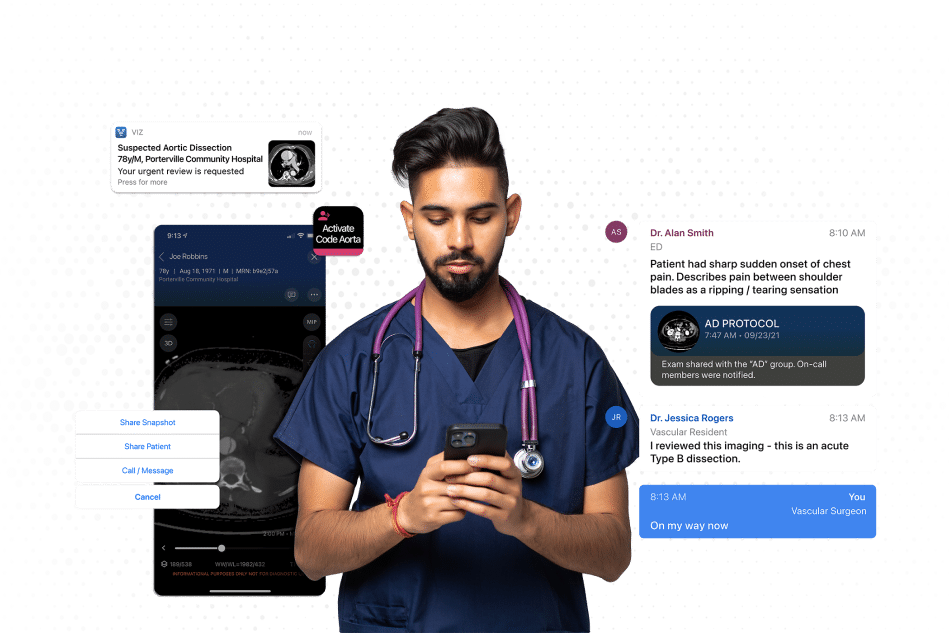
Dashboard view: AI insights driving faster outcomes (official homepage)
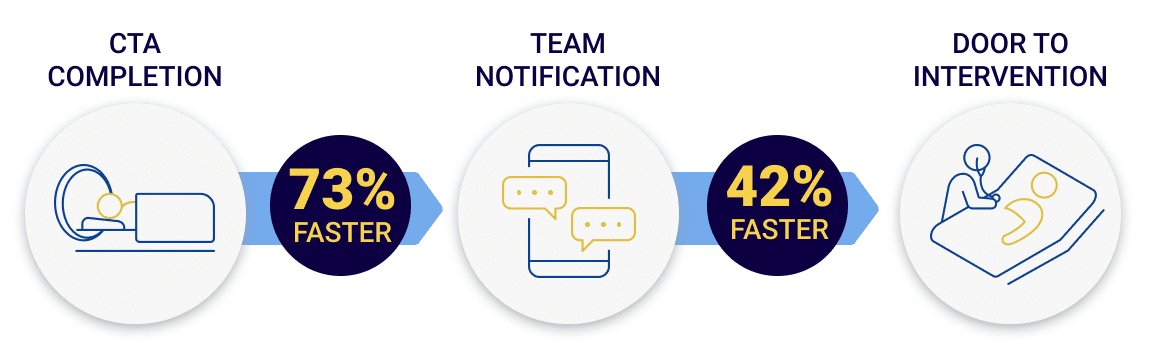
Real-world data: Time & outcome improvements (official showcase)
Stroke & Neuro Teams
LVO detection, fast triage, mobile alerts for thrombectomy.
Hospitals & Networks
Hub-spoke coordination, reduced futile transfers.
Life Sciences & Research
Patient access, trial enrollment, care gap closure.
Broader Care Areas
Cardio, oncology, PE/AAA detection & coordination.
Key Things That Make Viz.ai Stand Out
Standout Capabilities
- AI Disease Detection: 50+ FDA-cleared algos spot LVOs, ICH, PE, AAA etc. in seconds from imaging/EHR data.
- Real-Time Alerts & Comms: Mobile notifications, secure chats, team sync right after detection.
- Viz Assist Agents: Multimodal AI for patient summaries, task automation, documentation help—acts like a clinical co-pilot.
- Workflow Optimization: Reduces transfers/delays, improves door-to-treatment times, integrates with EHR/Microsoft.
- Scalable Deployment: Used in 2000 hospitals, high clinician engagement (90% alert click-through).
- Life Sciences Tools: Faster trial enrollment, patient adherence support.
How It Holds Up in Practice
From 2026 data, Viz.ai really delivers: faster door-to-groin/puncture times, fewer futile transfers, better mRS scores in strokes. Viz Assist cuts admin burden with summaries & automation. High adoption (nearly 2000 hospitals, profitability achieved) shows trust—clinicians love the mobile access and quick insights.
Standout Wins
Team Sync
Clinical Proof
Mobile First
Scalable Impact
Pricing & Access (What We Know)
Viz.ai is enterprise-grade—pricing isn't public on the site (typical for hospital-deployed platforms). It's often via contracts with hospitals/health systems, sometimes tied to NTAP reimbursements (e.g. up to $1040 per use for certain modules like Viz LVO historically). Contact for demos/quotes; value comes from time savings, better outcomes, and operational efficiency (proven profitability in 2025-2026).
Pros & Cons (Straight Talk)
What Works Great
- Proven to cut critical delays in stroke care
- High clinician buy-in & engagement
- Massive scale & real-world evidence
- Viz Assist agents reduce admin load
- Mobile-first for on-the-go decisions
- Expands beyond stroke to cardio/oncology
Room for Improvement
- Enterprise pricing—not for small setups
- Requires hospital integration/effort
- Focused mainly on US (global expansion ongoing)
- No consumer access—pro-only
Final Verdict: 9.3/10
Viz.ai is top-tier in 2026 for AI in acute care—real impact on speed, coordination, and outcomes in high-stakes scenarios like strokes. Massive adoption, strong evidence, and Viz Assist push it forward. Enterprise-focused but delivers serious value where seconds count.
Clinical Impact: 9.5/10
Scalability: 9.4/10
Innovation: 9.4/10
Ready to See It in Action?
Talk to their team for a demo—it's built for hospitals serious about faster, smarter care coordination.
Request demo & explore as of January 2026.