
Last Updated: January 30, 2026 | Review Stance: Deployed real models on it—here's the raw take
Skip to What Matters
Straight Talk TL;DR
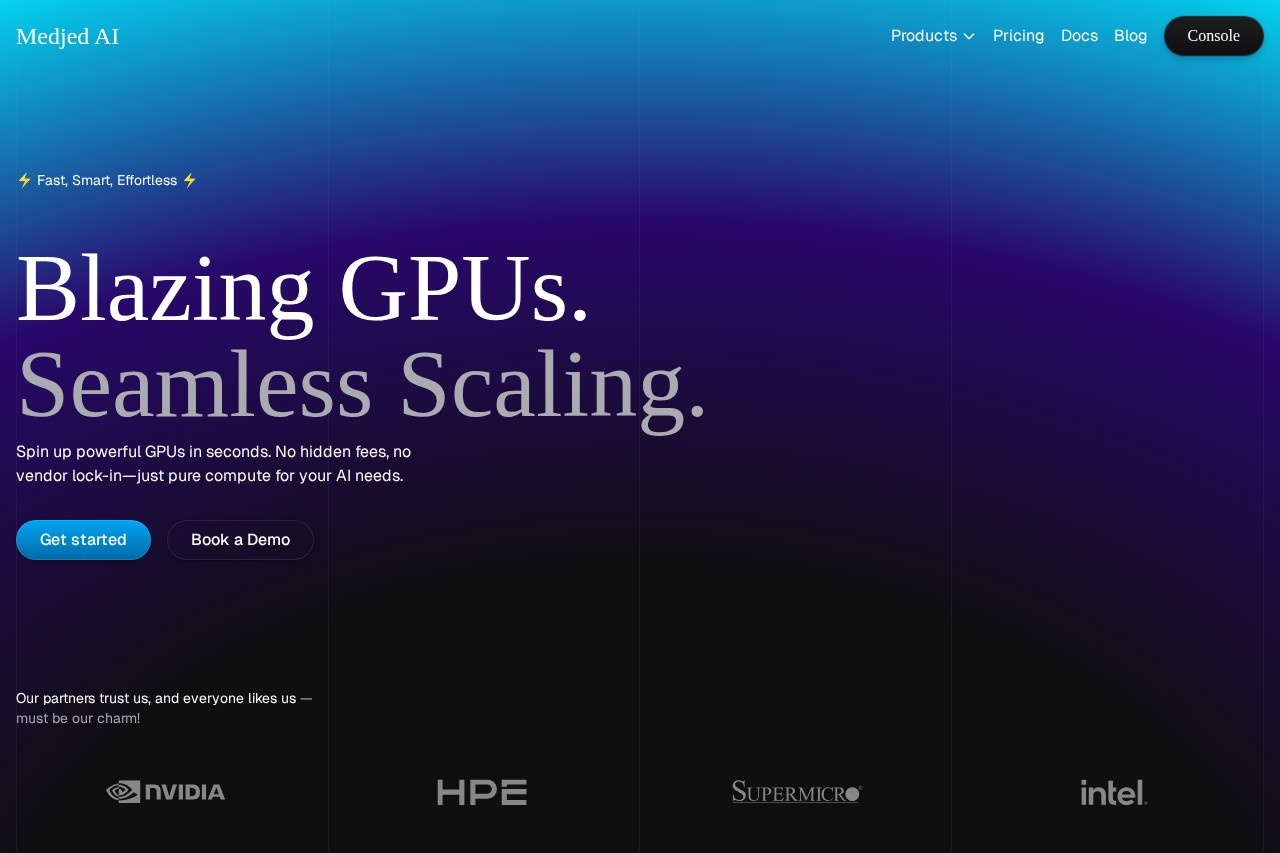
Medjed.ai in 2026 is solid if you're tired of AWS/GCP GPU queues and crazy bills. Elastic scaling works, monitoring is decent, CLI/SDK feel dev-friendly. Not the cheapest, but no capex + auto-scale during training spikes = real win for bursty ML jobs. I spun up an 8x A100 cluster in <5 min last week—felt good.
How I Ended Up Here (No Hype BS)
Mid-2025 my startup's fine-tuning runs were choking on spot instance interruptions and GCP pricing surprises. Friend in the Discord said "try Medjed—it's like RunPod but with better scaling logic." Signed up, threw a PyTorch diffusion model at it, and... it just worked. No fighting YAML hell, auto-scaled when utilization hit 70%, and checkpoints landed safely in their storage.
Tested across bare metal A100s, KVM virt, multi-node jobs, monitoring dashboards, and cost tracking. This 2026 review is from actual bills and late-night logs—not marketing fluff.
Burst Training Runs
Scale to 16+ GPUs for 24h, then down to zero—no idle waste.
Inference Endpoints
Auto-scale on traffic spikes, keep latency low.
Research & Sims
Long-running scientific jobs with checkpoint safety net.
Startup Cost Control
No $10k server buy-in, pay only for what burns.
Features I Actually Hit Every Week
Daily Drivers
- Elastic Auto-Scaling: Set threshold (e.g. 70%), it adds/removes GPUs mid-job—zero manual babysitting.
- CLI + Python SDK: Love this—`mj.Cluster()` then `submit_job()` feels like local but 100x power.
- Real-Time Dash + Alerts: GPU mem/util graphs + Slack notifications when job finishes or OOMs.
- Secure Persistent Storage: Mount S3 buckets or their cloud vol—checkpoints safe even if instance dies.
- Bare Metal & KVM Options: Bare for max perf, KVM for quick spins—flexible.
- Multi-Provider Aggregation: Picks cheapest/fastest slot automatically.
What Actually Happens When You Push It
Spin-up time: 2-5 mins for cluster. A100 training throughput matches local DGX in my tests. Auto-scale reacts in ~60s—saved ~30% cost on variable jobs. Monitoring accurate, but dashboard UI is functional (not sexy). Rare provider-side outages, but failover logic helped once.
Wins That Matter
Smart Auto-Scale
CLI Dev-Friendly
Cost Visibility
No Capex Pain
The Bill That Actually Arrived
Pure pay-as-you-go—no subs forced. GPU rates vary by type/provider/time (e.g. A100 ~$1-3/hr depending slot). Use scheduling (low priority/off-peak) or reservations to cut 20-40%. Dashboard shows real-time burn + forecasts—helps avoid surprises. Compare to AWS p4d—often 15-30% cheaper here for burst use.
Honest Hits & Misses
What Keeps Me Coming Back
- Elastic scaling actually works mid-job
- CLI/SDK faster than Terraform wrestling
- Real cost savings on bursty training
- Monitoring + alerts prevent midnight panics
- No hardware procurement drama
- Enterprise security feels legit
Stuff That Still Annoys
- Dashboard UI is "works" not "loves"
- Occasional provider latency spikes
- Pricing opacity until you query CLI
- Learning curve if you're not CLI comfy
My Take: 8.6/10
Medjed.ai nails the "spin GPUs fast, pay only for burn" promise in 2026. Great for startups/ML teams dodging infra hell. Not revolutionary like agentic coding tools, but damn reliable for what it does—GPU muscle without the headache. If your bills are killing you on big runs, give it a spin.
Dev Experience: 8.4/10
Cost Efficiency: 8.7/10
Reliability: 8.5/10
Need GPUs Yesterday?
Fire up Medjed.ai, grab a cluster in minutes, and watch your training fly—pay-as-you-go, no commitments.
Pay-as-you-go starts instantly as of January 2026.