Prodia simplifies the deployment of AI infrastructure into scalable, developer-friendly production workflows.

Loki.build is a groundbreaking AI-powered no-code platform that enables anyone to create full-stack web applications using natural language prompts. Simply describe your app idea, and Loki.build generates a complete React frontend, backend APIs, and database schema—ready for preview, iteration, and deployment.

AssemblyAI excels in late 2025 as a powerful developer platform for voice AI, combining high-accuracy speech-to-text (99+ languages) with advanced Audio Intelligence features like diarization, PII redaction, sentiment, and topic detection. Seamless LLM integration enables full speech-to-intelligence pipelines—trusted by thousands of companies with pay-as-you-go pricing and $50 signup credits.

Dvina AI excels as a privacy-centric platform in late 2025, connecting over 120 apps and databases for secure, real-time AI queries on internal data. It handles large files accurately without exposure—perfect for enterprises avoiding public AI risks.
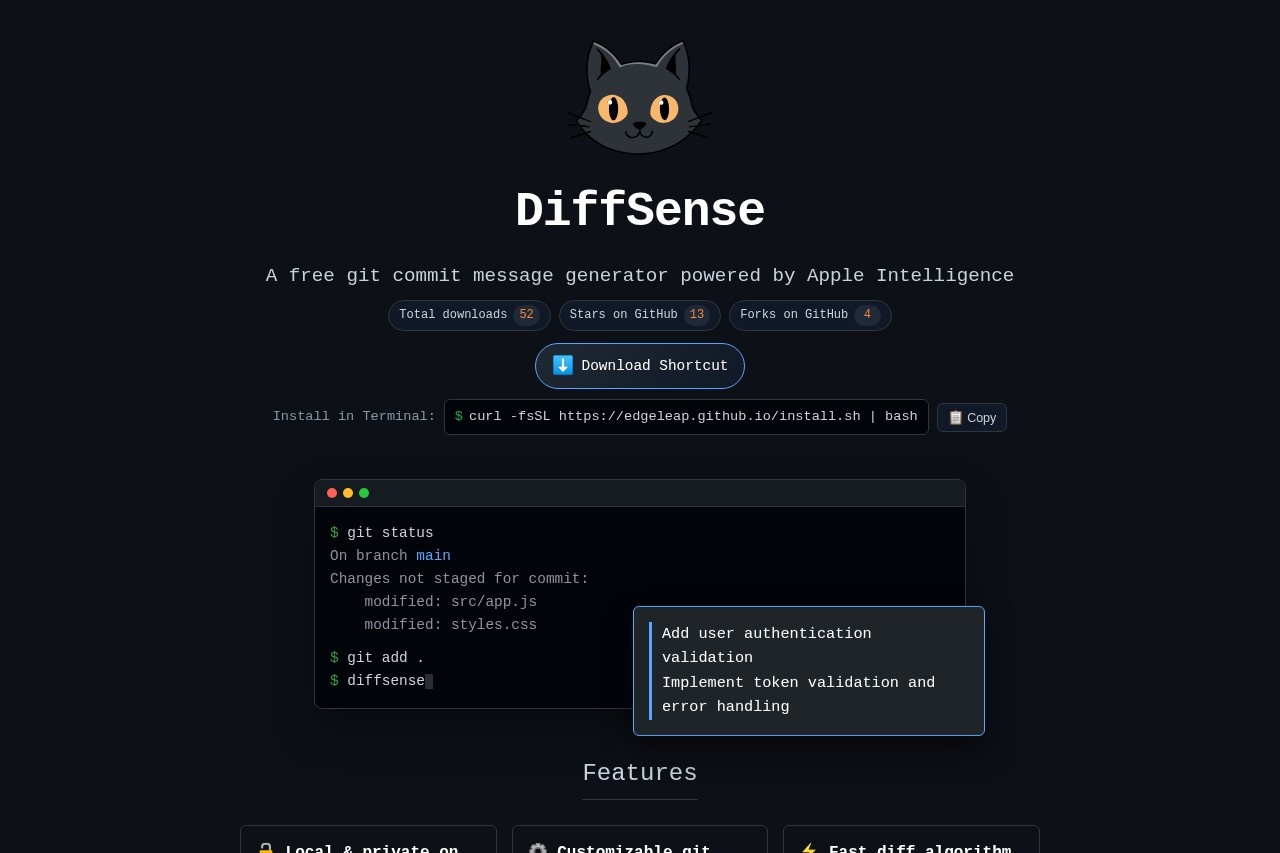
DiffSense stands out as a brilliant free tool in late 2025 for Mac developers who want AI-powered git commit messages without compromising privacy. Running locally on Apple Silicon using Apple Intelligence by default, it instantly analyzes diffs and generates clear, conventional-style messages you can edit before committing. Custom formats, powerful aliases, and optional cloud backends add flexibility while keeping core operation on-device.

Helicone stands as the premier open-source observability platform for LLM applications in late 2025. It delivers comprehensive logging, powerful caching, detailed analytics, and evaluation tools through a simple one-line integration. Trusted by thousands of developers, Helicone helps reduce costs, improve reliability, and accelerate iteration—making it essential for production LLM deployments.
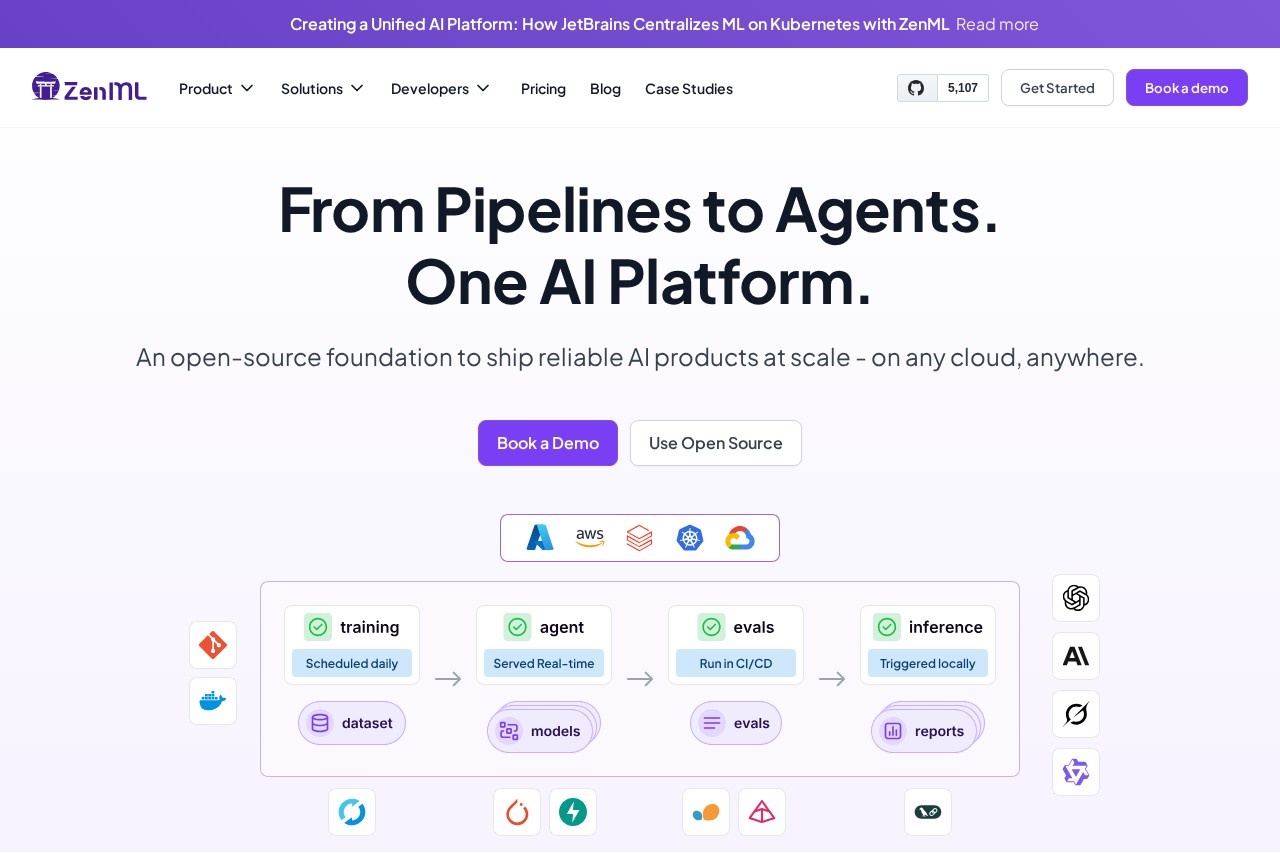
An open-source foundation to ship reliable AI products at scale - on any cloud, anywhere.

Traceloop excels as the top open-standards LLM observability platform in late 2025, built on OpenLLMetry (OpenTelemetry). It offers instant tracing, automated quality checks, custom evaluators, and deep integrations—ideal for catching issues before production.

Comet ML excels in late 2025 as a versatile MLOps platform combining robust experiment tracking with advanced LLM observability through Opik. It delivers real-time visualizations, seamless integrations, prompt optimization, and production monitoring—trusted by innovative teams seeking reproducible workflows.

Vellum AI remains the premier LLMOps platform in late 2025, providing an end-to-end solution for building, evaluating, deploying, and monitoring production LLM applications. Its visual workflow builder, comprehensive evaluations, git-like versioning, and robust observability set the standard for teams shipping reliable AI products.
Guardrails AI remains the premier open-source platform for LLM safety in late 2025, offering the largest community-driven Guardrails Hub with validators for toxicity, PII leaks, hallucinations, prompt injections, and more. It ensures reliable outputs with minimal latency, integrates seamlessly as a drop-in LLM wrapper, and includes tools like Snowglobe for pre-launch testing. Free for developers; enterprise managed service adds production deployment and observability. Trusted for building safe, compliant GenAI applications.
MLflow remains the leading open-source MLOps platform in late 2025, providing full experiment tracking, project packaging, model registry, and flexible deployment—all completely free. Framework-agnostic, highly extensible, and backed by a strong community, it's perfect for teams wanting control without licensing costs.
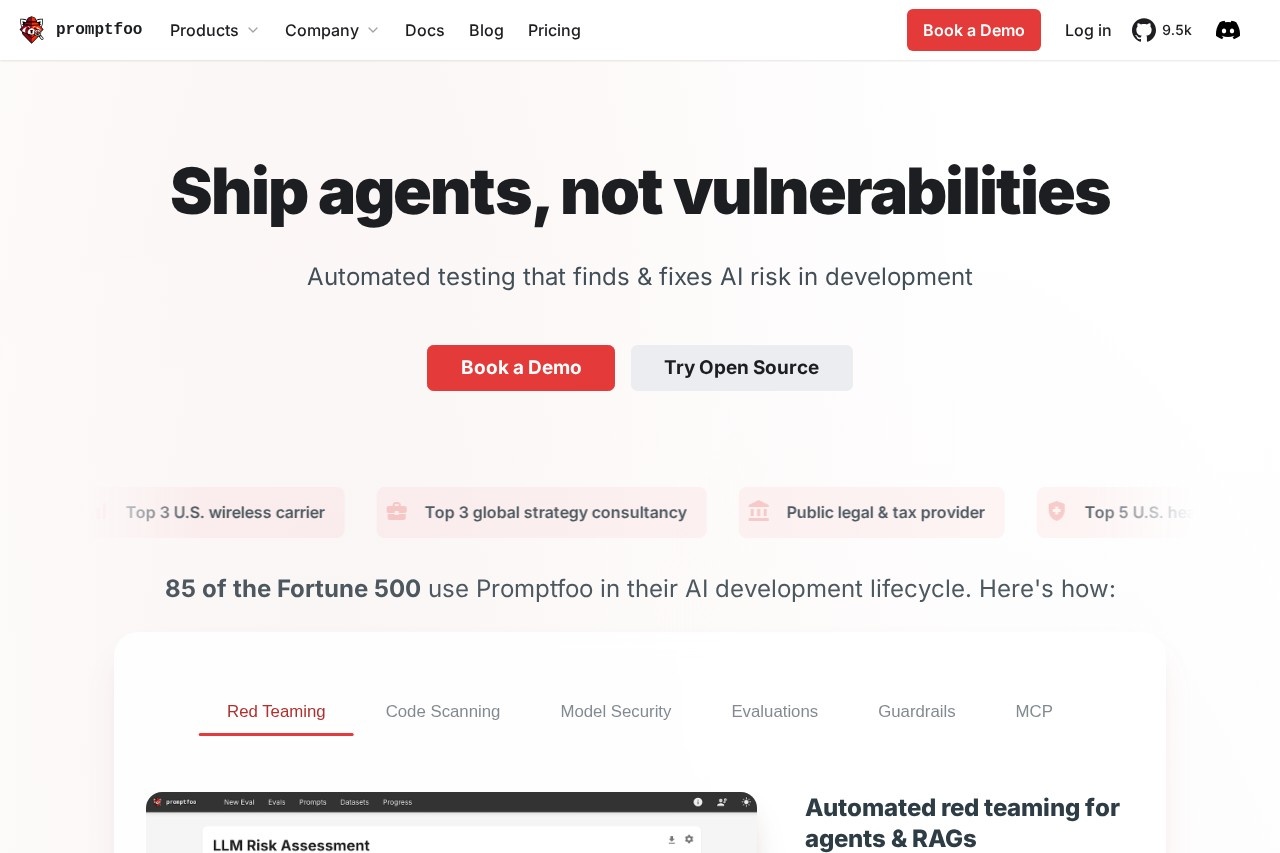
Promptfoo stands as the top open-source LLM evaluation and red teaming tool in late 2025, enabling developers to systematically test prompts, agents, and RAG pipelines with simple YAML configs, interactive web views, and automated vulnerability scanning across 50+ providers.
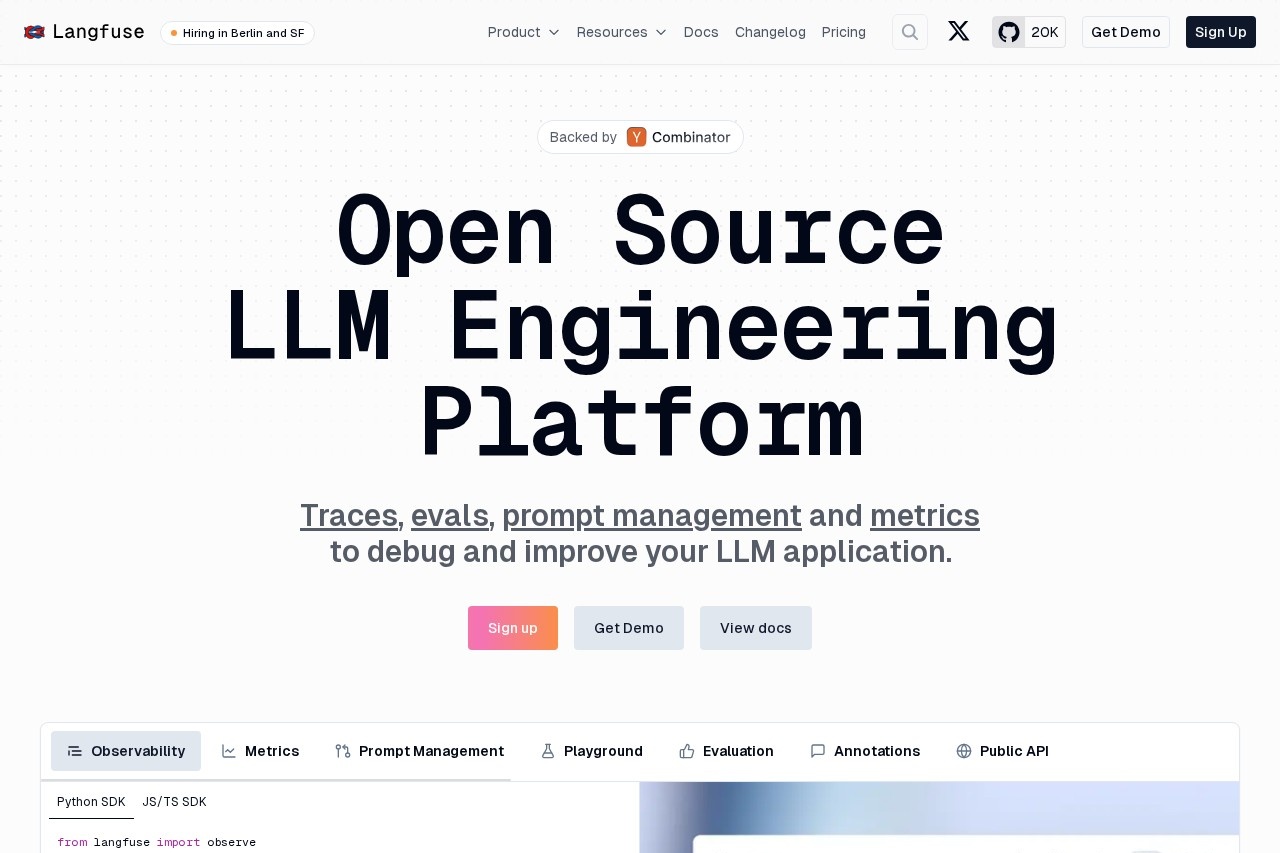
Langfuse stands out as the premier open-source LLM observability platform in late 2025, delivering end-to-end tracing, prompt management, evaluations, and metrics for production-grade applications. Its OpenTelemetry foundation, vast integrations, and full self-hosting capability provide unmatched flexibility and data sovereignty—trusted by enterprises and developers alike.
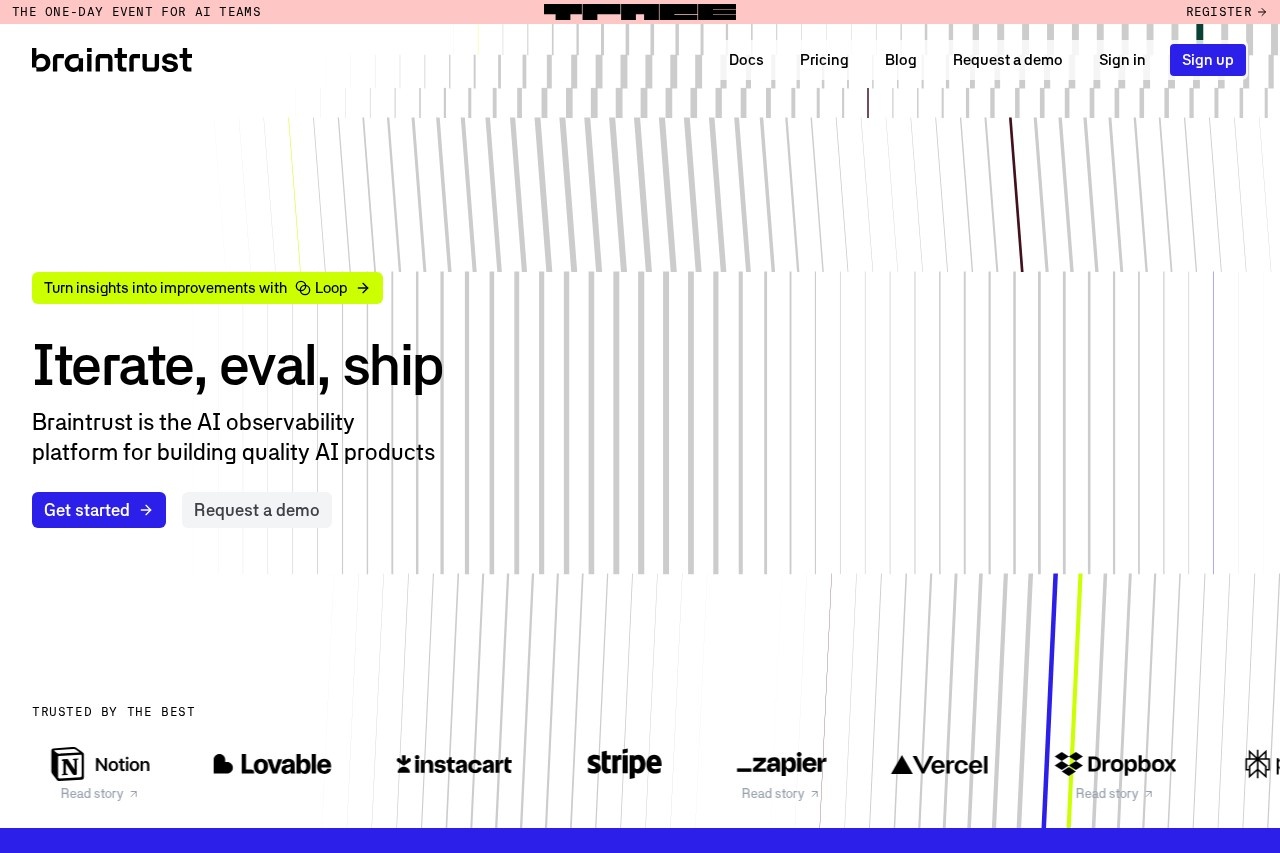
Braintrust remains the premier MLOps platform in late 2025, offering powerful experiment tracking, stunning visualizations, seamless integrations, Weave for LLM monitoring, and robust model registry. Trusted by OpenAI, Microsoft, and Toyota, it's essential for serious ML teams—free tier for individuals, paid for advanced collaboration.
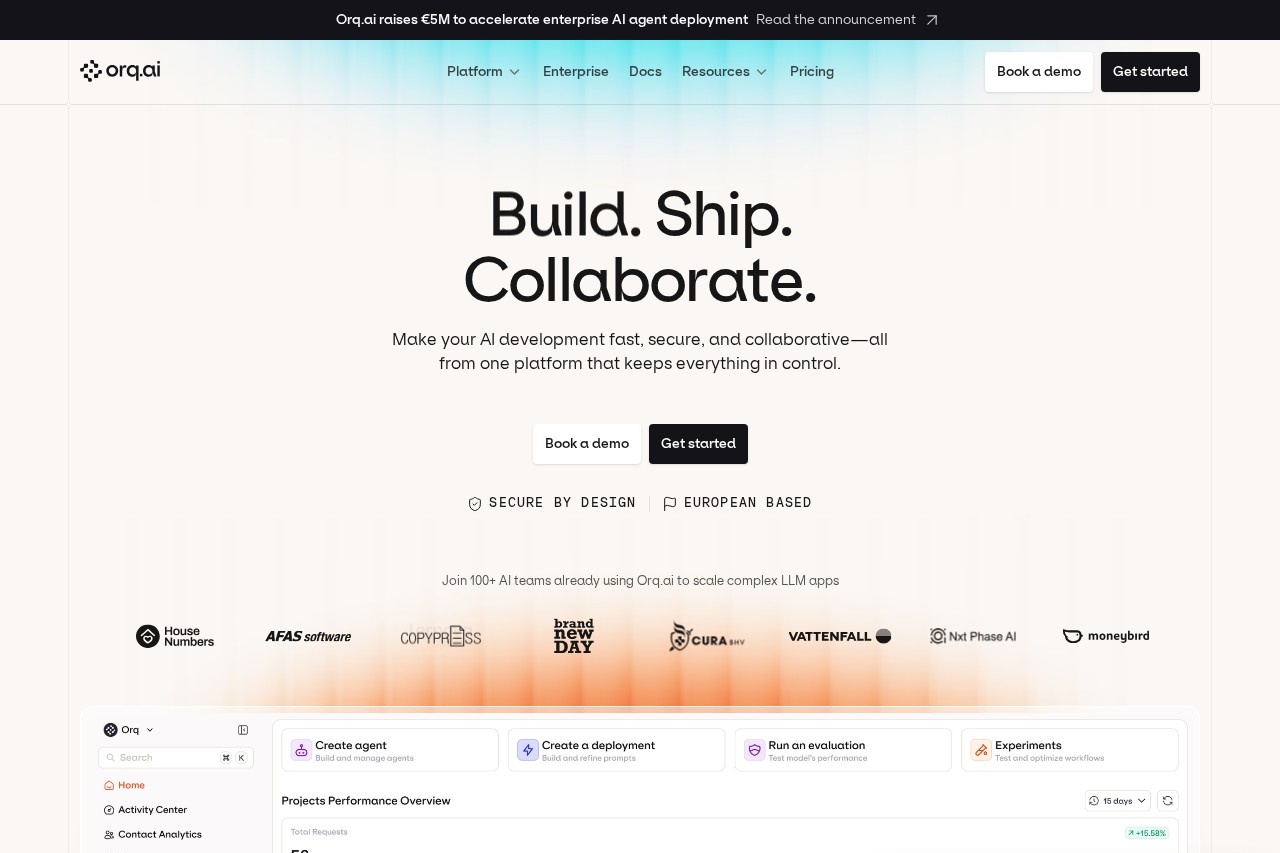
Orq.ai stands as a powerful end-to-end Generative AI Collaboration Platform in late 2025, designed to help teams build, optimize, deploy, and monitor production-ready LLM applications and autonomous agents. It unifies prompt engineering, multi-model routing (300+ LLMs), advanced evaluations, RAG pipelines, real-time observability, and enterprise governance in one workspace—enabling faster iteration and reliable scaling. Recognized by Gartner as an emerging leader, it's trusted for bridging the prototype-to-production gap with strong security and compliance features.
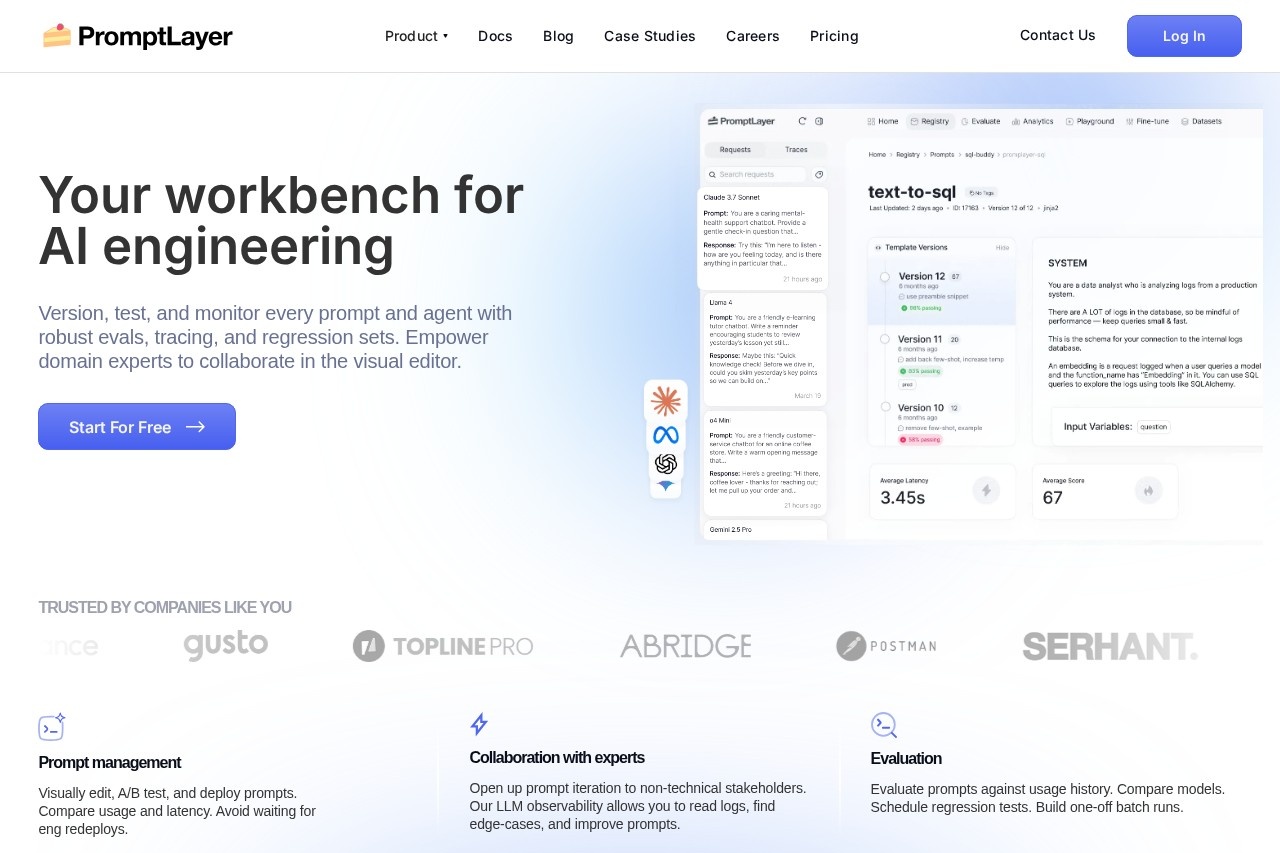
stunning visualizations, seamless integrations, Weave for LLM monitoring, and robust model registry. Trusted by OpenAI, Microsoft, and Toyota, it's essential for serious ML teams—free tier for individuals, paid for advanced collaboration.

LangSmith remains the premier observability and evaluation platform for LLM applications in late 2025. It delivers unmatched tracing, debugging, testing, and monitoring—working seamlessly with LangChain or any framework, with zero added latency.

Weights & Biases (W&B) remains the premier MLOps platform in late 2025, offering powerful experiment tracking, stunning visualizations, seamless integrations, Weave for LLM monitoring, and robust model registry. Trusted by OpenAI, Microsoft, and Toyota, it's essential for serious ML teams—free tier for individuals, paid for advanced collaboration.

CodeGen is an open-source model family for program synthesis, trained on TPU-v4 and offering competitive performance with OpenAI Codex.

Claude Threat Report 2026 Review: Drones, Surveillance, Bioweapons
09/11/2026
VyprVPN Review 2025 – Stable Privacy VPN with Audited No-Logs?
12/22/2025
OctoVPN Review 2026 – Stable, DDoS-Safe VPN for Gamers
09/04/2026
SmartyDNS Review 2026 - Smart DNS That Unblocks Streaming
10/07/2026
Two Weeks Until the EU Can Fine AI Companies 7% of Global Revenue
07/19/2026