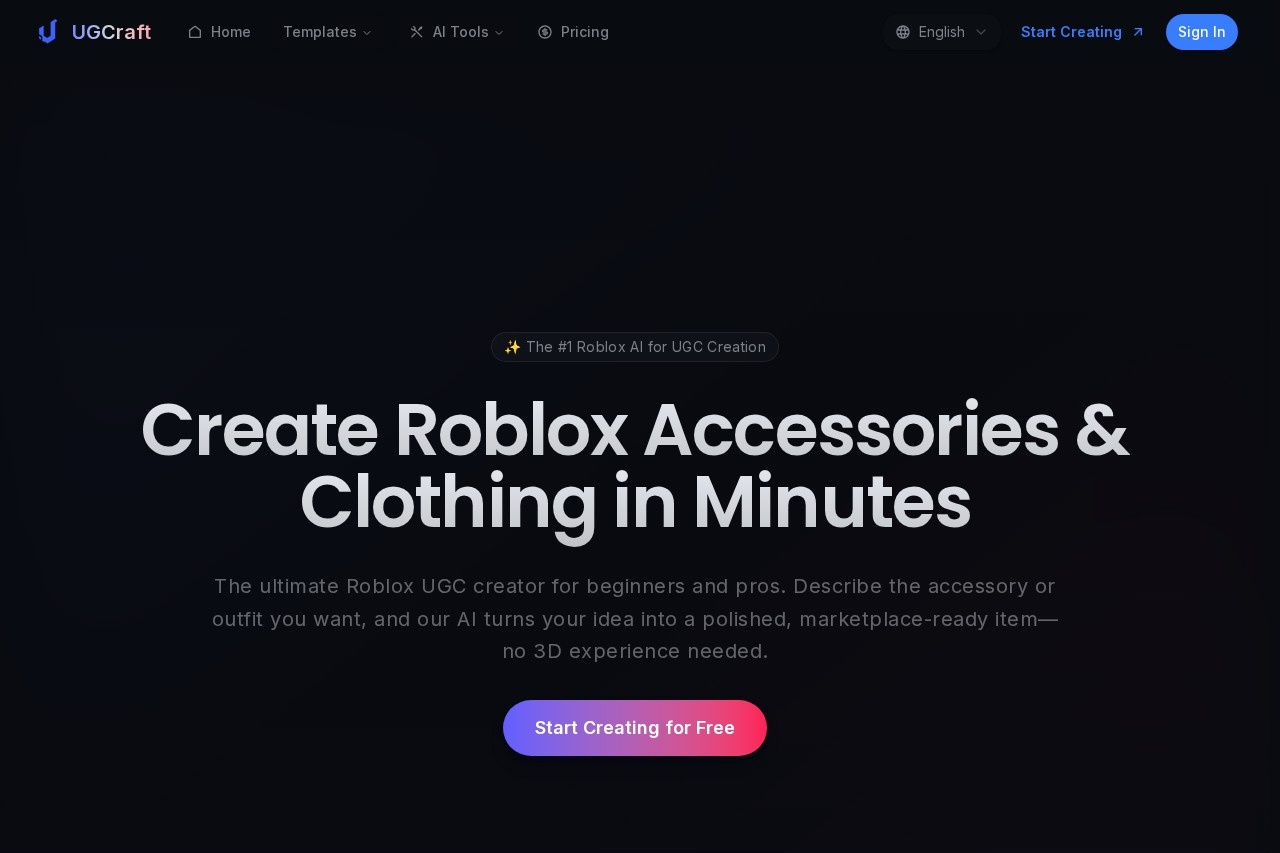
UGCraft + Meshy: The “Roblox UGC Production Line” That Turns Ideas Into Sellable Accessories (Without Blender Burnout)
Build Roblox-ready accessories faster by splitting the job in two: use Meshy for high-quality 3D generation, texturing, and optional rig/animation; then use UGCraft to create Roblox UGC-focused accessories quickly and export in marketplace-friendly formats. This tutorial shows a detailed, practical workflow, deliverables, QA rules, and realistic monetization paths—without promising Robux.
AIImageToVideo.pro + CapCut AI Tools: The “Scroll‑Stopper Clip Factory” You Can Sell Without Hype
Create short, high-impact motion clips from still images, then polish them into platform-ready ads and Reels. Use AIImageToVideo.pro for fast image-to-video generations, and CapCut AI Tools for captions, pacing, resizing, and finishing. This tutorial gives you a detailed, client-ready workflow, templates, deliverables, and realistic pricing—focused on consistent output, not exaggerated promises.

Clevia + Elicit: Sell “Evidence Packs” (Research That Clients Trust, Cite, and Reuse)
Turn academic research into paid, citation-ready deliverables. Use Elicit to search, screen, and extract evidence fast, then move the best sources into Clevia to write with grounded citations, in-text references, and export-ready bibliographies. This tutorial includes detailed steps, deliverable templates, and honest pricing—no hype.

WAExport + HubSpot AI: Turn WhatsApp Chaos Into a Paid “Lead Recovery System” (Without Spamming Anyone)
WhatsApp is where leads appear—and where they disappear. This tutorial shows how to export real WhatsApp contacts safely with WAExport, then turn them into a clean HubSpot pipeline powered by HubSpot AI (Breeze) for summaries, follow-ups, segmentation, and workflows. You’ll get a detailed, step-by-step implementation, deliverable packaging, and honest pricing ideas.

Notion Presentation + Gamma: Sell “Living Deck Systems” (Stop Rebuilding Slides Every Week)
Build presentations that don’t rot. Use Notion as the single source of truth, present it instantly with Notion Presentation, then turn the polished version into a client-facing deck in Gamma with branding, analytics, and exports. This tutorial shows a detailed, practical way to monetize the workflow as a productized “Living Deck System”—with templates, SOPs, and honest pricing.

Imagine.dev + Cursor: The “Prototype-to-Production” Monetization Playbook (Ship Fast, Then Build Right)
Build and sell real MVP outcomes without pretending every prototype is production-ready. Use Imagine.dev to ship a working, hosted prototype with built-in cloud features, then use Cursor to turn that prototype into a clean engineering plan (and, if needed, a production codebase). This guide shows exactly what to sell, how to deliver, how to avoid AI-sounding output, and how to price it honestly.

Sayline + Grammarly: The “Voice-to-Polish” Writing Service That Busy Clients Reorder
Turn spoken thoughts into clean, publishable writing—fast. Use Sayline to dictate drafts anywhere (email, docs, DMs), then use Grammarly to polish grammar, tone, clarity, and consistency. This tutorial shows a detailed monetization workflow: what to sell, how to package deliverables, step-by-step SOP, templates, revision rules, and realistic pricing—without hype.

Miro + Otter.ai: Sell “Chaos-to-Clarity” Visual Blueprints (The Strategic Mapping Service)
Turn meeting chaos into clear deliverables clients can actually use. Record and capture meetings with Otter, then translate decisions into a structured Miro board that tracks owners, next steps, and risks. This tutorial shows how to package the workflow into a productized service, what to deliver each week, how to avoid “AI notes” vibes, and how to price it honestly—without promising outcomes you can’t control.

Kuku + Perplexity: Sell “Research-to-Playbook” Deliverables (A Calm Workflow for Busy Teams)
Turn messy web research into clean, reusable client assets. Use Perplexity to find fresh sources and summarize with citations, then use Kuku to store everything as local Markdown—organized, linkable, and deliverable. This tutorial shows exactly what to sell, how to build your “client vault,” and how to ship weekly research briefs without sounding templated.

“Content Archivist” Workflow: Index in TranscribeToText, Curate in Cutback Selects
Long-form video is a dead asset until it’s searchable and clip-able. The pain is always the same: you can’t find that one perfect quote, manual transcription is a time-sink, and editing highlights takes forever. This workflow turns you into a content archivist. Use TranscribeToText to create a searchable text index of your entire video library. Use Cutback Selects to rapidly pull the best moments into a ready-to-use highlight reel. You sell the result: a fully indexed, curated archive package.

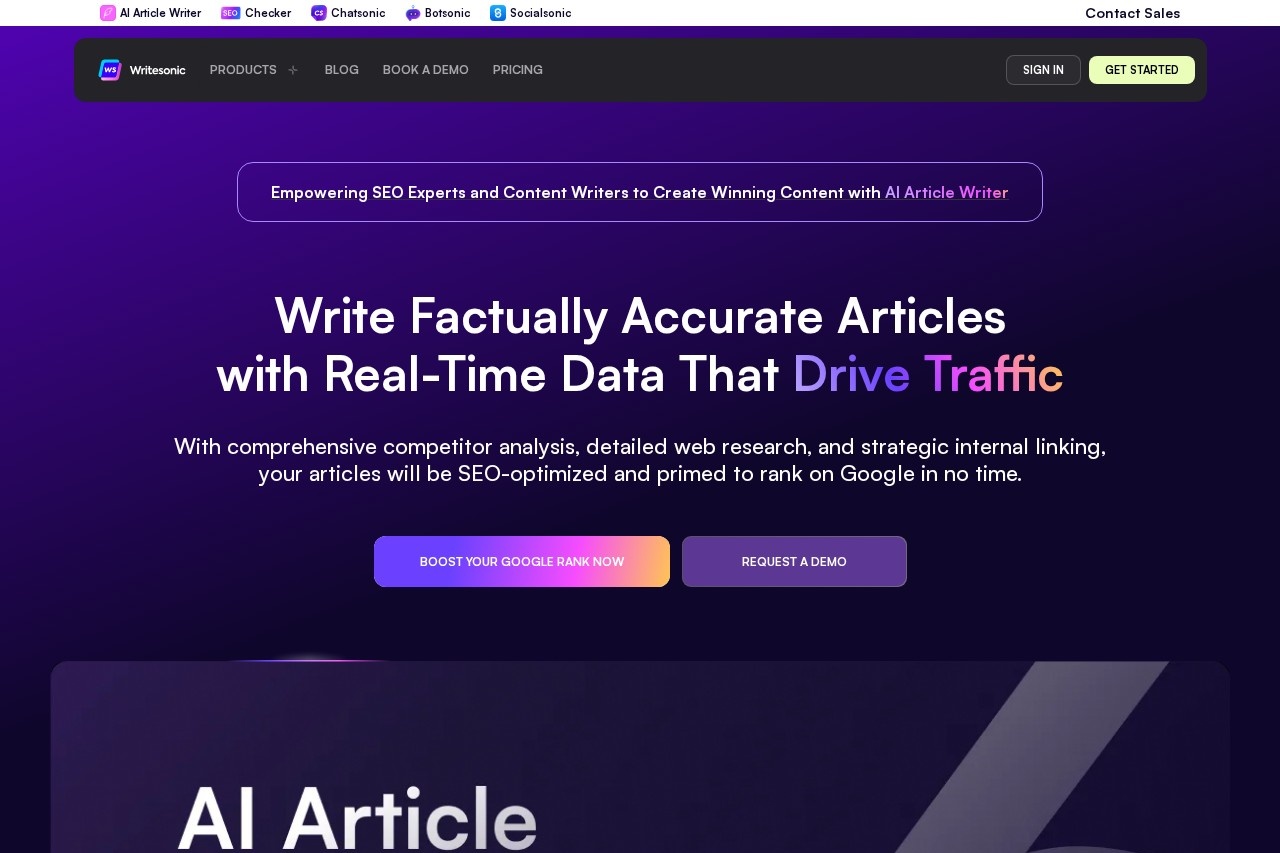
The “Launch Copy Assembly Line”: Writesonic for SEO Content, Copy.ai for GTM Workflows (SOP, Templates, Rescue Plays)
Writesonic is best when you need structured SEO content at scale (articles, audits, styles, Chatsonic) and you want to standardize output per brand. Copy.ai is best when you need GTM-ready copy systems (chat + workflows + credits) that turn one positioning into many deliverables fast. Together, they let you sell a tight productized service: a 48‑hour “Launch Copy Kit” (landing page + emails + ads) plus optional monthly content ops. This guide is an operator-style SOP with templates, QA gates, pitfalls, and compliance.
The “Internship Ops Sprint”: Use DevSeer to Run Your GitHub Like a Real Team, Then Prove It with Learn Place AI Internships
DevSeer turns GitHub issues into structured development plans with estimates—triggered right inside GitHub via a comment—so your work looks like professional engineering, not random commits. Learn Place AI Internships lets you complete project milestones with acceptance criteria and publish a recruiter‑verifiable portfolio with skills and video final reviews. Together, they support a productized service you can sell (or run for yourself): set up a “real workflow” repo, convert internship milestones into GitHub issues, generate plans, and ship a weekly proof‑heavy progress memo.

The “Voice Booth” Service: Clone in KikiVoice, Polish in Altered (SOP, Prompt Pack, Consent-First Monetization)
KikiVoice is a fast voice-cloning web tool: upload/record a short sample (it recommends ~3–15 seconds), pick one of three models (Core / Pro / Multilingual), control emotion/accents, add pause tags, and export common audio formats. Altered is a professional voice suite (RealTime Pro + Altered Studio) with voice skins, accent translation, local/on-device processing options, and explicit consent rules for custom voices (no illegal impersonation). This tutorial shows an operator-style “Voice Booth” service you can sell safely: intake → consent → scripts → voice generation → QC → delivery packs.

The Anime Shorts Studio Sprint: Design Characters in Yodayo, Ship 60‑Second Shorts in Nereo (SOP, Prompt Pack, Rescue Playbook)
Nereo creates complete 60‑second anime shorts (vertical or horizontal) from one prompt, supports reference images for character control, and can generate synced audio; a 60‑second job shows a 60‑credit cost and typical generation time of 3–8 minutes. Yodayo is an anime creation community with strict rules: users must be 18+, and you must confirm all characters in your creative work are over 18; explicit sexual content is banned and content is moderated. This guide shows a practical, sellable workflow: character bible → reference sheet → Nereo prompt → QA → deliver a weekly “Anime Shorts Pack.”

The “Second Brain + Market Radar” Desk: Remio + NBot.ai to Ship Weekly Intel Memos Teams Actually Read
Remio is a local-first personal knowledge hub that captures web pages, files, recordings, emails, and Slack—then lets you “Ask remio” across your own knowledge base, with a BYOK option for stronger privacy control. NBot.ai creates AI Curators that monitor the web, summarize what matters, and supports Feed Chat plus daily podcast summaries. Together, they form a clean operator system: NBot finds signals, Remio stores context + decisions. This guide shows a productized “Second Brain + Market Radar” service: setup sprint → weekly intel memo → decision log → rescue playbook + compliance.

The “Headshot Upgrade Desk”: Mintshot + PhotoMentor Workflow to Sell LinkedIn-Ready Photos (SOP, Templates, Rescue Plays)
Mintshot sells a $29 “photoshoot” (no subscription) and uses a credit system where credits never expire; it offers a satisfaction guarantee with a reshoot or refund requested within 7 days (refunds generally not available after downloading). PhotoMentor critiques photos with an AI score out of 10; Free includes 5 welcome analyses + 1/day, Pro is $5/mo or $30/yr, and Lifetime is $49. This tutorial shows the operator workflow I’d sell: intake → pick the best source photos using PhotoMentor → generate headshots in Mintshot → quality-gate and deliver a “LinkedIn pack” with clear rights/privacy guardrails.

The “Audience Router” Sprint: Build a Brand Brief in Soolo, Multiply Your Copy in MessageMosaic (SOP, Templates, Pitfalls)
MessageMosaic turns one “core message” into audience-tailored variants, with unlimited audiences/products and a credits model (Basic $4.99/mo: 250 credits ≈ 25 transformations; Pro $19.99/mo: 1,200 credits ≈ 120; Business $39.99/user/mo: 3,000 credits/user ≈ 300). This guide shows the operator workflow I’d sell: brand brief → audience profiles → transformation routing → QA → delivery as a Messaging Kit (emails, ads, landing copy) with guardrails.

The Ops Concierge Blueprint: Run Your Team From Ayanza, Delegate the Busywork to Notis (SOP, Scripts, Guardrails)
Notis is a “one message away” AI intern that works through WhatsApp/Telegram/iMessage/Slack/email, with integrations, reminders, long‑term memory, and scheduled/webhook automations. Ayanza is an AI‑powered project management platform (projects/tasks, wiki, chat, workflows) with an AI assistant on paid tiers. Together, you can sell a productized “Ops Concierge” service: set up Ayanza as the system of record, use Notis to turn voice/messages/emails into structured updates, then ship weekly status, follow-ups, and clean task plans. This guide includes templates, pitfalls, and compliance.

The “Docs-to-Deal Desk” System: ReadDocs + Accordio AI to Turn Messy Client PDFs into Signed Proposals (SOP, Templates, Pitfalls)
ReadDocs is a fast document summarizer (PDF/DOCX/TXT + OCR) that outputs a clean summary, key points, and Q&A, with Free (3 uploads/day), Pro (£9.99/mo, 300 uploads), and Business (£29/mo, 2,000 uploads). Accordio AI generates proposals/contracts/invoices, collects e-signatures, and can take payments via Stripe—Free uses a commission model, while Legend is a flat monthly fee with watermark removal and more usage. This tutorial shows a practical “Docs-to-Deal Desk” productized service you can sell: intake → doc triage → risk flags → proposal/contract → signature + payment.

The Rights‑Safe Shorts Remix Factory: Affogato.ai + YTShortsDL Workflow to Sell Weekly Ad Variants (SOP, Prompts, Compliance)
Affogato.ai is a credit-based “AI ad agent” positioned to generate short-form marketing videos (script + voice + visuals) and supports things like voiceover/lipsync, auto-captions, and product-style ad workflows; its public site is JavaScript-only, so verify pricing/terms in-app. YTShortsDL is a YouTube Shorts tool suite (download, MP3 extraction, video-to-script, AI script generator, trends) with Free/Pro/Elite plans. This guide shows a practical, compliance-first productized service: clients supply rights-owned footage → you extract hooks/scripts → generate 8–15 “ad-ready” variants in Affogato → deliver with an approval sheet and a strict rights gate.

- Previous Page
- 1
- 2
- 3
- 4
- Total 4 pages