Rising Star: GLM-4.6 Ties for Global Lead on Code Arena, Signaling a New Era in Open-Source AI
Category: Industry Trends、Tech Deep Dives
Excerpt:
China's open-source AI community has achieved a major milestone: Zhipu AI's latest model, GLM-4.6, has ascended to a global #1 rank (tied) on the highly competitive LiveCodeBench (LCB) leaderboard. This achievement, surpassing giants like DeepSeek and closely trailing GPT-4, demonstrates a dramatic leap in practical programming capabilities for models outside the U.S. tech sphere, reshaping the global landscape of code-generation AI.
The race for supremacy in AI code generation has a new and formidable contender. In a development resonating across the global developer community, Zhipu AI's GLM-4.6 model has achieved a co-top position on the rigorous LiveCodeBench (LCB), a benchmark that dynamically evaluates coding performance on fresh, real-world problems. This isn't just an incremental update; it's a statement that high-fidelity, open-source coding assistants are now a global reality.
Decoding the Victory: What LiveCodeBench Reveals
LiveCodeBench is not a static test. It's a continuously updated evaluation platform that pulls new coding problems from platforms like LeetCode weekly, preventing models from simply memorizing solutions. It tests core abilities like code correctness, problem-solving efficiency, and robustness across multiple programming languages including Python, Java, and C++.
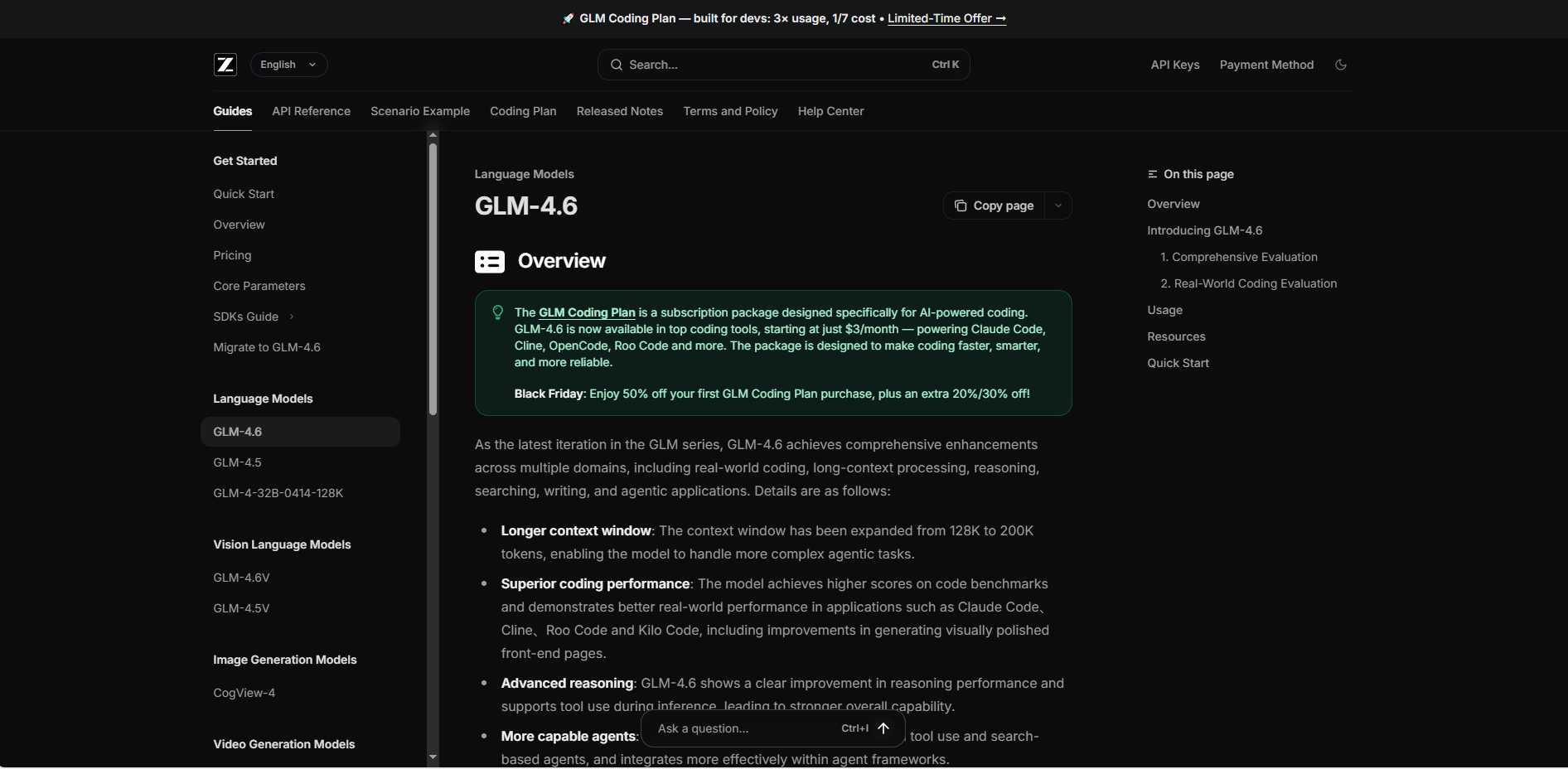
GLM-4.6's tie for first place (with a specific high-performing variant of another model) on the overall LCB leaderboard signifies that its performance is now statistically indistinguishable from the absolute best in the world in handling novel, practical coding challenges. The leaderboard snapshot tells a compelling story of rapid ascent.
Beyond the Benchmark: The "Full Stack" Strategy
Zhipu AI's breakthrough is attributed to a focused, "full-stack" approach. Industry analysts point to several key factors behind GLM-4.6's performance:
- Specialized Training Diet: The model was trained on a massive, meticulously curated corpus of high-quality code data, spanning open-source repositories, technical documentation, and complex problem statements.
- Advanced Reasoning Architecture: It incorporates enhanced reasoning capabilities, allowing it to better decompose complex instructions, understand nuanced requirements, and plan solution steps before writing code.
- Iterative Refinement: Zhipu has emphasized a tight feedback loop of training, benchmarking, and refinement specifically targeting the dynamic nature of coding evaluations.
Ripples Across the Ecosystem: Open Source Gains Momentum
This achievement has significant implications for the global AI ecosystem:
- A Validation of Open Source: It powerfully validates that open-source models can achieve parity with the best closed-source offerings in critical, commercially valuable domains like coding.
- Increased Developer Choice: For developers worldwide, especially those concerned with cost, data privacy, or customization, GLM-4.6 provides a top-tier, viable alternative to proprietary models from OpenAI or Anthropic.
- Geopolitical Resonance: It underscores the maturation and competitive intensity of China's AI research and development sector, moving it firmly into a leadership position in a specific, high-stakes application area.
The Road Ahead: Sustaining Performance and Expanding Horizons
The challenge for Zhipu AI and the GLM ecosystem now shifts from breakthrough to sustainability and breadth. Key questions include:
- Can this performance level be maintained and extended across future, unseen batches of LiveCodeBench problems?
- How well do these benchmark gains translate to real-world developer productivity in integrated development environments (IDEs)?
- Will the model's success catalyze faster adoption and contribution from the global open-source community, creating a virtuous cycle of improvement?
GLM-4.6's co-victory on LiveCodeBench is more than a badge on a leaderboard; it is a tectonic shift. It proves that excellence in AI code generation is no longer the exclusive domain of a few Silicon Valley giants. This milestone heralds a more diverse, competitive, and open future for developer tools, empowering a global community of builders with powerful, accessible intelligence. The era of a single dominant coding assistant is over; the race for the future of software development is now truly global.