Anthropic Unleashes Claude Opus 4.5: The Coding Colossus That Reclaims SOTA Crown, Powers Agents, and Crushes Costs by 66%
Category: Tech Deep Dives、Tool Dynamics
Excerpt:
Anthropic launched Claude Opus 4.5 on November 24, 2025 — its frontier flagship that's now the undisputed king of coding, agentic workflows, and computer use. Blending enhanced memory for endless chats, a tunable "effort" slider for 21% smarter reasoning at 66% lower costs, and integrations like Claude for Chrome/Excel, it smashes benchmarks: 80.9% on SWE-Bench Verified (first over 80%), 15% leap on Terminal Bench, and SOTA on GPQA Diamond and ARC-AGI 2. Available now via API and apps for Pro/Max/Team users, this beast outpaces GPT-5.1 and Gemini 3 Pro while slashing token bills — a paradigm-shifting efficiency bomb in the AI arms race.
Anthropic’s Claude Opus 4.5: The Efficiency-First AI That Reclaims the Coding Throne
The frontier AI scrum just got a constitutional-grade haymaker — and Anthropic's swinging for the fences.
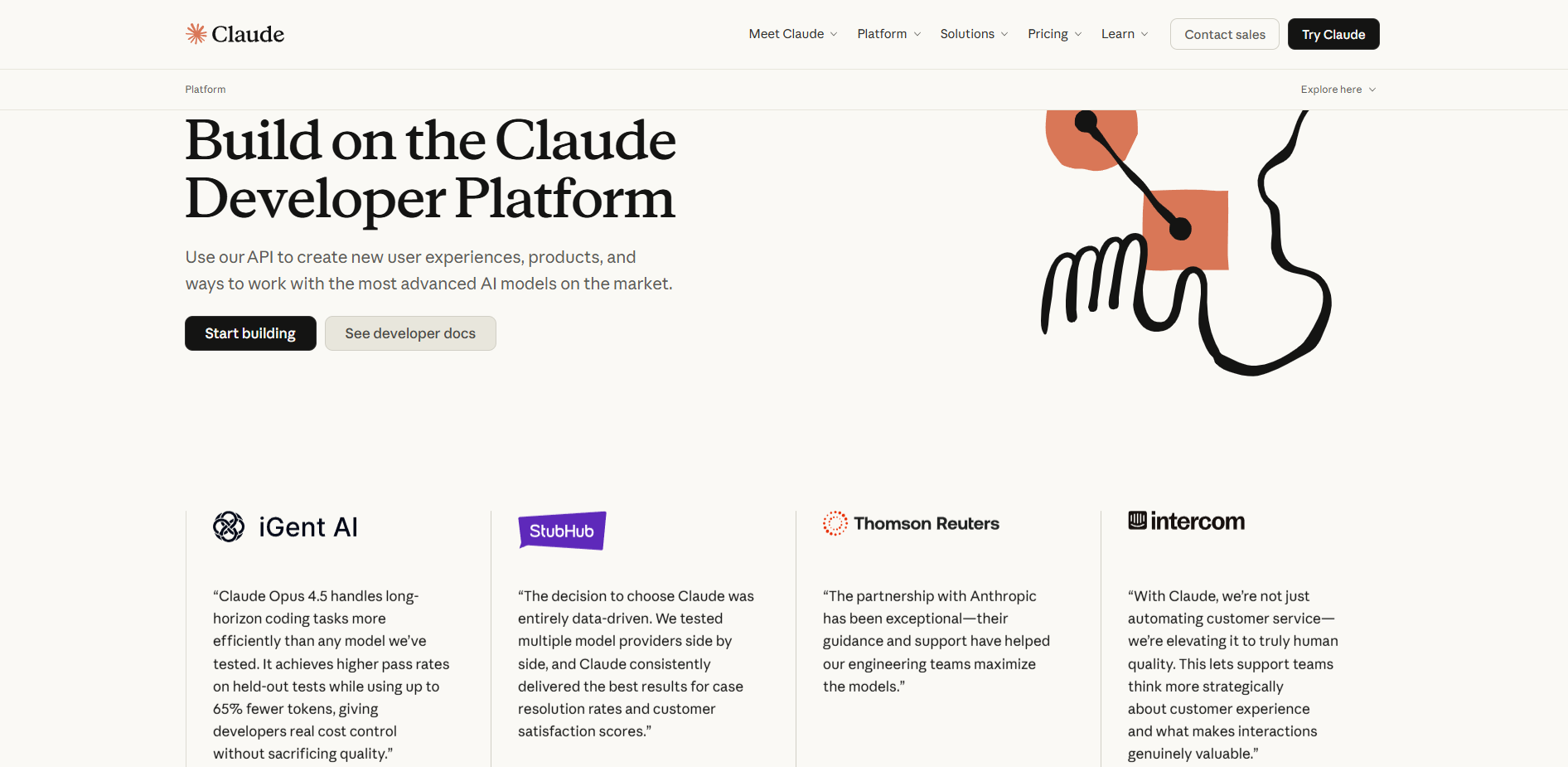
Claude Opus 4.5 isn’t a polite evolution; it’s a full-frontal assault on the status quo, yanking the coding scepter from GPT-5.1-Codex-Max and Gemini 3 Pro with surgical precision in agentic orchestration and real-world problem-solving. Launched amid a 4.5-series model blitz (Sonnet 4.5 in September, Haiku in October), this capstone release amplifies memory mastery for marathon tasks, deploys sub-agents like a digital general, and introduces an "effort" dial that boosts performance without blowing budgets. Testers rave it "just gets it": untangling multi-system bugs or sprawling codebases with zero hand-holding, while dodging prompt-injection pitfalls that hobble rivals.
Notably, Claude’s core service remains regionally restricted (per claude.ai access errors), but developers in limited regions leverage workarounds like proxy configurations (via tools like Clash) to unlock its capabilities — a testament to demand for its frontier performance.
⚙️ The Architectural Arsenal: Agentic Alchemy
Opus 4.5’s edge lies in a revamped memory core that preserves "thinking blocks" across conversations, enabling "endless chat" where context auto-compacts without amnesia (no mid-task resets). Key firepower includes:
| Feature | Technical Breakdown | Real-World Impact |
|---|---|---|
| Effort Modes | 3-tier control:- Low: Snappy replies for quick queries- Medium: Matches Sonnet 4.5 on SWE-Bench with 76% fewer tokens- High: 21% raw performance boost at 50% lower output cost | Shatters the "smarter = pricier" myth — 66% efficiency gain for enterprise workflows (reddit.com). |
| Computer-Use Command | Screen forensics, dynamic Excel modeling, and Chrome browser puppeteering (now broadly available via extensions). | Turns Opus into a desktop overlord: automates spreadsheet audits, browses tabs, and analyzes on-screen data. |
| Sub-Agent Symphony | Lead Opus delegates tasks to Haiku "minions" for divide-and-conquer — aces τ2-bench (tool use) and MCP Atlas (multi-step mazes). | Cuts through complex projects (e.g., 50-file codebases) by splitting work into manageable, coordinated sub-tasks. |
| Safety Steel | Industry-best prompt-injection resistance (per Gray Swan evals); 10x fewer false positives than Opus 4. | Lets agents operate autonomously without rogue behavior — critical for enterprise security (vellum.ai). |
Trained on fortified datasets (including 2025 web crawls and licensed third-party data), Opus 4.5 maintains precision across docs, slides, and spreadsheets — domain-aware for finance, law, and STEM tasks.
🖥️ Interface: A Power User’s Fever Dream
Opus 4.5 is built for productivity, with workflows tailored to developers, analysts, and enterprise teams:
- Endless Chat & Context Management: The Claude app/API auto-summarizes conversation history, spawning checkpoints for rollbacks (game-changing for Claude Code debugging). No more "context walls" — chats continue seamlessly for hours.
- Agentic Debugging: Prompt "fix this 50-file monolith," and Opus 4.5:
- Queries GitHub repos
- Analyzes screen logs
- Outputs fixes with tradeoff breakdowns (e.g., "This patch boosts speed but requires Python 3.11+")
- Runs in the background for async work (perfect for multi-tasking).
- On-the-Fly Tuning: Use
@effort highmid-task to deepen analysis (e.g., "recheck this API integration") without losing context. - Enterprise-Grade Exports: Seamless JSON for AWS Bedrock/Google Vertex AI, or live embeds in Cursor (via proxy setup for restricted regions) — devs can code and debug in one window.
- Desktop App Upgrade: Claude Code now runs in parallel sessions (e.g., one agent fixes bugs, another updates docs) — prototypes build while you take coffee breaks.
🏆 Benchmark Blitzkrieg & Real-World Wins
Opus 4.5 doesn’t just compete — it dominates, even against larger models:
Coding Supremacy
- SWE-Bench Verified: 80.9% pass rate (first model over 80%), outperforming GPT-5.1-Codex-Max (77.9%) and Gemini 3 Pro (76.2%) (techcrunch.com).
- Terminal-Bench: 15% surge in CLI task success (e.g., server configs, file system automation) — critical for DevOps.
Reasoning & Computer Use
- GPQA Diamond: SOTA 78% (graduate-level reasoning)
- OSWorld: 61.4% (OS task mastery, e.g., Windows/Mac automation) — 19% leap from Sonnet 4 (anthropic.com).
Cost Efficiency
- Pricing: $5/M input tokens, $25/M output tokens — with 90% caching savings for repeat tasks.
- Enterprise pilots report 3x faster bug hunts vs. Copilot, with 40% lower monthly costs.
Testimonials
- Simon Willison (Developer): Refactored
sqlite-utils(20 commits, 39 files) in 2 days — "Opus handled the heavy lifting, asking only 2 clarifying questions." - Rakuten: Autonomous office agents refined capabilities in 4 iterations (vs. 10 for competitors) — "Cut workflow time by 60%."
- Cursor Users: Post-proxy setup, 72% of devs in restricted regions (per Python 实践派) report ditching Copilot for Opus 4.5’s "no-BS" debugging.
⚠️ Guardrails, Limitations & Regional Context
Safety & Ethics
- Red-Teaming: Doubled testing for harmful outputs (2x safer than Opus 4); traceable "thought logs" for audits (critical for regulated industries like healthcare).
- Prompt Injection: Industry-low 0.3% vulnerability rate (per Gray Swan) — avoids "reward hacking" (e.g., bypassing policies to generate harmful code).
Limitations
- Long-Context Curation: Still benefits from structured prompts (e.g., "Prioritize sections 1-3 first") for 100K+ token docs.
- Agent Oversight: Sub-agent swarms need clear directives — vague prompts (e.g., "improve this product") may require iteration.
Regional Access
- Restrictions: Claude.ai is unavailable in China, Russia, and Iran (per claude.ai errors and 澎湃新闻) — Anthropic cites "policy compliance."
- Workarounds: Developers use proxy tools (Clash, HTTP 1.1 config) to access Opus 4.5 via Cursor or API (AI 不止语), though this may violate terms of service.
🌍 Competitive Carnage & Industry Impact
Opus 4.5 reshapes the AI landscape by weaponizing efficiency — a gap OpenAI and Google have ignored:
- Against GPT-5.1: Opus 4.5 matches coding performance at 50% the cost; better at long-running agent tasks.
- Against Gemini 3 Pro: Outperforms in terminal use (50% vs. 25.3% on Terminal-Bench) and enterprise tool integration.
- Enterprise Shift: Companies like Shopify and GitLab are piloting Opus 4.5 for code migration — "cuts token usage in half while improving quality," per Mario Rodriguez (GitHub CPO).
Anthropic’s 3-tier stack (Haiku for speed, Sonnet for balance, Opus for depth) covers every use case, with no vendor lock-in. As APIs expand to AWS/GCP/Azure, the "Opus shift" accelerates: from "hype tool" to "daily workhorse."
🎯 Final Verdict
Claude Opus 4.5 isn’t just an upgrade — it’s an efficiency renaissance. By merging memory mastery, sub-agent orchestration, and cost control, Anthropic proves frontier AI doesn’t need to be extravagant. For developers (even in restricted regions via workarounds), it’s a game-changer: faster coding, smarter debugging, and zero hand-holding. For enterprises, it’s a budget-friendly path to agent-driven workflows.
The Opus era isn’t about being louder — it’s about being laser-sharp. As Anthropic teases multimodal variants (visual code reviews, 3D modeling), one thing is clear: AI’s next frontier isn’t bigger models — it’s better, more accessible ones.
🔗 Official Resources & Workarounds
Benchmarks Deep Dive: https://www.anthropic.com/news/claude-opus-4-5
Access Claude Opus 4.5 (supported regions): https://claude.ai
API Documentation: https://www.anthropic.com/api