Midjourney v8.5 Unveils "Consistent Identity" Modeling — Unified Character Generation Across Scenes, Styles, and Time
Midjourney has officially released version 8.5, headlined by the groundbreaking Consistent Identity (CID) feature that enables true character consistency across generations. Unlike previous --cref approaches that required reference images each time, CID builds a persistent internal model of a character that can be summoned across sessions, scenes, artistic styles, and even aspect ratios — maintaining facial features, body proportions, clothing, and personality essence without degradation over time.

GitHub Copilot Launches "Auto-Fix" Beta — Autonomous AI Agent Now Detects and Patches Code Vulnerabilities in Real-Time
GitHub has officially launched the beta of Copilot Auto-Fix, a groundbreaking autonomous feature that automatically detects and repairs code vulnerabilities, bugs, and security issues directly within the development workflow. Integrated into pull requests and the IDE, Auto-Fix leverages Copilot's agentic architecture to analyze code, generate fixes, and even review its own patches before submission—dramatically reducing developer toil and accelerating secure code delivery.
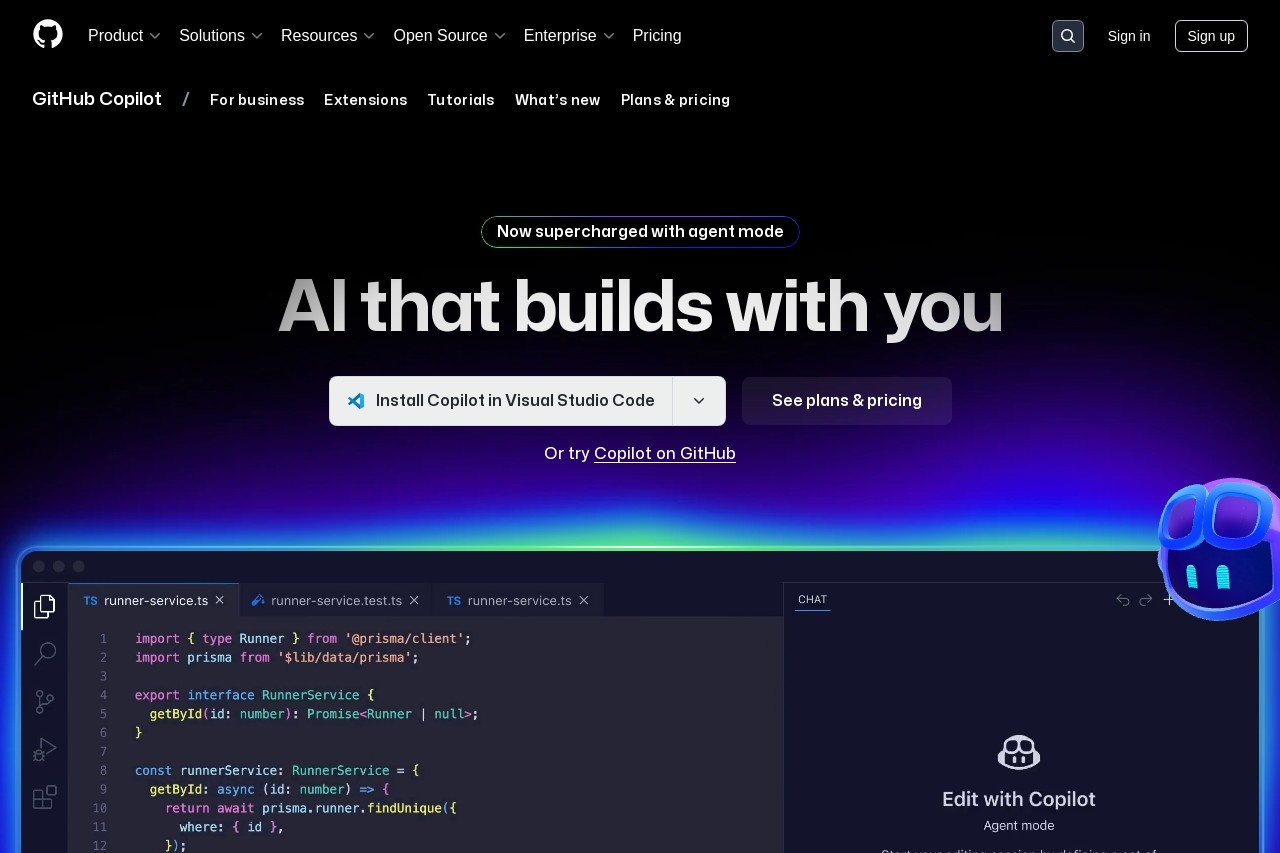
Cursor “Live Align” Goes Viral — Reality Check on the Rumored Real‑Time Alignment Feature and What Cursor Has Actually Shipped
“Live Align” is being mentioned as a new Cursor capability that keeps AI-generated edits continuously aligned with your codebase in real time. However, Cursor has not officially announced or documented a feature named “Live Align” in its public changelog/blog/docs at the time of writing. What Cursor has shipped recently is a fast-moving set of agent and workflow upgrades—such as MCP Apps, team plugin marketplaces, and Bugbot Autofix—that point to the same underlying direction: tighter human↔AI collaboration and better end-to-end execution inside the IDE.

OpenAI Releases GPT‑5.3‑Codex — 25% Faster Agentic Coding Model That Can Build Complex Games & Apps From Scratch Over Days
OpenAI has officially launched GPT‑5.3‑Codex on February 5, 2026, describing it as its most capable agentic coding model to date and 25% faster than the prior generation. The model combines the frontier coding performance of GPT‑5.2‑Codex with GPT‑5.2’s reasoning and professional knowledge, enabling longer-running workflows that involve research, tool use, and complex execution. OpenAI says GPT‑5.3‑Codex can iteratively build highly functional complex games and apps from scratch over the course of days, running autonomously over millions of tokens while users steer and interact without losing context.
Anthropic Releases Claude Opus 4.6 — Frontier Model Targets Financial Research, Deep Document Analysis, and “Days-to-Minutes” Workflow Automation
Anthropic has launched Claude Opus 4.6 on February 5, 2026, positioning it as its most capable model to date for enterprise agents and “professional work” — including financial analysis that can surface insights that would otherwise take days of manual compilation. Opus 4.6 adds major agentic upgrades (notably Agent Teams in research preview) and introduces up to a 1M-token context window (preview) for processing large collections of company filings, regulatory documents, spreadsheets, and research notes in a single workflow. The model is available to Claude paid tiers (Pro/Max/Team/Enterprise) and via API, as well as through Amazon Bedrock and other cloud platforms.

Kuaishou Upgrades Kling 3.0 — 15‑Second Video + Native Multilingual/Accent Audio, Stronger Multi‑Character Scenes Push AI Video Toward “Hollywood‑Grade”
Kuaishou has rolled out a major upgrade to its AI video generation stack with Kling 3.0 (including an Omni variant), expanding generation to up to 15 seconds per clip while pushing harder into native audio and more consistent multi-shot, multi-character storytelling. Third‑party platform announcements and product pages claim improvements in lifelike physics, character consistency, and multi-shot storyboards, with support for multilingual speech and dialects/accents in the audio-enabled Omni model. The update strengthens Kling’s positioning against competitors like OpenAI Sora and Google Veo by moving from “silent video clips” to a more complete “video + sound + dialogue” creative pipeline.
Kunlun Skywork Desktop Goes Global — On‑Device “AI Office Agent” Reads Local Files (Docs, PPT, Sheets, Images, Video) Without Uploading to the Cloud
Kunlun Tech (昆仑万维) has officially launched Skywork Desktop (天工 Skywork 桌面版) globally on February 4, 2026, positioning it as a privacy-forward, on-device productivity agent that can read and organize large volumes of files directly on a user’s computer—without uploading documents to the cloud. Skywork Desktop emphasizes “content understanding over file formats,” supporting unified semantic processing across documents, spreadsheets, PPT, images, video, and more, while also enabling multi-task parallel execution for workflow automation and content generation

A New “Copilot for Unreal (UE5)” Wave Lets Developers Speak Worlds Into Existence — But It’s Third‑Party (Not an Official Microsoft Release)
A new generation of third‑party “AI Copilot for Unreal Engine 5” tools is pushing UE5 workflows toward agentic, voice‑like world building: creators can describe a scene (e.g., “18th‑century London street, destructible”) and the system helps scaffold assets, Blueprint logic, UI, and scene population inside the editor. Public listings and forum changelogs show capabilities such as project‑wide indexing, mass scene population, UMG UI scaffolding, Blueprint refactoring, and MCP integration to connect external AI clients like Cursor and Claude Desktop. However, there is currently no verifiable Microsoft official announcement of a “Copilot for Unreal” product with fully automated real‑time modeling + ray tracing + physics setup.

OpenAI Retires “Codex for macOS” (Standalone) as Focus Shifts to Agentic Coding — Codex Becomes a Multi‑Agent Command Center Across CLI, IDE, and Cloud
OpenAI did not "cut off the macOS version of Codex" - on the contrary, it released its official Codex app for macOS on February 2, 2026, positioning Codex as a "command center for agents" that focuses on parallel agents, long task collaboration, and secure execution. If your news topic is "Cutting off macOS version of Codex, fully intelligent", a more accurate way to write it is: OpenAI is cutting down/weakening the "traditional monolithic Codex form" (such as single tool/single interface/single workflow), pushing Codex into a cross CLI/IDE/cloud/mobile agentic platform, and iteratively strengthening the capabilities of "long-range tasks, refactoring migration, and collaboration" with models such as GPT-5/5.2-Code.

ByteDance Launches "Doubao Video Translation Master" — AI-Powered Lip-Sync Translation for 50+ Languages With Voice Cloning and Emotion Preservation
By aifreetool February 2, 2026 ByteDance Releases "Doubao Video Translation Master" With AI Lip-Sync and Voice Cloning for 50+ Languages Beijing, China — ByteDance has officially launched Doubao Video Translation Master (豆包·视频翻译大师), a comprehensive AI-powered video translation platform that transforms videos into any of 50+ languages with synchronized lip movements, cloned voices, and p...

Cursor Launches Multi-User AI Collaboration Features — Real-Time Code Sharing, Shared Agent Context, and "Composer-in-Sync" Enable Teams to Code With AI Together
Cursor has rolled out significant team collaboration capabilities that transform its AI-powered IDE from a single-developer tool into a multiplayer coding environment. The update enables real-time code sharing with synchronized AI context, allowing multiple developers to work with the same AI agent simultaneously while maintaining conversation history and project understanding. Combined with the new "Composer-in-Sync" mode where AI edits are visible to all team members in real-time, Cursor is positioning itself as the first IDE where humans and AI collaborate as a unified team.

Google Starts Limited Rollout of “Gemini 2.5 Ultra” via Deep Think — AI Ultra Subscribers Get Early Access as Frontier Safety Evaluations Continue
Google has begun a limited rollout grey test of its most compute-intensive Gemini 2.5 capability via Deep Think inside the Gemini app—an “enhanced reasoning” mode designed for highly complex math, coding, and multi-step problem solving. Google positions Deep Think as a variant built on Gemini 2.5 Pro’s foundation with extended parallel thinking time, and it’s being rolled out to Google AI Ultra subscribers with daily usage limits. Google also says a full “IMO-grade” version of Deep Think is being shared with a small group of mathematicians and academics, while broader access expands gradually as safety and usability data comes in.

- Previous Page
- 1
- 2
- 3
- 4
- ···
- Total 12 pages